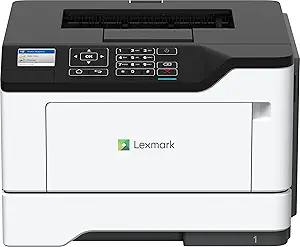

HP vs Lexmark: Overview
Comparing HP and Lexmark helps you determine which brand is best suited for your needs in Printers. Both brands offer strong choices depending on your budget and key feature requirements.
Key Features & Comparison
Evaluate factors such as build quality, warranty, customer satisfaction, and total value before making your final purchase choice between HP and Lexmark.
Features
HP’s feature architecture is designed around multi-platform versatility, digital connectivity, and modern lifestyle productivity. Consumer and office machines alike leverage the HP Smart App, widely regarded as one of the most intuitive mobile interfaces in the industry, enabling frictionless cloud scanning, remote printing, and automated workflow shortcuts. HP also leads extensively in dynamic security features through HP Wolf Security, which incorporates hardware-enforced protection, self-healing BIOS layers, and runtime intrusion detection on its enterprise LaserJet series. Additionally, HP embraces innovative consumables management via its Instant Ink automated delivery program and eco-focused features such as high-yield EcoSmart toner, catering effectively to modern hybrid workers who demand seamless digital collaboration tools.
Lexmark counters with a software suite built explicitly for deep administrative control, complex document workflows, and enterprise IT compliance. Lexmark's Embedded Solutions Framework (eSF) allows their multifunction printers to function almost as customized server nodes, executing sophisticated document capture, dynamic indexing, and routing natively from the printer's touchscreen without intermediary computer processing. Security is equally formidable with Lexmark's full-spectrum security architecture, which features comprehensive hard drive encryption, secure digital signatures, and extensive CAC/PIV smart-card authentication integrations popular in government and healthcare sectors. While HP wins on cloud convenience and mobile app maturity for the everyday user, Lexmark holds the advantage in back-end customization, secure print release architectures, and complex networked fleet integrations.
Performance
In terms of raw output capability, HP demonstrates unmatched versatility across diverse media types, setting the industry benchmark for color vibrance and image reproduction. HP’s OfficeJet and Color LaserJet lineups consistently outshine Lexmark when generating mixed-media documents, graphics, marketing collateral, and photo prints, rendering smooth gradients, deep black saturation, and accurate color matching. HP's Instant-on Technology also minimizes first-page-out times from low-power sleep modes, making it exceptionally responsive for sporadic print tasks common in standard office workflows. However, under relentless, high-volume document cycles, some of HP's mid-tier engines can exhibit thermal throttling or paper feed wear faster than their commercial ratings suggest.
Lexmark’s performance profile is engineered for unrelenting throughput, rapid mechanical pacing, and sheer endurance in demanding document processing. In enterprise mono and color laser benchmarks, Lexmark consistently delivers industry-leading continuous print speeds with negligible mechanical degradation over sustained runs of hundreds or thousands of pages. Their robust steel-frame paper paths and advanced separation rollers handle mixed paper weights, recycled stocks, and labels with substantially fewer jams and misfeeds than HP’s comparable enterprise units. While Lexmark falls noticeably short of HP regarding photographic color reproduction and ultra-fine graphical dithering, it decisively outperforms HP in duty cycle resilience, monochrome text crispness, and sustained high-speed duplexing efficiency.
Design
HP’s industrial design ethos emphasizes sleek aesthetics, clean desktop footprints, and modern consumer tech styling. Their printers frequently utilize curved silhouettes, minimalist matte white and neutral gray finishes, and unobtrusive control layouts that blend seamlessly into contemporary home offices and open-plan workspaces. Touchscreen interfaces on HP devices prioritize clean, smartphone-like graphical user interfaces with smooth capacitive responsiveness and animated troubleshooting tutorials. However, HP’s heavy reliance on lightweight plastics in their entry and mid-tier ranges can result in brittle paper trays, fragile output extensions, and chassis flexing under aggressive mechanical strain.
In contrast, Lexmark adheres to an austere, industrial, and purpose-driven design language where durability and serviceability supersede decorative trends. Lexmark printers feature internal steel structural skeletons and rugged external casings engineered to withstand the rigors of warehouse, manufacturing, clinical, and corporate installations. Component access is distinctly modular: toners, imaging units, waste toner containers, and fusers are clearly demarcated for rapid, tool-less replacement by standard office personnel, vastly reducing IT intervention time. The trade-off is that Lexmark machines are generally heavier, bulkier, and visually utilitarian compared to HP, but they offer vastly superior mechanical stamina and resistance to physical environmental wear.
Compare current retail pricing, active promotions, and verified stock availability directly from authorized stores: