



HP vs Epson: Overview
Comparing HP and Epson helps you determine which brand is best suited for your needs in Printers. Both brands offer strong choices depending on your budget and key feature requirements.
Key Features & Comparison
Evaluate factors such as build quality, warranty, customer satisfaction, and total value before making your final purchase choice between HP and Epson.
Features
In terms of feature sets and technological mechanisms, the two manufacturers deviate significantly in their fundamental print head technologies. HP predominantly deploys Thermal Inkjet technology, which uses heat to vaporize ink and project droplets onto paper. On the software and connectivity front, HP shines with its HP Smart app, which offers the most comprehensive mobile printing, advanced cloud scanning, and workflow automation in the industry, backed by robust enterprise-grade security suites such as HP Wolf Security. Additionally, HP has heavily integrated automatic firmware management and subscription ink tracking, ensuring users rarely run dry, though this often introduces rigid third-party cartridge blocking through dynamic security measures.
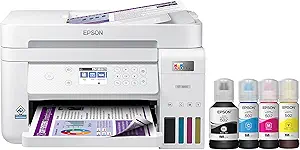
Epson sets itself apart mechanically with its proprietary Micro Piezo and PrecisionCore Heat-Free technology, which utilizes electrical charges rather than thermal stress to eject liquid ink. This mechanism allows Epson to handle a broader spectrum of ink formulations, including specialized pigment and dye combinations, without degrading the print head over time. Beyond its innovative bulk-ink reservoir systems, Epson equips its creative and office machines with expansive media-handling features, such as rear specialty paper feeds for thick cardstock, panoramic banner printing, and dedicated disc printing trays. While Epson's companion apps and interface software are somewhat more utilitarian than HP's streamlined digital interfaces, Epson compensates with superior manual driver controls and expansive color management profiles.
Performance
Performance metrics reveal distinct operational advantages for each brand depending on the application. For standard text and mixed business documents, HP frequently holds an edge in sheer velocity and typographical sharpness. HP’s page-wide arrays and enterprise LaserJet models achieve class-leading First Page Out Times (FPOT), rapidly firing from standby mode to finish small print runs before many competitors have fully initialized. Furthermore, HP's pigment-based black inks produce crisp, laser-like text on plain copy paper that demonstrates exceptional smudge resistance against highlighters and moisture, making them ideal for high-throughput corporate and academic environments.
Epson, however, dominates the color reproduction, photo printing, and continuous-run endurance arenas. Because PrecisionCore technology does not rely on thermal cycles, Epson printers do not suffer from thermal throttling during massive, multi-hundred-page print jobs, maintaining consistent print speeds throughout extended operations. In photographic output, especially within the EcoTank Photo and SureColor ranges, Epson’s capability to deploy five- and six-color ink arrays provides a broader color gamut, subtler tonal gradations, and deeper dynamic range than comparable HP models. For detailed imagery, fine-art reproduction, and sustained heavy-duty output, Epson routinely outpaces HP in fidelity and mechanical stamina.
Design
From an industrial design and ergonomic standpoint, HP crafts machines that prioritize modern office aesthetics and minimalist user integration. HP printers generally feature sleek, rounded contours, low-profile chassis, and muted matte finishes that integrate harmoniously into modern living spaces and executive offices. Their control panels are among the best in the market, often boasting responsive, high-resolution capacitive touchscreens with intuitive, smartphone-like menu hierarchies. Input trays are almost universally internal and fully enclosed, protecting paper stock from dust and keeping the overall operational footprint clean and self-contained.
Epson’s design language is noticeably more functional and workshop-oriented. While modern EcoTank models have successfully integrated ink reservoirs directly into the main front-facing housing rather than tacking them onto the side, the transparent ink-level windows and physical key-lock refill valves emphasize mechanical utility over pure minimalism. Epson machines tend to have more protruding, modular components, such as multi-stage telescoping output trays and articulated rear sheet feeders designed to accommodate delicate media. While their control screens are occasionally smaller and rely on physical directional pads on non-flagship units, Epson’s focus on user-serviceable parts—such as easily replaceable maintenance boxes and print heads—showcases a hardware design geared toward longevity and practical utility.