





Canon vs Lexmark: Overview
Comparing Canon and Lexmark helps you determine which brand is best suited for your needs in Printers. Both brands offer strong choices depending on your budget and key feature requirements.
Key Features & Comparison
Evaluate factors such as build quality, warranty, customer satisfaction, and total value before making your final purchase choice between Canon and Lexmark.
Features
Canon’s feature architecture is deeply rooted in media versatility, user convenience, and sophisticated image processing. Across its lineup, Canon incorporates advanced connectivity options including Apple AirPrint, Mopria, NFC, and intuitive cloud printing integrations through the Canon PRINT app. Creative and professional models boast specialized paper-handling mechanics, such as flat-path rear feeders capable of handling thick fine-art stock, alongside high-precision ink-density sensors and multi-tank MegaTank configurations that drive down consumable costs. Canon's business-tier imageCLASS and imageRUNNER lines complement these features with comprehensive application libraries, customizable touchscreen workflows, and robust security protocols like verify-system-at-startup.
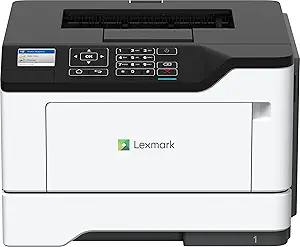
Lexmark approaches feature sets through a lens of enterprise efficiency, administrative control, and end-to-end security architecture. Lexmark’s embedded solutions framework (eSF) allows their multifunction devices to function as custom software terminals capable of executing industry-specific applications, direct document routing, and advanced cryptographic authentication right at the panel. Furthermore, Lexmark has distinguished itself with its Comprehensive Security portfolio, which includes hard disk encryption, digital signatures, and granular network port filtering as standard across broad segments of their portfolio. While Lexmark lacks the photographic-oriented media-handling features found in Canon's portfolio, it vastly outpaces Canon’s non-enterprise models in fleet management features like Markvision Enterprise, automated supply reordering integrations, and modular paper-handling expansions.
Performance
In terms of pure visual performance, Canon remains the standard to beat, especially regarding tonal gradation, color gamut, and microscopic dot precision. In photographic and marketing collateral applications, Canon’s FINE (Full-photolithography Inkjet Nozzle Engineering) print heads yield remarkable detail, deep dynamic range, and vibrant saturation that Lexmark’s laser-only technology cannot mirror. Even within the laser sector, Canon’s imageCLASS series delivers exceptionally crisp text and clean vector graphics, backed by instant-warmup fuser technologies that generate rapid first-print-out times (FPOT) from standby, ensuring quick turnarounds for daily, low-volume office jobs.
Lexmark, on the other hand, dominates in raw operational velocity, continuous throughput, and sustained duty-cycle performance. Lexmark laser engines are engineered with powerful internal processors, expansive RAM capacities, and durable internal mechanisms that prevent bottlenecks during high-volume document rendering. While Canon may print the first page quickly, Lexmark excels when processing large, hundreds-of-pages PDF spool files and sustained multipage collations without thermal pauses or mechanical slowdowns. Print output for text on Lexmark machines is sharp, indelible, and professional, rendering ultra-fine micro-text with absolute legibility, making it an unyielding powerhouse for legal, medical, and administrative data processing.
Design
From an industrial design standpoint, Canon blends clean ergonomics with consumer-friendly aesthetics. Their desktop and small-office units frequently feature sleek, space-saving contours, rounded edges, and matte finishes that conceal fingerprints and integrate unobtrusively into modern office decor. Canon’s user interfaces generally prioritize visual intuitiveness, using vibrant, smartphone-style capacitive touchscreens on mid-to-high-end models, supported by logical navigation paths. Access to consumables, such as front-loading toner cartridges or transparent ink reservoirs on MegaTank devices, is clearly delineated, reducing the friction associated with day-to-day physical maintenance.
Lexmark takes an unapologetically utilitarian, commercial approach to its hardware design. Built to survive rigorous office wear, Lexmark machines utilize rigid, steel-frame internal architectures that minimize vibration, paper jams, and mechanical failure under heavy usage. While Lexmark units tend to have a larger, boxier footprint and an austere commercial aesthetic, their physical modularity is exceptionally well-conceived; administrators can easily stack supplemental input trays, envelope feeders, and external inline staplers or booklet finishers. The control panels on Lexmark devices emphasize durability and straightforward menu navigation, intentionally built to facilitate rapid, high-volume batch jobs rather than consumer-oriented multimedia exploration.
Compare current retail pricing, active promotions, and verified stock availability directly from authorized stores:
Compare current retail pricing, active promotions, and verified stock availability directly from authorized stores: