







SteelSeries vs Microsoft: Overview & Brand Philosophy
When selecting a computer mouse, few comparisons illustrate the divide between competitive performance and functional utility quite like SteelSeries versus Microsoft. SteelSeries, founded in Denmark in 2001, is built entirely around the esports ecosystem. The brand's philosophy centers on uncompromising speed, tracking precision, lightweight engineering, and latency reduction. Every design decision—from switch actuation mechanics to PTFE glide feet—is made to deliver a competitive edge to gamers and enthusiasts who push their peripherals to their absolute operational limits.
In contrast, Microsoft approaches peripheral engineering from a legacy of enterprise computing, broad-scale accessibility, and ergonomic workplace health. Microsoft’s peripheral division, which revolutionized consumer input devices with the optical Intellimouse in the late 1990s and later with the modern Surface line, prioritizes all-day comfort, multi-device connectivity, seamless operating system integration, and quiet reliability. While SteelSeries views the mouse as an extension of reflexes, Microsoft views it as an invisible, friction-free conduit for office productivity and general computing.
This fundamental divergence in philosophies creates two distinctly specialized product portfolios. SteelSeries concentrates on modularity, high polling rates, and deep RGB customization through proprietary software, whereas Microsoft optimizes for Bluetooth power efficiency, minimalist aesthetic harmony with modern workstations, and natural anatomical support.
Key Differences & Technological Comparison
The technological gap between SteelSeries and Microsoft is most apparent in their sensor architecture, switch mechanisms, and connectivity profiles:
- Sensors and Tracking Engines: SteelSeries deploys advanced, customized PixArt sensors—branded as TrueMove (such as the TrueMove Air and TrueMove Core)—delivering up to 18,000+ CPI (counts per linear inch), 400+ IPS tracking speeds, and zero hardware acceleration. These sensors track accurately under aggressive swipes and liftoffs. Microsoft models, outside of specialized releases like the Pro Intellimouse, rely on standard optical sensors or Microsoft's proprietary BlueTrack technology. BlueTrack is engineered to track across unconventional real-world surfaces—including granite countertops, unfinished wood, and carpet—sacrificing high-speed tracking fidelity for go-anywhere office versatility.
- Switch Actuation and Lifespans: SteelSeries equips its mice with mechanical or optical switches (such as Prestige OM switches) rated for 60 to 100 million clicks, designed to prevent unintended double-clicks and reduce debounce delay. Microsoft utilizes standard tactile micro-switches tuned for soft, muted clicks suitable for quiet office environments, typically rated for significantly fewer duty cycles.
- Connectivity & Battery Management: SteelSeries leverages proprietary Quantum 2.0 dual wireless technology, which combines a low-latency 2.4GHz wireless dongle connection for gaming with fallback Bluetooth support. Battery life in performance mode is measured in dozens of hours. Microsoft mice emphasize ultra-low-energy Bluetooth 4.0/5.0 implementations, enabling travel mice like the Surface Mobile Mouse or the Microsoft Sculpt to run for 6 to 12 months on standard AAA or AA alkaline batteries.
- Ergonomic Form Factors: SteelSeries focuses on performance shapes (claw, fingertip, and palm variants) optimized for rapid lateral flicking, often utilizing perforated "honeycomb" shells to drop total weight below 60 grams. Microsoft's industrial designs prioritize neutral wrist pronation, featuring dedicated vertical alignments, thumb scoops, and larger volumetric profiles (like the Microsoft Ergonomic Mouse) designed to mitigate Repetitive Strain Injury (RSI).
Pros & Cons Comparison
SteelSeries: Pros
- Esports-Grade Precision: TrueMove optical sensors offer industry-leading 1-to-1 tracking accuracy with granular CPI adjustments.
- Low Latency Connectivity: 2.4GHz Quantum wireless protocols minimize input lag down to sub-1ms levels.
- Robust Software Suite: SteelSeries Engine allows deep customization of button macros, polling rates, liftoff distance, and dynamic RGB lighting.
- Ultralight Engineering: Modern iterations (like the Aerox line) are designed for swift, low-inertia movement.
SteelSeries: Cons
- Premium Price Point: High-end wireless and hybrid models command significant price premiums over standard peripherals.
- Aggressive Aesthetics: Perforated bodies, prominent branding, and RGB accents may look out of place in corporate environments.
- Shorter Battery Cycles: High polling rates mean frequent recharges via USB-C cables compared to enterprise mice.
Microsoft: Pros
- Exceptional Ergonomic Design: Decades of human-factors research yield mice that significantly reduce forearm fatigue and wrist strain.
- Surface Versatility: BlueTrack technology operates reliably on nearly any surface without the need for a mouse pad.
- Remarkable Battery Longevity: Months of continuous operational life without recharging or frequent battery swaps.
- Clean, Minimalist Aesthetics: Premium, understated designs that integrate cleanly with modern office and Surface hardware ecosystems.
Microsoft: Cons
- Unsuitable for Fast-Paced Gaming: Low polling rates (often fixed at 125Hz) and standard sensor limits cause input latency and tracking smoothing during rapid movements.
- Limited Customization: Native software offers basic button assignment with minimal advanced macro configuration.
- Higher Weight Profiles: Ergonomic housings and AA battery cells make these units noticeably heavier and less agile.
Performance, Durability & Value Analysis
From a durability perspective, SteelSeries constructs its products to withstand high-stress mechanical abuse. In their newer mice, IP54-rated AquaBarrier technology protects exposed internal circuitry against dust, dirt, and moisture ingress—a crucial inclusion for perforated ultralight shells. Their optical switches also eliminate physical metal degradation, ensuring long-term click consistency without bounce degradation. Conversely, Microsoft relies on heavy-duty ABS plastics, soft-touch rubberized side grips, and rigid unibody structures. While Microsoft hardware is mechanically dependable for day-to-day desk duty, the rubber coatings on long-running units can degrade over years of intense friction and skin oil exposure.
Value determination depends entirely on the operational environment. Microsoft products occupy a highly accessible $20 to $60 bracket for their standard and ergonomic designs, offering outstanding cost-per-hour value for professionals, students, and home-office workers who do not require gaming features. SteelSeries units typically range from $40 for budget wired options to upwards of $150 for flagship wireless models. However, this investment directly translates to component performance: higher-grade sensors, superior onboard memory processing, flexible paracord cables, and premium PTFE feet that ensure effortless glide.
Final Verdict: Which Brand Should You Choose?
Your choice between SteelSeries and Microsoft should be guided by your primary use case, physical demands, and software expectations:
Choose SteelSeries if: You play competitive or fast-paced PC games (such as FPS, MOBA, or battle royales), require pinpoint optical tracking with zero acceleration, or prefer ultra-lightweight mice with remappable macros and high-refresh-rate wireless performance. Models like the SteelSeries Rival 3 or Aerox 3 Wireless provide performance margins that enterprise mice simply cannot match.
Choose Microsoft if: Your primary computing tasks revolve around spreadsheets, document authoring, web navigation, and long workdays where wrist comfort and forearm alignment are paramount. Products like the Microsoft Bluetooth Ergonomic Mouse or the Surface Mobile Mouse deliver quiet switches, multi-month battery life, sleek aesthetics, and superior ergonomics at an economical price point.
Features
When evaluating the feature ecosystems of SteelSeries and Microsoft in the mouse category, consumers are presented with a stark contrast between high-performance competitive gaming engineering and specialized everyday productivity. SteelSeries prioritizes mechanical speed, customizability, and real-time biometric feedback. Its flagship models, such as the Aerox and Rival lines, are equipped with TrueMove optical sensors engineered in tandem with PixArt, offering true 1-to-1 tracking, ultra-low latency, and astronomically high DPI scaling alongside secondary lift-off distance sensors. The hardware feature set extends to proprietary Prestige OM (optical-magnetic) switches for consistent actuation and longevity, integrated OLED screens for on-the-fly profile switching, programmable multi-zone RGB, and IP54-rated AquaBarrier protection on honeycomb chassis models. The accompanying SteelSeries GG (Engine) software suite offers granular control, allowing users to remap buttons, tweak acceleration curves, and integrate dynamic illumination with in-game events.
Conversely, Microsoft approaches peripheral features through the lens of ergonomic physiology, business productivity, and seamless operating system integration. Historically celebrated for its utilitarian engineering—from the legendary IntelliMouse to the modern Surface Mouse and Ergonomic lines—Microsoft designs features around daily comfort rather than split-second reflexes. Standout hardware attributes include patented BlueTrack technology, which allows precise tracking on virtually any surface including rough wood or granite, and the physical shape engineering designed to reduce carpal strain. Microsoft devices also emphasize multi-device workflow, boasting Smart Switch technology via Bluetooth that enables users to pair and seamlessly jump between up to three PCs. Additional productivity features include tactile, machined aluminum scroll wheels with smooth-to-detent toggles, customizable macro buttons mapped to Windows navigation, and ultra-portable innovations like the Arc Mouse’s snap-flat mechanism.
The practical trade-offs between the two brands boil down to specialized utility versus generalized comfort. SteelSeries offers vastly superior technical overhead—hyper-fast polling rates up to 8,000Hz, lighter build configurations, robust onboard memory profiles, and specialized macro deployment that competitive gamers demand, yet these features add complexity and drain battery life rapidly. Microsoft provides a frictionless, "plug-and-work" feature set with multi-month (or multi-year) battery endurance, quiet switches ideal for office environments, and native Windows integration, but it completely lacks the high-speed tracking, low click latency, and deep software customization required for demanding creative workflows or gaming. Ultimately, users seeking technical customization, tracking precision, and hardware agility will favor SteelSeries, whereas consumers prioritizing multi-system versatility, long-term ergonomic support, and travel convenience will benefit more from Microsoft’s feature suite.
Performance
When evaluating performance in the mouse category, SteelSeries and Microsoft diverge sharply in their core engineering philosophies. SteelSeries designs its mice with competitive gaming at the forefront, partnering with sensor giant PixArt to deploy cutting-edge proprietary hardware such as the TrueMove Air and TrueMove Core optical sensors. These components deliver true 1-to-1 tracking, staggering DPI ranges scaling up to 18,000, and exceptionally high polling rates up to 1,000Hz (with some models pushing 8,000Hz). Furthermore, SteelSeries incorporates Quantum 2.0 dual wireless technology to ensure sub-millisecond, latency-free transmission that rivals wired setups. In contrast, Microsoft approaches performance through the lens of productivity, ergonomics, and seamless utility. While legacy lines like the resurrected Pro IntelliMouse previously flirted with gaming-grade tracking, Microsoft’s primary hardware—such as the Surface Precision and Modern Mobile lines—focuses on smooth, multi-surface adaptability via their proprietary BlueTrack technology, which trades hyper-low response times for the ability to track reliably on virtually any surface, including high-gloss wood and even glass.
The practical trade-offs between the two brands become apparent under varying real-world workloads. SteelSeries excels in high-stakes, reaction-intensive environments where acceleration, micro-stutter, and click latency directly impact success; features such as optical-magnetic switches rated for 100 million clicks, customizable lift-off distances, and zero hardware smoothing make them uncompromised performance tools. Conversely, this degree of sensitivity and aggressive tuning is largely wasted, and occasionally counterproductive, in everyday desktop tasks. Microsoft optimizes for consistent workflow efficiency rather than raw mechanical agility, offering features like magnetic detent-to-smooth scrolling transitions, multi-device Bluetooth switching with Smart Switch technology, and vastly superior battery life that spans months rather than days. Ultimately, while SteelSeries holds the decisive technical advantage in pure speed, sensor accuracy, and mechanical responsiveness, Microsoft offers refined, low-maintenance performance engineered specifically for sustained creative and enterprise environments.
Design
When evaluating design, SteelSeries and Microsoft diverge dramatically due to their fundamentally distinct target audiences, resulting in contrasting approaches to engineering, form factor, and material selection. SteelSeries focuses squarely on the high-performance competitive gaming sector, which dictates a design language centered around hyper-lightweight agility, aggressive ergonomics, and durability under intense conditions. Their mice—exemplified by the Aerox and Rival lines—frequently feature ultra-lightweight chassis, including perforated "honeycomb" shells to shave grams, paired with high-grade virgin PTFE glide skates and flexible, low-drag paracord cables. Furthermore, SteelSeries integrates IP54-rated AquaBarrier technology to protect exposed internal circuitry from moisture and dust, effectively engineering against the inherent structural compromises of open-shell designs. The aesthetics lean heavily into customizable multi-zone RGB illumination and sharply contoured profiles crafted for specific claw, fingertip, or palm grips.
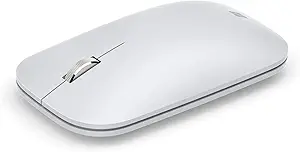
Conversely, Microsoft approaches mouse design through the lens of timeless desktop computing, business ergonomics, and executive minimalism. With legendary lineages like the IntelliMouse and modern additions to the Surface and Sculpt families, Microsoft prioritizes anatomical support, all-day comfort, and workplace aesthetics. Their engineering strength lies in structural rigidity and organic shapes, often incorporating contoured thumb rests, natural wrist angles, and soft-touch rubberized side grips to mitigate repetitive strain injuries during extended productivity sessions. Instead of ostentatious gamer accents, Microsoft favors clean lines, monochromatic palettes, and understated materials, such as the lightweight aluminum scroll wheels found on the Modern Mobile and Surface mice. Additionally, Microsoft excels in functional ingenuity with portable travel designs, as demonstrated by the Arc Mouse, which snaps flat for packing and curves into an ergonomic arc to power on.
The practical trade-offs between the two brands ultimately reflect the divide between speed and comfort. SteelSeries offers superior structural optimizations for rapid hand movements, highly tactile microswitches engineered for millions of rapid-fire clicks, and deep aesthetic personalization through the SteelSeries GG software suite. However, their aggressive contours and ultralight, hollowed-out frames can feel flimsy or excessively stylized for traditional office environments. Microsoft provides unmatched ergonomic refinement for general productivity and a sophisticated hardware presence that seamlessly integrates into professional workflows, but their devices are heavier, use lower-polling-rate sensors, and lack the high-performance buttons and low-friction glide necessary for fast-paced gaming. Choosing between them is a matter of prioritizing mechanical precision and twitch-reflex ergonomics (SteelSeries) versus musculoskeletal support and understated productivity design (Microsoft).