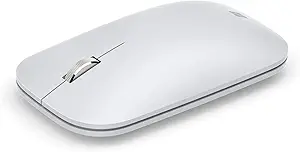
Razer vs Microsoft: Overview
Comparing Razer and Microsoft helps you determine which brand is best suited for your needs in Mouse. Both brands offer strong choices depending on your budget and key feature requirements.
Key Features & Comparison
Evaluate factors such as build quality, warranty, customer satisfaction, and total value before making your final purchase choice between Razer and Microsoft.
Features
Razer's feature set is one of the most comprehensive and technologically aggressive in the consumer hardware industry. Built around the proprietary Razer Synapse software suite, their mice provide exhaustive control over sensitivity stages, surface calibration, RGB illumination profiles, and complex macro scripting. Razer frequently leads the sector by integrating groundbreaking hardware elements, including third-generation Optical Mouse Switches rated for up to 90 million clicks, HyperPolling technology offering wireless polling rates up to 8000 Hz, and multi-functional tilt wheels. Many models also offer specialized physical configurations, such as hot-swappable side plates on the Naga series or integrated focus-shifting DPI clutches for precision aim control.
Microsoft takes a more restrained, productivity-centric approach to features, targeting friction points found in workplace multitasking rather than gaming mechanics. Premium entries like the Surface Precision Mouse excel in multi-device workflows, allowing users to pair up to three separate PCs via Bluetooth and transition between them fluidly with smart switching technology. Hardware features prioritize utility: magnetic detent scroll wheels that transition smoothly between stepped and hyper-fast scrolling, dedicated productivity buttons for task-view access, and extended battery architectures that yield months of operational runtime on a single charge or via standard AA batteries. While lacking the intricate micro-adjustments of Razer, Microsoft’s feature suite excels in immediate, driverless utility for daily office tasks.
Performance
In pure performance metrics, Razer dominates nearly every benchmark that evaluates latency, tracking fidelity, and mechanical responsiveness. Powered by the Focus Pro 30K and 35K optical sensors, Razer mice achieve virtually flawless tracking across virtually any surface—including transparent glass—with 99.8% resolution accuracy. The pairing of low-debounce optical micro-switches and high-speed wireless protocols like Razer HyperSpeed ensures input latency measured in fractions of a millisecond. Whether handling high-velocity flick shots in competitive gaming or executing micro-edits in complex vector software, Razer mice offer instantaneous, jitter-free execution that remains the gold standard for high-speed tracking.
Microsoft mice are not calibrated for twitch reflexes or ultra-high tracking speeds, but they deliver rock-solid, predictable performance within their design parameters. Utilizing proprietary BlueTrack technology in many of their standard units, Microsoft peripherals track effectively on challenging surfaces like granite, carpet, and rough wood where standard optical mice often fail. Sensor polling rates are generally capped at standard office levels (typically 125 Hz to 250 Hz), which is wholly sufficient for desktop navigation, spreadsheet manipulation, and general browsing. The mechanical switches provide tactile, quiet feedback suitable for quiet conference rooms rather than the crisp, loud actuation of competitive gaming mice, trading raw speed for dependable, unobtrusive operation.
Design
Razer’s industrial design language is distinctly sharp, modern, and performance-oriented, balancing aggressive contours with functional, data-driven ergonomics. The company invests heavily in reducing overall chassis mass, producing featherlight shells—frequently under 60 grams in models like the Viper and DeathAdder lines—without resorting to structural compromises. Materials typically consist of finely textured PBT or lightweight ABS plastic that resists sweat and oils during intense sessions, complemented by premium 100% PTFE mouse feet that glide smoothly across fabric or hard surfaces. While earlier Razer designs leaned heavily into flamboyant gamer tropes, contemporary models offer clean, sophisticated silhouettes with subtly integrated lighting accents.
Microsoft’s design identity leans firmly toward minimalist, Scandinavian-inspired elegance and rigorous biomechanical ergonomics. Devices within the Microsoft Surface and Ergonomic lineups focus primarily on wrist health, natural forearm alignment, and fatigue reduction, frequently utilizing vertical or semi-vertical chassis forms, contoured thumb rests, and soft-touch materials that cradle the hand naturally during eight-hour workdays. The visual styling is deliberately subtle and office-appropriate, using neutral platinum, matte black, and soft gray finishes. While heavier and bulkier than Razer's featherweight models, Microsoft’s substantial physical presence provides a reassuring, grounded feel favored by professionals who prioritize structural comfort over rapid-glide mobility.