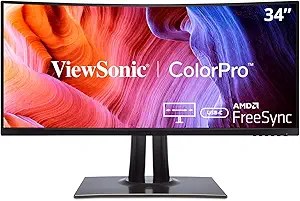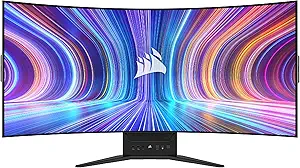






ViewSonic vs Corsair: Overview & Brand Philosophy
In the expansive world of display technology, ViewSonic and Corsair represent two fundamentally different approaches to product development, target demographics, and market heritage. ViewSonic is an established display veteran with roots stretching back to the late 1980s. The California-based company has built its reputation on broad market accessibility, offering everything from entry-level office monitors to high-end, color-accurate displays for creative professionals, alongside their dedicated "ELITE" and "OMNI" gaming lineups. ViewSonic's brand philosophy is rooted in versatility, visual ergonomics, and maximizing price-to-performance ratios across various industries and consumer tiers.
Conversely, Corsair is a dominant force in PC gaming hardware and enthusiast peripherals that entered the display arena much more recently with its "Xeneon" family of monitors. Corsair's philosophy is explicitly enthusiast-driven, prioritizing high-end desktop integration, bleeding-edge panel technology, and premium industrial design. Rather than flooding the market with budget-friendly office models, Corsair targets gamers, streamers, and power users who are already invested in high-performance hardware and seek seamless aesthetic and ecosystem cohesion across their setups.
Consequently, comparing ViewSonic and Corsair is not simply a matter of measuring refresh rates or pixel densities; it is an evaluation of traditional display breadth versus modern enthusiast specialization. While ViewSonic focuses on providing comprehensive display solutions for every possible desk and budget, Corsair concentrates on delivering flagship-tier experiences that push the boundaries of form factor innovation, such as bendable OLEDs and native Elgato streaming integration.
Key Differences & Technological Comparison
The technological philosophies of ViewSonic and Corsair diverge sharply across several critical areas, including panel selection, industrial design, ecosystem features, and display control mechanics:
- Panel Selection and Display Technology: ViewSonic operates across the entire panel spectrum, deploying IPS, VA, and TN panels across standard resolutions (1080p to 4K), while reserving cutting-edge Mini-LED and OLED implementations for its top-tier gaming and professional ColorPro lines. Corsair bypassed the budget segment entirely, focusing strictly on high-performance Fast IPS and cutting-edge QD-OLED / W-OLED panels sourced from tier-one manufacturers like LG Display and Samsung Display, frequently offering ultra-wide and bendable display variants.
- Industrial Design and Ergonomics: Corsair displays are characterized by heavy, cast-aluminum stands, ultra-slim profiles, and dedicated cable management channels. Innovations like the Xeneon Flex (which allows users to manually curve the screen from flat to 800R) showcase Corsair's focus on structural ingenuity. ViewSonic offers practical, functional ergonomics across its catalog, featuring full height, tilt, swivel, and pivot adjustments, but its chassis designs tend toward traditional matte plastics and conservative aesthetics, with aggressive RGB accents largely restricted to the ELITE series.
- Creator and Streaming Ecosystems: Corsair leverages its ownership of Elgato by building native streaming features directly into its monitors. Several Xeneon models feature integrated 1/4-inch multi-mount threads on the stand for cameras, lighting, or microphones, as well as native software controls via Elgato Stream Deck. ViewSonic caters to a different professional vertical: digital artists, photographers, and video editors. Its ColorPro line features hardware calibration tools, factory color certification (Pantone, Delta E < 2), and specialized accessories such as shading hoods and calibration pucks.
- On-Screen Display (OSD) and Software Control: Corsair provides modern OSD navigation through dedicated joysticks and integrates deeply with its unified iCUE desktop software, allowing users to tweak display profiles via Windows without touching physical buttons. ViewSonic utilizes standard joystick or tactile-button OSD controls, complemented by their vDisplay Manager software, which focuses heavily on split-screen productivity and color profiling rather than peripheral synchronization.
Pros & Cons Comparison
ViewSonic: Pros
- Extensive product catalog covering every price point, from under $100 up to premium tiers.
- ColorPro lineup offers industry-leading, factory-calibrated color accuracy for creative professionals.
- Strong value proposition with high-refresh-rate gaming monitors available at budget-friendly prices.
- Comprehensive ergonomic adjustability across both productivity and gaming displays.
ViewSonic: Cons
- Lower-tier models often feature utilitarian plastic builds and basic aesthetics.
- On-Screen Display software and user interface can feel dated compared to newer competitors.
- Enthusiast-tier innovations (such as OLED or ultra-wide formats) are slower to roll out across the brand.
Corsair: Pros
- Premium build quality featuring robust aluminum stands and modern industrial styling.
- Groundbreaking display formats, including bendable OLED panels and high-refresh ultrawides.
- Direct integration with Corsair iCUE and Elgato ecosystem accessories, ideal for streamers.
- Comprehensive 3-year warranty that includes zero-dead-pixel and burn-in protection on OLEDs.
Corsair: Cons
- High barrier to entry with virtually no budget or mainstream office options.
- Large, deep desktop stands require significant desk space or third-party monitor arms.
- Limited appeal for traditional office workers or enterprise deployments.
Performance, Durability & Value Analysis
In terms of raw display performance, Corsair achieves exceptional consistency because it exclusively competes in the premium bracket. Its Fast IPS and OLED panels deliver benchmark-level pixel response times, virtually eliminating ghosting and motion blur in fast-paced competitive games. Build durability is another area where Corsair excels; the heavy-gauge metal stands and chassis hardware reflect high manufacturing standards, and Corsair backs its OLED offerings with a comprehensive three-year burn-in and zero-dead-pixel warranty. However, this level of performance comes at an enthusiast price point, meaning buyers pay a distinct premium for aesthetics, chassis materials, and ecosystem integration.
ViewSonic demonstrates a broader spectrum of performance and value. Its budget OMNI gaming displays offer accessible 144Hz to 240Hz refresh rates with solid motion handling, though some lower-cost VA panels suffer from minor black-smearing. In contrast, its specialized ColorPro displays compete directly with high-end brands like BenQ and ASUS ProArt, providing exceptional color uniformity and longevity for studio workloads. From a pure economic standpoint, ViewSonic offers far superior value per dollar for the average consumer, offering robust, durable workhorses that deliver the exact specifications needed without inflating costs through luxury materials.
Final Verdict: Which Brand Should You Choose?
Choosing between ViewSonic and Corsair comes down to your budget tier, desktop requirements, and primary use cases:
Choose ViewSonic if:
- You are looking for the best price-to-performance ratio for 1080p, 1440p, or entry-level 4K gaming without paying a premium for luxury materials.
- You are a creative professional, photographer, or video editor requiring certified out-of-the-box color accuracy and hardware calibration tools (ColorPro series).
- You need reliable, ergonomically flexible monitors for general office productivity, enterprise deployment, or multi-display home workspaces.
Choose Corsair if:
- You want an enthusiast-tier gaming display featuring top-of-the-line Fast IPS or OLED panel technology with minimal motion blur.
- You are a content creator or streamer who benefits from Elgato mounting integration and software synchronization through Corsair iCUE.
- You want premium industrial aesthetics, durable metal construction, or innovative form factors like ultra-wide bendable panels, and are willing to pay the corresponding price.
Affordability
When evaluating affordability, ViewSonic fundamentally outclasses Corsair in market breadth, entry-level accessibility, and overall cost-to-performance ratio. ViewSonic operates as a high-volume display specialist with a catalog spanning sub-$100 productivity panels to aggressively priced esports monitors under their Omni series. Their competitive pricing is driven by mature global supply chains and panel sourcing partnerships, which allow them to deliver essential features—such as IPS panels with 144Hz-plus refresh rates and AMD FreeSync—at rock-bottom price points. However, this accessibility introduces noticeable engineering compromises; budget ViewSonic units often rely on lightweight, squeaky plastic housings, basic tilt-only stands, lower peak nit brightness, and functional yet austere On-Screen Display (OSD) controls. For general consumers, students, and budget-conscious gamers, these cosmetic and mechanical trade-offs are minor compared to the sheer value ViewSonic provides.
Conversely, Corsair largely bypasses the traditional budget segment, positioning its Xeneon monitor lineup exclusively within the premium enthusiast tier where affordability is measured by high-end feature density rather than low sticker shock. A base Corsair monitor often commands a premium that eclipses several comparable ViewSonic models, but that expenditure is reflected in the bill of materials. Corsair monitors feature high-grade aluminum die-cast ergonomic stands, integrated cable routing channels, Elgato Stream Deck software ecosystem synergy, and cutting-edge panel technologies like Quantum Dot Fast-IPS and bendable OLEDs. The brand does not attempt to engineer a sub-$300 display; instead, their value proposition hinges on longevity, premium tactile quality, zero-dead-pixel guarantees, and niche multi-purpose flexibility for high-end streamers and hybrid desk setups.
Ultimately, the affordability comparison highlights two diametrically opposed hardware philosophies. ViewSonic represents true democratic affordability, winning easily on pure cost efficiency and providing an accessible gateway for standard office and 1080p/1440p gaming configurations without requiring consumer sacrifice of core visual performance. Corsair, meanwhile, offers "relative affordability" only in the premium prosumer domain, undercutting legacy ultra-enthusiast boutique brands while offering luxury aesthetics and proprietary peripheral integration. For buyers seeking the maximum technical fidelity per dollar spent, ViewSonic remains the undisputed champion of affordability, whereas Corsair should only be considered by buyers who already possess the budget for enthusiast-grade hardware and prioritize industrial design over strict economic savings.
Customer Support & Warranty
When evaluating warranty coverage and post-purchase support, ViewSonic and Corsair represent fundamentally different engineering and market philosophies. ViewSonic operates as a traditional, high-volume display veteran, offering a robust standard 3-year limited warranty across the majority of its portfolio, from budget-friendly workplace displays to high-end ColorPro and ELITE gaming monitors. Their warranty framework includes a dedicated LCD Pixel Performance Guarantee, which explicitly outlines acceptable dead or stuck pixel thresholds, providing clarity for professional and enterprise clients. Furthermore, ViewSonic delivers enterprise-grade post-sales support through broad B2B channels, offering advanced exchange options on select commercial lines to minimize business downtime. The technical trade-off lies in consumer agility: ViewSonic’s customer service infrastructure relies on traditional ticketing, distributor networks, and regional service hubs, which can occasionally result in bureaucratic delays and slower RMA turnaround times for mainstream end-users.
Conversely, Corsair brings an enthusiast-first, gamer-centric approach tailored to cutting-edge display technology, such as their XENEON OLED and high-refresh IPS panels. Corsair matches the industry-standard 3-year warranty duration, but their technical strength lies in aggressive consumer-protection policies directly addressing the vulnerabilities of next-generation hardware. Most notably, Corsair provides a zero dead pixel guarantee across all panel tiers and an explicit 3-year burn-in and image retention warranty on their OLED models—an essential safeguard given the thermal and phosphor degradation concerns inherent to organic light-emitting displays. Corsair's customer service pipeline is deeply integrated into a centralized consumer ecosystem, featuring active community management, responsive web-based support ticketing, and streamlined RMA logistics that often feel more modern and user-accessible than legacy enterprise portals.
The practical trade-off between the two brands hinges on the intended use case and panel technology. For businesses, creators, and budget-conscious buyers seeking reliable, standardized coverage over a massive catalog of traditional LED-backlit monitors, ViewSonic’s long-standing regional infrastructure and commercial advance exchange programs provide structural dependability. However, for enthusiasts investing in premium gaming hardware, Corsair decisively outperforms ViewSonic in consumer peace of mind. By explicitly covering OLED burn-in and enforcing a strict zero-tolerance dead pixel policy, Corsair’s warranty engineering provides superior financial and functional protection against the technical degradation risks of modern performance displays.
Picture Quality
When evaluating picture quality, ViewSonic and Corsair represent fundamentally different engineering philosophies and target demographics. ViewSonic leverages decades of display manufacturing heritage, offering an expansive lineup that caters to both casual office users and demanding digital creatives. The crown jewel of ViewSonic's visual fidelity is its professional-tier ColorPro series, which prioritizes strict color calibration, wide color gamuts (covering 100% sRGB and vast swathes of Adobe RGB and DCI-P3), and ultra-low Delta E metrics right out of the box. Even across their mainstream IPS and VA panels, ViewSonic emphasizes uniform backlighting, natural color science, and robust gamma controls. However, their budget-oriented gaming monitors often rely on standard edge-lit local dimming solutions, which can struggle with elevated black levels and noticeable light bleed in dark environments, resulting in a somewhat mediocre HDR experience for entry-to-mid-range displays.
Conversely, Corsair entered the display market with a laser focus on premium, enthusiast-grade gaming experiences, heavily investing in cutting-edge OLED and fast-IPS panel technologies. Models like the Xeneon series and Xeneon Flex push picture quality forward through state-of-the-art self-emissive OLED panels engineered by LG Display, delivering infinite contrast ratios, true inky blacks, and virtually no blooming around bright highlights. Corsair’s panels shine brightest in high dynamic range (HDR) reproduction, dynamic tone mapping, and microsecond-level response times, ensuring moving images retain pristine clarity without the ghosting or inverse smearing that can subtly degrade perceived visual quality. The trade-off for Corsair's aggressive pursuit of high-impact visuals is panel brightness variability caused by aggressive Automatic Brightness Limiters (ABL) on their OLEDs, alongside the inherent, albeit minimized, risk of burn-in when displaying static productivity interfaces over long periods.
Ultimately, the choice between ViewSonic and Corsair for picture quality depends on the user's primary application. ViewSonic is the superior choice for color-critical workflows, static image editing, and scenarios demanding precise, mathematically accurate color spaces without the risk of dynamic brightness shifts. Corsair, on the other hand, triumphs in dynamic contrast, immersive HDR gaming, and fluid motion fidelity, thanks to its high-end panel sourcing and gaming-centric image processing. While ViewSonic provides dependable, uniform, and calibrated visual accuracy across a broad price spectrum, Corsair delivers a superior visual punch and unmatched contrast performance for high-end gaming and entertainment enthusiasts.
Build Quality & Durability
When assessing engineering standards and structural durability in the monitor market, ViewSonic and Corsair represent fundamentally different philosophies that reflect their target demographics. ViewSonic leans heavily on its extensive heritage in commercial, enterprise, and educational display manufacturing. Across its high-end ColorPro, gaming-centric Omni, and enterprise VG lines, ViewSonic prioritizes functional, utilitarian robustness. Their enclosures typically utilize high-density, matte-textured ABS plastics that resist scuffs, fingerprints, and long-term UV degradation. Internal chassis framing is dependable and thermally optimized, ensuring components remain cool over 24/7 continuous operational cycles. Ergonomic stands on mid-to-high-tier ViewSonic units are industrial in nature—featuring reinforced steel internal risers with smooth mechanical counterbalances that provide rock-solid stability, though budget models in their lineup do compromise with lightweight, plastic-heavy pedestals prone to minor desk wobbles.
Conversely, Corsair brings an enthusiast, luxury-tier hardware ethos to display construction through its flagship Xeneon portfolio. Designed specifically for competitive gamers, power creators, and luxury PC setups, Corsair monitors emphasize high-grade structural materials over utilitarian plastics. They frequently incorporate die-cast aluminum chassis elements, heavy cast-aluminum bases, and sleek, minimalist profiles that exude high-end industrial design. Corsair sets a very high mechanical benchmark with integrated cable management channels, fluid-damping pivot joints, and custom-engineered C-clamp desk mounts that dramatically reduce desk footprint while eliminating sway. Furthermore, Corsair addresses panel durability directly: their high-profile OLED displays feature robust active heatsinks and microprocessor-driven pixel protection routines to mitigate organic degradation and burn-in, backed by an aggressive, comprehensive zero-dead-pixel and burn-in warranty that outclasses many traditional vendors.
From an analytical standpoint, the practical trade-offs between the two brands center on premium longevity versus functional value across diverse price tiers. Corsair delivers a noticeably more uniform, rigid, and premium unboxing experience, but their product portfolio is narrowly focused, meaning buyers must pay a significant premium to access their high-durability, metal-accented engineering. ViewSonic offers far greater market flexibility with proven component reliability that scales gracefully from sub-$200 productivity monitors to multi-thousand-dollar professional mastering displays. While ViewSonic monitors may look and feel more modest due to an exterior reliance on utilitarian plastics, their internal soldering, power supplies, and thermal endurance are rigorously engineered for sustained longevity. Ultimately, Corsair wins on sheer material quality and cutting-edge mechanical execution for discerning enthusiasts, whereas ViewSonic offers time-tested, dependable build metrics that maximize durability-per-dollar for commercial and everyday users.