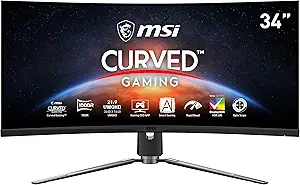
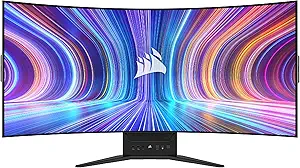
MSI vs Corsair: Overview & Brand Philosophy
The desktop monitor landscape has evolved from a race over raw refresh rates into a sophisticated battleground encompassing advanced panel technologies, color precision, and physical ergonomics. Micro-Star International (MSI) has transitioned from its roots as a core PC component manufacturer into one of the most prolific display vendors in the world. MSI approaches the monitor market with a philosophy rooted in broad accessibility and rapid technological adoption. By maintaining aggressive manufacturing pipelines across budget, mid-range, and flagship tiers—spanning their MAG, MPG, and MEG series—MSI aims to deliver bleeding-edge features like Quantum Dot layers and Rapid IPS panels to every segment of the enthusiast market.
Corsair, by contrast, entered the monitor arena with a distinctly curated, enthusiast-first strategy under its "Xeneon" banner. Rather than attempting to flood the market with dozens of SKUs covering every conceivable price point, Corsair focuses on premium, purpose-built displays designed to integrate seamlessly into high-end gaming setups and creator workflows. Corsair’s design philosophy centers on industrial build quality, premium material choices, ecosystem cohesion through its iCUE software suite, and innovative form factors—exemplified by flexible OLED technology developed in partnership with panel manufacturers like LG Display. Where MSI plays the volume and value game, Corsair positions itself as a boutique alternative focusing on luxury execution.
Key Differences & Technological Comparison
While both brands source their raw underlying panels from tier-one manufacturers like Samsung Display (QD-OLED) and LG Display (WOLED/IPS), their implementation, thermal management, firmware, and chassis engineering diverge significantly.
Panel Portfolio & Market Segmentation: MSI holds a distinct advantage in portfolio diversity. Consumers looking for affordable 1080p esports displays, ultra-wide 1000R curved VA productivity monitors, or third-generation QD-OLEDs will find targeted solutions in MSI’s catalog. Corsair maintains a tightly focused portfolio strictly concentrated on high-end 1440p and 4K panels, alongside niche showcase displays like the 45-inch bendable Xeneon Flex. Users shopping on a sub-$400 budget are inherently catered to by MSI, whereas Corsair generally ignores the entry-level bracket.
Cooling Solutions & Burn-In Mitigation: With the migration toward OLED monitors, thermal dissipation has become a primary metric of longevity. MSI utilizes custom graphene films paired with fanless heatsinks across its modern QD-OLED line, backed by the proprietary "OLED Care 2.0" firmware suite. This suite includes pixel shifting, multi-logo detection, and static taskbar dimming. Corsair counters with engineered aluminum heatsinks in its Xeneon displays, intentionally avoiding active cooling fans to maintain silent operation while integrating aggressive thermal throttling failsafes to guarantee panel longevity without inducing thermal noise.
Ergonomics, Materials & Cable Management: Corsair heavily out-engineers MSI in terms of structural physical design. Corsair’s flagship stands feature heavy-duty cast aluminum construction, integrated RapidRoute cable channels, and standard 1/4-inch multi-mount threads on the top for mounting cameras, lights, or microphones. MSI stands are generally functional, utilizing plastic-clad steel assemblies that perform adequately but lack the premium desk-clearing footprint and specialized utility of Corsair's industrial designs.
Software & Interface Integration: MSI relies on its Gaming Intelligence app, which allows users to tweak monitor settings via a Windows GUI and create profile shortcuts mapped to a physical macro key on the chassis. Corsair incorporates display controls directly into the broader iCUE ecosystem, allowing centralized control over profiles, hotkeys, and synchronized lighting with other Corsair peripherals, making it substantially more streamlined for users already invested in that ecosystem.
Pros & Cons Comparison
MSI Monitors
- Pros:
- Extensive catalog covering entry-level 1080p to flagship 4K QD-OLED displays.
- Aggressive, highly competitive pricing across all price-to-performance brackets.
- Comprehensive OLED Care firmware tools with robust customizable burn-in safeguards.
- Early adopter of the latest panel generations (e.g., 360Hz QD-OLEDs).
- Cons:
- Lower-tier models often rely on cheap, creaky plastic chassis materials.
- OSD software (Gaming Intelligence) can feel disjointed compared to unified suites.
- Factory calibration consistency varies notably between budget and premium tiers.
Corsair Monitors
- Pros:
- Exceptional industrial build quality with heavy-duty metal stands and integrated mounting points.
- Deep integration into the Corsair iCUE software ecosystem for seamless desktop management.
- Pioneering form factors, such as the bendable Xeneon Flex OLED.
- Generous zero-dead-pixel policies and standard 3-year burn-in warranties across the board.
- Cons:
- High barrier to entry with virtually no budget-friendly or mid-tier options.
- Limited total selection of SKUs compared to traditional display powerhouses.
- Oversized stand footprints consume significant desk depth on certain models.
Performance, Durability & Value Analysis
From a pure performance standpoint, both brands extract the maximum potential from their silicon and panels, but they hit different value curves. In competitive motion clarity and input latency testing, MSI’s high-refresh OLEDs and Rapid IPS displays match or occasionally exceed Corsair due to aggressive factory overdrive tuning. MSI gives the user granular control over overdrive modes, allowing enthusiasts to dial out inverse ghosting manually. Corsair adopts a more conservative, "set-it-and-forget-it" tuning philosophy, ensuring zero overshoot at the expense of a fraction of a millisecond of raw pixel transition speed. Regarding color accuracy, Corsair delivers slightly tighter out-of-the-box Delta E figures on its creator-centric Xeneon monitors, whereas MSI’s factory calibrations can lean overly saturated in standard gaming modes unless clamped to sRGB via the OSD.
When assessing long-term durability and value retention, Corsair claims the upper tier of material longevity. Their chassis designs resist flexing, their internal board component layout allows for passive thermal headroom, and their zero-dead-pixel coverage is among the most consumer-friendly in the display market. However, from a strict capital value proposition, MSI wins decisively. MSI consistently prices comparable panel specifications between $50 to $200 below Corsair’s equivalents. For buyers who utilize third-party VESA monitor arms and do not need Corsair's specialized desk ecosystem or aluminum mounting posts, MSI provides functionally identical or superior visual performance per dollar spent.
Final Verdict: Which Brand Should You Choose?
Choosing between MSI and Corsair comes down to the balance between budget scope and holistic hardware integration.
Choose MSI if: You are seeking maximum performance per dollar across virtually any budget. Whether you have $200 for a competitive 1080p esports monitor or $800 for a state-of-the-art 360Hz QD-OLED, MSI gives you cutting-edge panel technology, comprehensive OLED burn-in mitigation software, and stellar display engineering without charging an aesthetic or boutique premium.
Choose Corsair if: You prioritize pristine desk aesthetics, premium metal materials, and ecosystem integration over pure price-to-spec optimization. If you already run Corsair iCUE peripherals, stream using Elgato mounts, demand a rock-solid aluminum stand with integrated cable routing, or want unique display technology like a manually bendable ultrawide OLED, Corsair's Xeneon lineup represents an elite, zero-compromise investment.
Affordability
When evaluating affordability in the monitor space, MSI emerges as a significantly more versatile, cost-conscious champion compared to Corsair. MSI’s product philosophy relies on deep market penetration across all tiers, offering budget-friendly displays through its PRO and Optix/MAG gaming lines that start at well under $200. Corsair, by contrast, avoids the entry-level segment entirely, positioning itself as an enthusiast-first luxury brand. Corsair’s XENEON line targets mid-to-high-end consumers, meaning their entry point often exceeds $400, climbing dramatically when factoring in their flagship high-refresh-rate IPS and OLED offerings. For consumers operating on a strict budget, MSI holds a decisive advantage, delivering high refresh rates (144Hz–180Hz) and Rapid IPS or high-contrast VA panels at price-to-performance metrics that Corsair simply does not contest.
The trade-offs inherent to each brand’s approach become evident in their engineering quality, feature sets, and bill of materials. MSI achieves its competitive price tags by utilizing standard, predominantly plastic chassis, basic internal power supplies, and, on their lower-tier units, more utilitarian tilt-only stands that sacrifice ergonomic flexibility unless consumers utilize VESA mounts. However, MSI does not skimp on panel performance, frequently providing 1ms response times, wide color gamuts, and Adaptive-Sync support even on sub-$300 displays. Corsair justifies its steep price barrier through over-engineered industrial design; their monitors typically feature cast-aluminum desk stands, integrated Elgato Multi-Mount threading, extensive cable management routing, and robust multi-port I/O hubs featuring USB-C with hefty power delivery. The affordability equation for Corsair rests not on a low initial cost, but on an all-in-one ecosystem value proposition for streamers and creators who would otherwise purchase separate mounting and connectivity hardware.
Ultimately, determining the winner in affordability depends on whether a buyer prioritizes the barrier of entry or the concentration of premium features per dollar. MSI undeniably offers superior affordability across the broader consumer spectrum, allowing budget-restricted gamers and multi-monitor office setups to acquire modern display technology without financial strain. Even in the high-end enthusiast arena, MSI’s QD-OLED monitors are consistently priced aggressively against Corsair’s comparable OLED and bendable-panel (XENEON FLEX) solutions, which carry a heavy premium for their novel engineering. Corsair successfully delivers a lavish, highly durable out-of-box experience, but MSI’s lean manufacturing, tiered market segmentation, and aggressive pricing structure make it the undisputed leader for overall affordability and value-per-dollar.
Customer Support & Warranty
When evaluating the post-purchase experience and long-term reliability for gaming and productivity monitors, Corsair holds a decisive operational edge over MSI, particularly concerning warranty clarity and protective coverage. Corsair generally offers an industry-leading three-year warranty across its monitor portfolio, famously pioneering comprehensive burn-in and dead-pixel protections with the launch of its Xeneon OLED line. This zero-dead-pixel guarantee and explicit burn-in mitigation reassure consumers investing in high-end, degradable display tech. In contrast, MSI typically provides a standard three-year limited warranty for most regions, and while they have recently matched the industry shift by introducing a 3-year OLED burn-in warranty on their newer QD-OLED series (under the MSI OLED Care banner), their legacy policies on dead and stuck pixels remain far more restrictive. MSI utilizes an ISO-standard tiered approach that often requires a minimum cluster of defective sub-pixels before authorizing an RMA, which can leave early-adopter enthusiasts stuck with visually flawed panels.
The practical trade-offs become even more apparent when navigating customer service infrastructure and RMA logistics. Corsair benefits from a streamlined, centralized global support portal, highly accessible ticketing workflows, and an active web community staffed directly by technical representatives. Furthermore, Corsair frequently offers advanced RMA options—shipping out a replacement unit with a temporary credit hold before receiving the defective product—drastically minimizing downtime for competitive gamers and remote professionals. MSI's support architecture, conversely, can feel decentralized and antiquated. Users often report a convoluted web registration process that requires hunting down serial numbers and CHK codes on the hardware itself, and the repair turnaround frequently involves shipping the monitor at the consumer’s expense to a regional hub, resulting in multi-week resolution cycles and inconsistent communication regarding repair status.
Ultimately, both manufacturers design their current display firmware and companion software (such as MSI Gaming Intelligence and Corsair iCUE) to handle critical preventative maintenance like pixel refresh cycles and thermal management, but Corsair executes superior consumer-facing risk absorption. While MSI displays deliver exceptional value-to-performance metrics on paper, buyers seeking a frictionless safety net will find Corsair's responsive RMA channels, rapid cross-shipping options, and unambiguous zero-defect pixel policies significantly more dependable over a multi-year ownership lifecycle.
Picture Quality
When evaluating picture quality between MSI and Corsair, both manufacturers leverage high-end panel technologies—primarily Fast IPS and Quantum Dot OLED (QD-OLED)—yet they diverge significantly in color calibration, panel coating choices, and sub-pixel management. MSI has established a strong reputation for aggressive out-of-the-box color saturation and wide gamut coverage, particularly through its extensive use of Quantum Dot layers on both traditional IPS panels and their modern MEG and MAG QD-OLED lineups. MSI displays routinely exceed 98% DCI-P3 coverage with exceptionally punchy highlights, making them deeply immersive for cinematic gaming and SDR content. In contrast, Corsair, primarily known for its Xeneon and Xeneon Flex flagships, utilizes high-grade LG WOLED and AU Optronics Fast IPS panels. Corsair generally emphasizes a more natural, creator-friendly out-of-the-box calibration with tighter Delta E tolerances. While MSI pushes visual vibrance and peak perceived brightness, Corsair prioritizes uniform color accuracy across the entire display area, resulting in a cleaner image for mixed productivity and color-critical workflows.
The practical trade-offs become starkest when comparing black levels, contrast engineering, and panel finishes. MSI’s QD-OLED panels offer virtually infinite contrast ratios with true zero-nit blacks in dark rooms; however, their lack of a polarizing layer means that elevated ambient lighting can cause these blacks to shift toward a purplish or hazy tint. Furthermore, MSI’s sub-pixel arrangements on early-generation QD-OLEDs can produce minor color fringing along high-contrast edges and fine text. Corsair counters this primarily through its mastery of panel finishes and structural anti-glare coatings. Their matte and low-haze treatments handle well-lit environments substantially better than glossy MSI equivalents, preserving apparent black depth and preventing ambient reflections from washing out the screen. Additionally, Corsair’s implementation of WOLED technology in displays like the 27QHD240 utilizes a white sub-pixel that, while slightly diluting absolute color brightness at maximum HDR luminance, yields superior localized peak highlights in HDR without the ambient light susceptibility of QD-OLED.
Ultimately, the engineering approaches of both brands cater to distinct visual priorities. MSI excels for the enthusiast gamer who consumes media primarily in light-controlled or dim environments, where the visual fireworks of hyper-saturated Quantum Dot colors, glossy panel clarity, and pure OLED contrast can be fully appreciated. Corsair offers the more technically disciplined and versatile visual profile, prioritizing anti-glare versatility, reliable grayscale uniformity, and broad ambient light performance. While MSI takes the edge for sheer HDR impact, dynamic range, and cinematic saturation, Corsair delivers the superior compromise between accurate SDR color rendering, daytime viewing comfort, and text fidelity.
Build Quality & Durability
When evaluating build quality and engineering integrity in the gaming monitor space, Corsair and MSI present fundamentally different manufacturing philosophies. Corsair treats its monitor lineup—specifically the Xeneon series—as an extension of its premium PC hardware ecosystem, emphasizing heavy-duty materials, industrial minimalism, and robust mechanical stability. Corsair monitors are characterized by cast-aluminum stands, thick matte-textured chassis plastics that resist flex, and rigid metal sub-frames. The brand's engineering prowess is particularly evident in innovations like the bendable Xeneon Flex, where Corsair integrated complex mechanical gears and multi-axis hinges without compromising structural endurance. Furthermore, Corsair leverages its cooling expertise by incorporating substantial passive heat dissipation architectures, which are critical for panel longevity—especially on their OLED offerings—by mitigating pixel degradation and preventing thermal throttling.
MSI, conversely, relies on a high-output, consumer-focused design language that balances structural reliability with aggressive gaming aesthetics. While MSI's budget-to-midrange Optix and MAG lines incorporate a higher ratio of lightweight plastics, their flagship MEG and MPG series showcase dramatic improvements in material density, sporting reinforced metal core stands and brushed-metal accents. MSI’s technical strength lies in internal component longevity and panel protection; the brand incorporates custom heatsinks and graphene films directly behind the panels (particularly on their QD-OLED monitors) to actively siphon heat away from sensitive display components. While MSI displays feature snappy ergonomic articulation with smooth tilt, swivel, and height adjustments, their housing can exhibit slight plastic creak when manipulated compared to the monolithic rigidity found on Corsair displays.
The practical trade-offs between the two brands largely come down to mechanical refinement versus cost-effective durability. Corsair offers an undeniably more premium tactile experience; their desktop footprints feature exceptional weighted stability, integrated cable-management channels that endure heavy reconfiguration, and extensive warranties (often including zero dead-pixel policies and multi-year burn-in coverage) that reinforce long-term consumer confidence. MSI trades away some of that ultra-premium external heft to offer lighter, highly maneuverable monitors with cutting-edge internal thermals at more accessible price points across a vastly broader product catalog. For consumers prioritizing dense, tank-like chassis construction and industrial-grade stands, Corsair holds a slight edge, whereas MSI remains the superior choice for buyers seeking durable, thermally efficient display engineering without paying a boutique enclosure premium.
Compare current retail pricing, active promotions, and verified stock availability directly from authorized stores:
Compare current retail pricing, active promotions, and verified stock availability directly from authorized stores: