MSI vs BenQ: Overview
Comparing MSI and BenQ helps you determine which brand is best suited for your needs in Monitors. Both brands offer strong choices depending on your budget and key feature requirements.
Key Features & Comparison
Evaluate factors such as build quality, warranty, customer satisfaction, and total value before making your final purchase choice between MSI and BenQ.
Affordability
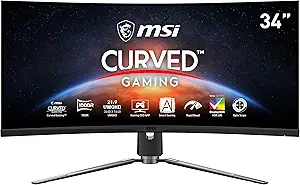
When evaluating affordability, MSI consistently positions itself as an aggressive value leader, particularly within the entry-level to mid-range gaming sector. By heavily utilizing cost-effective Fast IPS and VA panels sourced from major display manufacturers, MSI delivers high-refresh-rate gaming monitors (ranging from 144Hz to 240Hz) at price points that significantly undercut traditional legacy brands. Models in the Optix and MAG series often bundle premium gaming features, such as wide color gamut coverage and adaptive sync, into accessible packages. While buyers occasionally trade off advanced chassis ergonomics or cutting-edge calibration features at the lowest tiers, MSI ensures the core display performance per dollar spent remains exceptionally high for budget-conscious consumers.
BenQ approaches the pricing spectrum with a more segmented strategy, separating its mass-market productivity displays from its high-end professional and specialized gaming lines. In the budget tier, BenQ's GW and GL series provide reliable office solutions at low costs, but they rarely match the aggressive gaming specifications that MSI offers for similar money. Moving up the stack, BenQ's ZOWIE esports monitors and PhotoVue professional lines carry substantial price premiums justified by specialized proprietary tech—such as DyAc+ motion clarity and hardware color calibration. Consequently, while BenQ delivers fair value in terms of purpose-built engineering, MSI holds a distinct advantage in pure specification-per-dollar value across mainstream gaming and entertainment categories.
Customer Support & Warranty
MSI provides a standard warranty structure across its monitor lineup, typically offering two to three years of limited coverage depending on the series and geographic region. For its higher-end QD-OLED monitors, MSI has notably addressed consumer burn-in anxiety by integrating dedicated 3-year OLED warranties covering pixel degradation. However, navigating MSI's customer service infrastructure can occasionally yield inconsistent results; while their online portal facilitates straightforward RMA registration, users frequently report slower turnaround times for repairs and varied responsiveness from first-line technical support agents when dealing with subtle panel defects like dead pixels or backlight bleed tolerances.
BenQ generally holds a reputation for superior post-purchase support and more reliable warranty fulfillment, particularly within enterprise and professional photography markets. Most BenQ monitors come standard with a robust three-year limited warranty, often accompanied by strict zero-bright-dot policies on specialized models. BenQ's service infrastructure is widely praised for better diagnostic communication, more accessible domestic technical support desks, and streamlined replacement logistics. While neither brand is entirely immune to standard RMA friction, BenQ's established presence in mission-critical professional environments drives a higher tier of accountability and customer care compared to MSI's gamer-centric, mass-volume support ecosystem.
Picture Quality
Picture quality reveals fundamental divergences in panel optimization and design intent between the two manufacturers. MSI focuses aggressively on visual vibrancy, contrast, and raw speed, making extensive use of Quantum Dot (QD) film technology in their higher-end IPS and QD-OLED displays. As a result, MSI monitors often exhibit remarkably wide color gamuts (covering significant percentages of DCI-P3 and Adobe RGB) and punchy, saturated imagery that excels in immersive gaming and media consumption. However, factory calibration can sometimes favor overly vibrant color profiles over scientific accuracy, requiring users to perform manual color adjustments if they intend to do color-critical graphic work on mainstream MAG or MPG models.
BenQ prioritizes uncompromising color accuracy and visual comfort, standing out as an industry reference through its PhotoVue and DesignVue series. These specialized monitors undergo rigorous factory calibration to achieve Delta E ≤ 2 values out of the box, supplemented by hardware calibration tools and uniform luminance compensation across the entire panel. For everyday users, BenQ's Eye-Care technology—incorporating advanced low-blue-light filters and intelligent ambient light sensors (Brightness Intelligence Plus)—provides a naturally balanced, flicker-free picture that minimizes fatigue. While BenQ's esports-focused ZOWIE line deliberately sacrifices color fidelity for raw motion clarity and TN-panel speed, their professional lineup easily outclasses MSI's traditional IPS monitors in color precision and grayscale tracking.
Build Quality & Durability
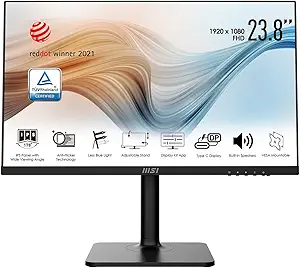
MSI displays exhibit distinct modern aesthetics characterized by sharp geometric lines, brushed textures, and occasional integrated RGB lighting accents. Structurally, MSI has steadily upgraded its mechanical standards, moving from lightweight plastic stands in early generations to heavy-duty, metal-reinforced bases in the MAG and MPG tiers that provide excellent stability and full ergonomic adjustability. Internal component reliability is commendable, though quality control on lower-tier models can occasionally exhibit minor panel uniformity issues or subtle chassis creak. Overall, MSI constructs monitors that hold up exceptionally well under typical desktop gaming environments, prioritizing thermal venting to prolong the lifespan of high-refresh panel logic.
BenQ demonstrates an engineering-led philosophy centered on utilitarian robustness and industrial-grade durability. Their monitor chassis lean toward thick, matte, anti-glare plastics that resist smudging, scratching, and structural flex, making them particularly resilient in high-traffic office spaces or LAN tournament environments. Ergonomic stands on both ZOWIE and professional monitors feature ultra-precise height adjustment mechanisms with laser-etched markings for repeatable positioning. Across the board, BenQ's internal thermal management and strict quality control result in lower rates of structural failure and panel degradation over extended multi-year lifecycles, cementing their status as the more physically durable and rigorously engineered brand.