MSI vs Alienware: Overview & Brand Philosophy
When selecting a high-performance gaming or productivity monitor, MSI (Micro-Star International) and Alienware (Dell’s premier gaming subsidiary) represent two distinct paths in engineering philosophy and market positioning. MSI has historically built its reputation by bridging the gap between mainstream affordability and bleeding-edge enthusiast hardware. Its monitor lineup ranges from aggressive budget esports displays to top-tier QD-OLED panels, emphasizing rapid adoption of emerging display technologies while maintaining aggressive, competitive price points for gamers across all financial brackets.
Conversely, Alienware operates with an uncompromising focus on the premium segment. Backed by Dell’s massive corporate supply chain and enterprise-level display pedigree, Alienware monitors prioritize industrial design, factory calibration, and robust warranty ecosystems. Rather than saturating every market niche, Alienware targets enthusiast gamers, streamers, and creative professionals who are willing to pay a premium for distinctive sci-fi aesthetics, superior structural integrity, and industry-leading after-sales support.
Key Differences & Technological Comparison
The technological tug-of-war between MSI and Alienware is largely defined by panel deployment, design execution, and post-purchase security. In the high-end OLED sector, both brands utilize Samsung Display's Quantum Dot OLED (QD-OLED) panels, yet their implementations diverge significantly. Alienware was a pioneer in this space with models like the AW3423DW, utilizing specialized G-Sync Ultimate modules and custom liquid cooling systems designed to prevent image retention and sustain peak brightness without thermal throttling.
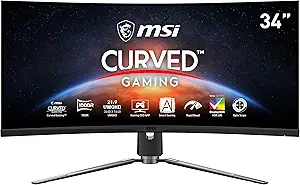
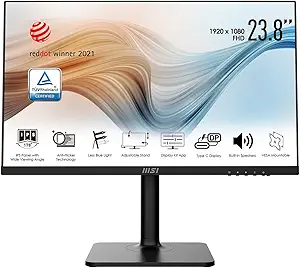
MSI’s approach to QD-OLED—evident in lines like the MEG and MPG series—emphasizes software-driven maintenance features under their "OLED Care" suite, which includes subtle boundary detection, multi-logo detection, and pixel-refresh scheduling. Additionally, MSI frequently leads Alienware in connectivity versatility by integrating full-bandwidth HDMI 2.1 ports, DisplayPort 1.4/2.1, and high-wattage USB-C Power Delivery (frequently 65W to 90W) with built-in KVM switches, making them substantially more functional for users who juggle a gaming rig and a work laptop on the same desk.
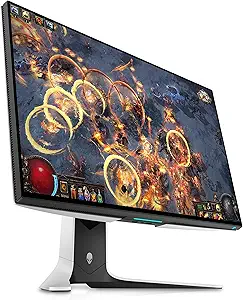
In contrast, Alienware's structural engineering remains a cut above. Alienware displays utilize their iconic "Legend" design language, featuring reinforced chassis plastics, integrated cable-management channels, customizable AlienFX RGB lighting, and robust, counterbalanced monitor stands. Furthermore, Alienware's burn-in mitigation strategy is backed by an industry-standard 3-year warranty that includes advanced exchange coverage (where Dell ships a replacement panel before you return the defective one), placing a strong emphasis on consumer peace of mind over raw feature-layering.
Pros & Cons Comparison
MSI Monitors
- Pros:
- Exceptional value proposition across entry-level to high-end brackets.
- Comprehensive connectivity suites including high-wattage USB-C and integrated KVM functionality.
- Advanced on-screen display (OSD) controls and robust software utility (Gaming Intelligence).
- Rapid integration of the latest panel revisions and high refresh-rate standards.
- Cons:
- Build materials lean heavily on utilitarian plastics with occasional creaking.
- Factory color calibration can be inconsistent on mid-range and budget models.
- Customer service and warranty handling are standard, lacking advanced exchange programs in most regions.
Alienware Monitors
- Pros:
- Class-leading industrial design, premium materials, and ultra-stable stand designs.
- Exceptional factory color accuracy (Delta E < 2) directly out of the box.
- Benchmark warranty coverage: 3-year standard including burn-in and advance hardware replacement.
- Effective thermal management solutions resulting in silent and sustained performance.
- Cons:
- Noticeable price premium compared to identically specced competitors.
- Conservative port selection; often lacks built-in KVM switches or high-wattage USB-C connectivity.
- Large, deep stand bases occupy significant desk space, often requiring monitor arms.
Performance, Durability & Value Analysis
From a raw performance perspective, both manufacturers extract near-maximum potential from their underlying display tech. Alienware displays consistently demonstrate tighter adherence to color standards directly from the factory, making them inherently more reliable for dual-use scenarios involving color-critical video or photo editing. Long-term durability also tilts toward Alienware; their internal component cooling, panel isolation, and robust casing minimize thermal wear on sensitive internal electronics. Dell’s customer support framework ensures that hardware failures are resolved with minimal disruption to the user, an intangible value asset that offsets Alienware's higher initial retail pricing.
MSI dominates the cost-to-performance matrix. An MSI panel often undercuts an equivalently specced Alienware display by 15% to 25% while delivering identical refresh rates, comparable motion clarity, and frequently superior input flexibility. While MSI’s budget-tier displays may suffer from subtle backlight bleed or average contrast ratios common to standard IPS/VA manufacturing, their upper-tier QD-OLED and rapid-IPS offerings punch well above their weight class. If you assess value based on pure hardware specifications per dollar spent, MSI routinely outpaces Alienware across nearly every display category.
Final Verdict: Which Brand Should You Choose?
Choose MSI if you prioritize value, modern connectivity, and desk versatility. Gamers operating on precise budgets will find MSI’s rapid-IPS and curved VA panels unbeatable in the mid-range market. Furthermore, power users who require a single cable solution to drive a laptop via USB-C while sharing mouse and keyboard inputs across multiple systems will find MSI's modern port layouts vastly superior to Alienware’s gaming-centric interfaces.
Choose Alienware if you demand uncompromising build quality, pristine factory calibration, and the safety net of best-in-class customer support. Alienware is the clear choice for enthusiast gamers investing in flagship panels (such as ultrawide or 4K QD-OLEDs) where long-term panel health, structural stability, and immediate three-year advance replacement coverage outweigh the initial cost premium.
Affordability
When evaluating affordability in the monitor space, MSI positions itself as an industry leader in accessible performance, capturing high market share through aggressive price-to-spec ratios. Across its Optix, MAG, and MPG lineups, MSI engineers displays that cater heavily to budget-conscious gamers and mainstream esports enthusiasts. The brand frequently offers panels boasting 144Hz to 240Hz refresh rates, rapid IPS and VA technologies, and adaptive sync capabilities at price points that significantly undercut traditional premium competitors. To maintain this accessibility, MSI makes calculated trade-offs: housings rely more heavily on utilitarian plastic constructions, on-screen display (OSD) physical interfaces can feel basic, and out-of-the-box factory color calibration is often secondary to peak speed. However, for consumers prioritizing fundamental technical metrics—such as low input lag, high frame rates, and modern connectivity like USB-C display alt-mode—MSI maximizes the value per dollar expended.
Conversely, Alienware operates strictly in the premium tier, rarely competing for budget-driven consumers and instead delivering luxury hardware where the cost is justified through halo-tier specifications. A Dell subsidiary, Alienware focuses on high-end engineering, distinguished by its iconic "Legend" industrial aesthetic, customizable AlienFX RGB lighting, and robust, metal-reinforced ergonomics with superior cable routing. Where Alienware excels in pricing justification is at the enthusiast extreme; they have heavily disrupted the ultra-premium market by offering some of the most competitive pricing for high-tier QD-OLED displays (such as the AW3423DWF and AW3225QF). While an entry-level Alienware monitor will almost universally cost more than an equivalent MSI display, Alienware backs its higher price tags with rigorous factory color calibration, exceptional thermal management, and industry-leading warranties that include native OLED burn-in protection—an assurance rarely matched by budget-oriented brands.
Ultimately, the practical trade-off between the two brands centers on upfront financial investment versus comprehensive product longevity and refinement. MSI is the undisputed champion of pure affordability, offering functional, highly capable gaming displays for consumers who want to minimize expenditure without sacrificing competitive gaming metrics. In contrast, Alienware's affordability argument relies on total cost of ownership and tier-specific value: while it excludes entry-level budgets entirely, it offers exceptional build quality, extended warranty security, and cutting-edge panel technology that frequently undercuts legacy display manufacturers in the high-end OLED and professional-grade sectors.
Customer Support & Warranty
When evaluating monitor post-purchase security and technical assistance, Alienware holds a decisive engineering and policy advantage over MSI, primarily driven by Dell’s enterprise-grade infrastructure. Alienware monitors include a standard three-year limited hardware warranty featuring an Advanced Exchange Service, which ships a replacement panel to the user the next business day before requiring the defective unit to be returned. Crucially, Alienware pioneered robust coverage against OLED burn-in with its QD-OLED series (such as the AW3423DWF and AW3225QF), baking pixel retention protection directly into its three-year terms alongside Dell’s Premium Panel Guarantee, which permits replacements for even a single bright sub-pixel defect. MSI has aggressively updated its policy to match this standard, recently expanding its OLED Care 2.0-equipped displays to include a three-year burn-in warranty. However, MSI's warranty fulfillment generally adheres to a traditional Return Merchandise Authorization (RMA) process, frequently requiring consumers to bear the initial cost and logistical risk of shipping bulky displays to regional repair hubs for lengthy turnaround times.
The operational discrepancy between the two brands becomes even more pronounced in direct customer support workflows and firmware maintainability. Alienware leverages Dell’s unified ecosystem, offering centralized global support, 24/7 technical phone lines, prompt remote diagnostics, and dedicated software integration via the Alienware Command Center and streamlined Dell display managers. In contrast, MSI’s support experience is more decentralized; users often encounter ticket-based web portals with variable response latencies and tiered service agents who may lack specialized monitor engineering knowledge. While MSI excels in manufacturing enthusiast-focused hardware packed with physical features like localized KVM switches and comprehensive on-screen display (OSD) functionality, early adopters of MSI panels have historically faced firmware deployment hurdles, with certain previous-generation models lacking user-updatable firmware architectures altogether—requiring an RMA just for code revisions. Alienware prioritizes seamless consumer-facing firmware updates via standard display data channels, resulting in a substantially lower total cost of friction over the monitor's lifespan.
Picture Quality
When evaluating picture quality, Alienware generally holds a distinct competitive edge, largely due to its early and aggressive adoption of cutting-edge panel technologies paired with rigorous factory calibration. Operating under Dell’s high manufacturing standards, Alienware has become the benchmark for premium visuals in the gaming monitor space, particularly through its widely acclaimed Quantum Dot OLED (QD-OLED) displays. These panels deliver infinite contrast ratios, true inky blacks, and an extraordinarily wide color gamut that covers upwards of 99% of the DCI-P3 space. Alienware’s factory tuning ensures out-of-the-box color accuracy that rivals dedicated creative displays, with delta E values routinely falling below 2. Additionally, Dell's sophisticated sub-pixel layouts and advanced anti-reflective coatings significantly minimize color fringing around text and suppress ambient glare, preserving vibrant visual fidelity across varying lighting environments.
MSI, by contrast, has rapidly closed the technical divide, offering high-tier visual performance with a strong focus on high-value execution and versatile color optimization. While MSI also leverages QD-OLED panels in its flagship MEG and MAG lineups to match Alienware's pure blacks and per-pixel luminescence, its broader product portfolio heavily features Rapid IPS and Quantum Dot VA panels. MSI’s technical strength lies in its saturated, punchy color delivery, frequently pushing sRGB and AdobeRGB volumes beyond standard limits to create hyper-vibrant visual profiles tailored for immersive gaming. Furthermore, MSI’s Gaming Intelligence software allows for granular user-level calibration and dynamic contrast adjustments, though out-of-the-box color fidelity can occasionally lean slightly warmer or oversaturated compared to Alienware’s strictly tuned sRGB/DCI-P3 clamp modes.
The practical trade-off between the two brands centers on consistency and purpose. Alienware is the superior choice for users demanding uncompromising visual authenticity, exceptional High Dynamic Range (HDR) peak brightness rendering, and color precision that bridges the gap between competitive gaming and professional color grading. MSI provides a more accessible approach, delivering ninety percent of that top-tier panel performance at a substantially lower price-to-performance ratio across a wider array of display tiers. However, buyers looking at mid-range IPS options must accept that MSI monitors often suffer from minor IPS glow and less uniform backlighting compared to Alienware’s rigorously inspected, premium-binned panels.
Build Quality & Durability
When evaluating engineering standards and structural integrity, Alienware—operating as Dell’s premier gaming banner—consistently sets an industry benchmark for build quality that MSI struggles to match across its broader product stack. Alienware displays feature an unmistakable, ultra-rigid chassis design defined by the brand's signature "Legend" industrial aesthetic. Dell engineers these units with high-density, matte-finished polycarbonate exteriors supported by robust internal metal skeletons, practically eliminating chassis flex, creaking, and aesthetic degradation over time. Furthermore, Alienware's stands are exceptional; they employ cast aluminum and heavy steel counterweights that provide unwavering desktop stability while housing sophisticated, integrated cable-management channels. In contrast, MSI employs a more utilitarian, cost-effective engineering approach, heavily relying on lighter-gauge plastics and aggressive gamer-centric accents that are more susceptible to superficial wear. While MSI’s high-end MEG and MPG lines showcase marked improvements in rigidity and component fit, their mid-tier MAG and budget Optix lines reveal noticeable compromises, including thinner bezels prone to flexing, lighter and wobblier tripod stands, and less refined seam tolerances.
Durability extends deeply into thermal management and panel longevity, areas where both brands invest heavily but execute with varying degrees of long-term reliability. As both manufacturers lead the market in QD-OLED adoption, cooling design directly dictates sub-pixel health and burn-in prevention. Alienware holds a technical advantage here, integrating bespoke thermal systems that combine customized graphite heat spreaders, extensive directional passive venting, and in some models, ultra-quiet, variable-speed magnetic levitation fans designed to pull heat away from the organic substrate without inducing mechanical wear. Alienware underwrites this engineering confidence with an industry-leading 3-year standard warranty that explicitly covers OLED burn-in with seamless advanced exchange service. MSI has closed the gap significantly with its "OLED Care 2.0" firmware protections and tailored graphene heat sinks, which cleverly avoid the long-term failure points of active cooling fans by relying entirely on passive dissipation. While MSI has retroactively added 3-year burn-in coverage to match Dell's duration, their return, inspection, and customer repair logistics can be more friction-laden than Dell’s enterprise-grade support ecosystem.
Ultimately, the practical trade-off between the two brands centers on industrial refinement and longevity versus cost efficiency. Alienware monitors are premium, over-engineered pieces of hardware designed to withstand relentless, multi-year use with minimal degradation of panel performance or physical integrity, though users pay a distinct premium and must accommodate footprint-heavy stands that devour desk space. MSI offers strong physical value, delivering cutting-edge panel technology wrapped in an adequate, albeit unexceptional, exterior frame that prioritizes component density and lower entry costs over luxury materials. For buyers prioritizing absolute structural permanence, premium tactile finishes, and the most reliable long-term warranty infrastructure, Alienware remains the definitive victor in build quality; however, MSI provides sufficient durability for price-conscious gamers who treat their hardware with care and prefer functionally streamlined display footprints.