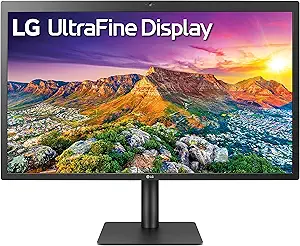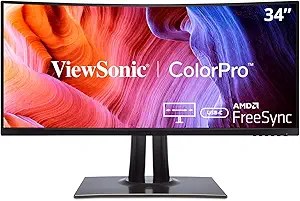




LG vs ViewSonic: Overview
Comparing LG and ViewSonic helps you determine which brand is best suited for your needs in Monitors. Both brands offer strong choices depending on your budget and key feature requirements.
Key Features & Comparison
Evaluate factors such as build quality, warranty, customer satisfaction, and total value before making your final purchase choice between LG and ViewSonic.
Affordability
When evaluating affordability, ViewSonic frequently emerges as the superior choice for budget-conscious buyers and institutional purchasers who prioritize low acquisition costs. ViewSonic excels in providing high-utility, no-nonsense monitors in the entry-level and mid-range tiers, making them immensely popular in educational, office, and small-business environments. Their catalog features a diverse array of 1080p and 1440p displays that deliver competent refresh rates and basic ergonomic features without tacking on the premium costs associated with proprietary software or advanced chassis designs. For users seeking standard daily productivity or casual gaming on a strict budget, ViewSonic consistently undercuts the competition while maintaining acceptable fundamental display performance.
In contrast, LG generally occupies a higher baseline pricing tier, though it delivers outstanding value in the enthusiast and premium brackets. While LG produces basic consumer displays, the company’s true value proposition lies in its vertical integration as a panel manufacturer through LG Display. This gives LG the leverage to sell premium display technologies—such as cutting-edge Nano IPS, 240Hz OLEDs, and high-resolution ultrawides—at prices that frequently redefine the upper market segments. While a direct, specification-for-specification comparison at the sub-$200 price point often favors ViewSonic in raw dollar savings, LG offers greater long-term value for gamers, creative professionals, and power users who require bleeding-edge visual technologies and sophisticated firmware features.
Customer Support & Warranty
ViewSonic establishes a major competitive advantage in its post-purchase support and warranty coverage, particularly for corporate and productivity installations. The brand typically backs its desktop and professional monitor lines with a robust three-year limited warranty, encompassing parts, labor, and the LCD backlight. Crucially, ViewSonic offers an industry-leading pixel performance policy on many of its product lines, sometimes providing zero-bright-dot guarantees on select ColorPro models. Their customer service infrastructure is heavily geared toward corporate stability, which translates to dependable ticket management, straightforward replacement cycles, and reliable business-to-business logistical support that benefits general consumers as well.
LG presents a more uneven customer service footprint, despite its massive global infrastructure. Standard consumer and UltraGear gaming monitors often ship with a more restrictive one-year limited warranty, which falls short of the three-year industry standard upheld by ViewSonic, though select premium UltraFine or OLED displays may carry extended coverage. While LG's direct support network is vast and accessible via phone, chat, and decentralized service centers, consumer feedback frequently cites bureaucratic friction, inconsistent RMA turnaround times, and varying strictness regarding panel defects such as subpixel burn-in on OLEDs or backlight bleed on IPS models. For users seeking prolonged peace of mind and frictionless warranty resolution, ViewSonic offers the more reliable ecosystem.
Picture Quality
LG is an industry juggernaut in picture quality, setting technological benchmarks that drive the entire display industry forward. Leveraging proprietary advancements like Nano IPS and cutting-edge WOLED panels, LG monitors excel in wide color gamut coverage (often exceeding 98% DCI-P3), class-leading response times, and peerless contrast ratios in their OLED lineup. LG displays typically deliver exceptional out-of-the-box color accuracy, high peak brightness for HDR reproduction, and deep, uniform black levels on self-emissive models. For content creators requiring pristine color gradations or gamers demanding instantaneous pixel transitions without ghosting, LG's high-tier UltraGear and UltraFine models represent the zenith of consumer display fidelity.
ViewSonic counters with solid, dependable visual performance, particularly within its dedicated ColorPro series engineered for creative professionals. The ColorPro line features factory-calibrated panels with Delta E < 2 accuracy, integrated colorimeters on select flagship models, and uniform backlight distribution tailored for graphic design and photography. However, ViewSonic's broader catalog of entry-to-mid-range IPS and VA panels tends to employ more conservative backlighting and standard color gamuts. While ViewSonic monitors deliver crisp, flicker-free, and natural image rendering well-suited for everyday workflows and mid-tier gaming, they generally lack the high-impact dynamic range, contrast depth, and ultra-fast panel architectures that give LG the decisive visual edge.
Build Quality & Durability
ViewSonic monitors are engineered with an emphasis on utilitarian resilience, prioritizing structural integrity and functional longevity over sleek aesthetics. The brand commonly utilizes thick, matte-textured plastics that effectively resist scratching, fingerprints, and daily wear in high-traffic environments. ViewSonic’s stands are frequently robust, featuring heavy, weighted metal-reinforced bases that offer extensive tilt, swivel, pivot, and height adjustments with minimal screen wobble. While their aesthetic can lean toward the industrial and corporate, the internal components, including standard internal power supplies and passive thermal cooling, are built for long operational lifecycles without thermal throttling or chassis degradation.
LG tends to prioritize modern industrial design, creating monitors with ultra-thin bezels, sculpted rear profiles, and integrated RGB accent lighting on their gaming displays. While aesthetically striking, LG's consumer chassis frequently feature higher percentages of lightweight, glossy plastics that can creak under torsion or display slight flex when adjusted. Furthermore, LG often relies on external power bricks, which can clutter cable management but keep thermal stress away from the panel itself. While LG's mechanical engineering on its mid-to-high-end ergonomic stands (such as the Ergo arm series) is exceptionally innovative, ViewSonic holds a slight advantage in overall chassis ruggedness and utilitarian durability across its broader product catalog.
Compare current retail pricing, active promotions, and verified stock availability directly from authorized stores: