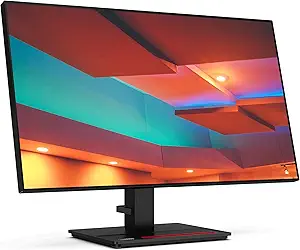
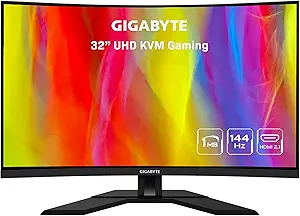
Lenovo vs GigaByte: Overview
Comparing Lenovo and GigaByte helps you determine which brand is best suited for your needs in Monitors. Both brands offer strong choices depending on your budget and key feature requirements.
Key Features & Comparison
Evaluate factors such as build quality, warranty, customer satisfaction, and total value before making your final purchase choice between Lenovo and GigaByte.
Affordability
When assessing affordability in the monitor space, Lenovo and Gigabyte cater to distinctly different consumer priorities, dictating where cost efficiencies are realized. Lenovo dominates the budget-to-midrange market by leveraging its massive corporate supply chain to produce highly cost-effective productivity and general-use displays. Under its entry-level L-series and commercial ThinkVision lineups, Lenovo provides exceptional value per dollar for everyday office computing, remote work, and basic content consumption. These models frequently undercut the competition by prioritizing ergonomic adjustability, energy-efficient engineering, and eye-care certifications (like TÜV Rheinland) over high-performance refresh rates. Conversely, Gigabyte approaches affordability through a gaming-centric lens. Under its standalone Gigabyte and enthusiast AORUS banners, the company aggressively challenges the market by democratizing high-tier gaming specifications—such as 144Hz-to-240Hz refresh rates, 1ms response times, and adaptive-sync technologies—at prices traditionally reserved for 60Hz or 75Hz office panels.
The technical trade-offs between the two brands further delineate their value propositions. Gigabyte's budget champions, such as the ultra-popular G24F or M27Q series, pack immense value through gaming-grade IPS and VA panels, wide color gamut coverage (often exceeding 90% DCI-P3), and innovative hardware features like built-in KVM switches. However, Gigabyte achieves this aggressive pricing by sacrificing build materials—relying heavily on hollow plastics—and exhibiting more frequent quality control variances, such as backlight bleed and coil whine. In contrast, budget Lenovo monitors deliver superior chassis rigidity, tighter tolerances, and dependable panel uniformity out of the box, but they trade away technical performance. Lenovo’s budget offerings often settle for modest sRGB color spaces, lower peak brightness, and basic 60Hz–100Hz refresh ceilings. While Lenovo’s dedicated gaming sub-brand, Legion, does offer high-refresh monitors, they generally carry a 10% to 20% price premium over equivalent Gigabyte hardware to account for their higher-end build quality and robust warranty services.
Ultimately, determining the more affordable brand depends on the intended workload and performance requirements. Consumers and enterprise buyers seeking long-term reliability, standard office utility, and minimal upfront cost will find Lenovo to be the more economical investment, as their basic displays are exceptionally cheap and built to withstand prolonged daily use. However, for users demanding high-spec multimedia performance, creative headroom, and gaming prowess, Gigabyte provides far superior feature-to-price ratio. Gigabyte effectively lowers the barrier of entry for high-performance computing features, offering enthusiasts premium monitor functionality at mid-tier pricing, whereas matching those exact hardware specifications through Lenovo would require stepping into their more expensive Legion or premium ThinkVision ecosystems.
Customer Support & Warranty
When assessing customer support and warranty coverage in the monitor category, Lenovo generally provides a more corporate, reliable infrastructure compared to Gigabyte’s enthusiast-oriented ecosystem. Lenovo backs its display portfolio—ranging from mainstream ThinkVision office panels to Legion gaming monitors—with a standard three-year limited warranty, frequently complemented by an Advanced Exchange policy. Under this protocol, Lenovo ships a replacement unit prior to receiving the defective panel, drastically reducing professional downtime. Furthermore, Lenovo utilizes an intuitive web portal driven by distinct serial number lookups, offering streamlined access to regional tech support, on-site service upgrades, and automated RMA generation. In contrast, Gigabyte typically offers a standard three-year warranty on its gaming displays, but handles claims via its centralized eSupport ticketing system. This pipeline often requires end-users to undergo a lengthy triage process and pay out-of-pocket shipping fees to send units to domestic repair centers, leading to turnaround times that can span several weeks.
The technical trade-offs between the two brands become particularly apparent when scrutinizing their pixel-defect policies and firmware maintenance pipelines. Lenovo maintains rigorous compliance with ISO 9241-307 Class II standards, but often applies a more forgiving threshold for bright sub-pixel anomalies on premium ThinkVision displays, granting faster panel swaps for discerning enterprise users. Gigabyte, primarily servicing the budget-to-midrange high-refresh-rate gaming market, enforces a strictly defined dead-pixel policy that often requires a minimum cluster of dead or bright pixels (typically three to five) before authorizing an RMA, potentially leaving buyers with localized panel defects. However, Gigabyte holds a technical advantage in post-purchase engineering support: its gaming monitors frequently feature accessible USB-B upstream ports linked to the proprietary OSD Sidekick utility, allowing users to flash firmware patches directly. This empowers enthusiasts to independently resolve display bug anomalies, color calibration quirks, and FreeSync flickering without needing to contact technical agents or physically return the panel.
Ultimately, your choice in post-purchase care depends on whether you prioritize enterprise-grade logistic efficiency or component-level modularity. Lenovo delivers superior engineering reliability from a logistics standpoint, featuring regional helpdesk responsiveness, straightforward dead-on-arrival (DOA) replacement protocols, and consistent global parts availability, making it the lower-risk choice for commercial setups and remote professionals. Conversely, Gigabyte relies on a leaner support footprint that requires the consumer to navigate a more friction-heavy claims process. While Gigabyte’s feature-rich monitors deliver exceptional price-to-performance on paper, buyers accept the trade-off of inconsistent RMA communication, rigorous defect thresholds, and potentially expensive transit costs if hardware faults manifest during the three-year coverage window.
Picture Quality
When evaluating picture quality, Lenovo and Gigabyte cater to distinct visual priorities through divergent panel engineering and calibration philosophies. Lenovo emphasizes professional-grade color fidelity, uniformity, and broad gamut coverage, drawing heavily from the pedigree of its ThinkVision line even within its consumer Legion series. Lenovo monitors frequently implement high-grade IPS panels characterized by exceptional out-of-the-box factory calibration, boasting average Delta E values below 2. This engineering focus ensures natural skin tones, precise sRGB and DCI-P3 color mapping, and wide viewing angles with minimal color shift. Conversely, Gigabyte prioritizes dynamic visual contrast and enthusiast gaming responsiveness, largely leaning into specialized Fast IPS and high-contrast VA panels via its standard and AORUS sub-brands. Gigabyte displays often exhibit more aggressive color saturation and punchy vibrance, with their VA implementations delivering deeper blacks and superior static contrast ratios (often exceeding 3000:1) compared to Lenovo's predominantly IPS-oriented lineups, which typically hover around the standard 1000:1 contrast mark.
The technical trade-offs between the two brands become particularly apparent in backlighting technology and motion-induced clarity. Gigabyte excels in high-refresh-rate performance and motion resolution, integrating proprietary firmware features like Aim Stabilizer (backlight strobing) that significantly reduces motion blur, thereby preserving visual sharpness during high-speed transitions. Furthermore, Gigabyte has aggressively adopted QD-OLED (Quantum Dot OLED) and advanced Mini-LED panels in its premium AORUS tier, yielding infinite contrast ratios, per-pixel dimming, and dazzling HDR performance that far outclasses traditional edge-lit displays. Lenovo's HDR implementation, particularly in the mid-range, tends to rely on basic VESA DisplayHDR 400 edge-lit configurations, which lack the local dimming zones necessary for true high-dynamic-range depth and often suffer from visible backlight bleed or IPS glow in dark environments. However, Lenovo strikes back with superior anti-glare panel coatings, superior panel uniformity, and Eyesafe-certified hardware low blue light technology that preserves color accuracy without injecting an undesirable yellow tint.
Ultimately, your choice in picture quality hinges on whether your visual workload prioritizes absolute chromatic accuracy or dynamic visual drama. Lenovo is the superior option for content creators, digital artists, and users who demand color-critical consistency and sharp, edge-to-edge text clarity without the need for extensive user-end calibration. Gigabyte is the definitive choice for gamers, media consumers, and HDR enthusiasts who favor deep black levels, high motion clarity, and the cutting-edge contrast capabilities offered by modern OLED and Mini-LED display engineering.
Build Quality & Durability
Lenovo approaches monitor design with a heavy emphasis on industrial engineering and long-term structural integrity, heavily influenced by its enterprise ThinkVision lineage and Legion gaming series. Lenovo monitors frequently incorporate reinforced metal internal sub-frames, heavy-gauge steel stand cores, and matte, textured plastics that resist micro-abrasions, fingerprint oils, and UV-induced yellowing over years of deployment. The mechanical tolerances on Lenovo’s ergonomic stands—offering buttery-smooth, spring-assisted height, swivel, tilt, and bidirectional pivot adjustments—are among the best in the consumer and professional spaces, displaying virtually no lateral wobble or creaking under adjustment. Furthermore, Lenovo’s thermal dissipation engineering is noticeably robust; internal power delivery systems and driver boards are well-shielded and ventilated, substantially mitigating heat accumulation that can degrade capacitors or induce edge-lit LED discoloration and backlight bleed over extended lifecycles.
Gigabyte, primarily operating through its budget-friendly mainstream gaming line and premium AORUS sub-brand, targets maximum specification density per dollar, which dictates a distinctly different approach to physical construction. AORUS-tier monitors exhibit premium external flourishes, featuring dense, high-grade polymers, brushed metal trim, and robust die-cast aluminum feet that provide immense stability on the desk. However, Gigabyte’s standard lineup (such as the popular M- and G-series) cuts engineering corners on external touchpoints to maintain aggressive pricing, relying on thinner, hollower plastics that can flex and squeak when handled. While the internal panels and control boards—frequently featuring built-in KVM switches—are reliable, the panel housing can exhibit localized light bleed if twisted, indicating lighter structural chassis bracing compared to Lenovo's rigid frame design. Joystick OSD navigators are generally responsive, though long-term durability on Gigabyte's budget stands reveals slight tilt sag over prolonged ownership.
When weighing the practical trade-offs in build quality and longevity, Lenovo emerges as the superior choice for users demanding bulletproof structural reliability and uncompromised mechanical fit-and-finish. A Lenovo monitor, whether destined for a demanding corporate workstation or a high-traffic gaming setup, will endure repeated repositioning and continuous thermal strain with fewer structural failure points. Gigabyte presents a compelling value proposition by delivering advanced gaming and productivity features without severe reliability penalties, but buyers must accept a more utilitarian, plastic-forward construction in the sub-$400 tier. For maximum physical durability, panel chassis rigidity, and top-tier stand mechanics, Lenovo retains a clear engineering advantage over Gigabyte's cost-optimized designs.