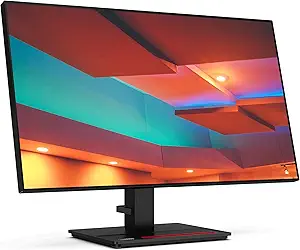
Lenovo vs BenQ: Overview
Comparing Lenovo and BenQ helps you determine which brand is best suited for your needs in Monitors. Both brands offer strong choices depending on your budget and key feature requirements.
Key Features & Comparison
Evaluate factors such as build quality, warranty, customer satisfaction, and total value before making your final purchase choice between Lenovo and BenQ.
Affordability
When evaluating affordability, Lenovo consistently positions itself as a high-value contender across the entry-level and mainstream monitor segments. Benefiting from massive global supply chain efficiencies, Lenovo is able to drive down production costs and offer feature-rich displays at aggressive price points. Budget-conscious consumers and enterprises procuring in bulk frequently turn to lines like the Lenovo L-Series or ThinkVision commercial monitors, which regularly undercut competitors while still delivering essential modern features such as USB-C power delivery, thin bezels, and ergonomic stands. Even within the competitive gaming category via its Legion sub-brand, Lenovo often packages high-refresh-rate IPS panels at pricing tiers that challenge the broader market, making advanced display technology accessible without significant financial friction.
BenQ approaches affordability through a more specialized lens, resulting in a product catalog with a generally higher baseline price but exceptional tiered value. In the entry-level sector, BenQ offers affordable office panels through its GW-series that prioritize eye-care technologies like Brightness Intelligence, yet these are rarely the absolute cheapest on the market compared to Lenovo's low-end offerings. However, BenQ justifies its price premiums within enthusiast niches; its MOBIUZ gaming and DesignVue/PhotoVue professional monitors carry higher MSRPs because they integrate specialized hardware, such as dedicated audio subwoofers, custom shading hoods, and integrated hardware color calibration sensors. Consequently, while Lenovo holds the upper hand for pure budget economy and mass-market price-to-performance, BenQ delivers tailored value for users whose specific workflows demand targeted, premium feature sets.
Customer Support & Warranty
Lenovo's support ecosystem is heavily structured around commercial and enterprise-grade expectations, providing robust warranty frameworks that benefit both home and office consumers. The brand typically backs its consumer and Legion gaming displays with standard three-year limited warranties, while its flagship ThinkVision series often includes advanced rapid-exchange programs and premium coverage options. Lenovo provides a centralized support interface with automated serial number detection, direct driver repositories, and global warranty lookup. However, experiences can vary depending on user classification; enterprise clients generally experience seamless, expedited RMA turnarounds with doorstep courier swaps, whereas retail consumers occasionally face bureaucratic friction with frontline outsourced customer representatives when diagnosing technical display anomalies.
BenQ, by contrast, operates a more boutique and direct support model that earns high marks, particularly among specialized creative professionals and competitive esports players. BenQ monitors generally carry a standard three-year warranty with zero-bright-dot policies on many of their high-end professional displays. Because BenQ caters heavily to niche user bases, their technical support teams tend to demonstrate deeper domain expertise regarding display-specific nuances such as color calibration software errors, hardware-level uniformities, and specialized competitive gaming features like DyAc. While BenQ may lack the vast physical footprint and global on-site depot infrastructure that Lenovo commands, its responsiveness to consumer-grade tickets and community engagement within creative and competitive gaming forums often yields a more personalized, knowledgeable post-purchase experience.
Picture Quality
Lenovo focuses on delivering clean, dependable visual performance tailored primarily for productivity, mixed media, and mainstream gaming. Across its ThinkVision and Legion lineups, Lenovo leverages solid IPS and VA panels sourced from leading tier-one manufacturers, providing wide viewing angles, consistent sRGB color gamuts, and respectable contrast ratios. In professional spaces, ThinkVision panels boast factory color calibration certificates that are more than adequate for UI/UX design, software engineering, and general content consumption. While Lenovo does produce top-tier Mini-LED and high-resolution creative monitors, the bulk of its portfolio relies on standardized panel calibrations that emphasize clarity and high brightness rather than bespoke cinematic tuning or specialized wide-gamut workflows.
Picture quality is an arena where BenQ distinguishes itself through proprietary image processing and rigorous panel binning. Across its PhotoVue and DesignVue lines, BenQ targets creative professionals with comprehensive hardware-level calibration, factory-verified Delta E ≤ 2 accuracy, and expansive coverage of specialized color spaces including Adobe RGB and DCI-P3, complete with uniform luminosity technologies. In the gaming domain, BenQ's MOBIUZ line utilizes proprietary HDRi technology that dynamically optimizes contrast and saturation based on ambient lighting, while the ZOWIE series prioritizes motion clarity and dynamic contrast over vividness. This specialized approach ensures that whether a user demands pinpoint, print-accurate color reproduction or extreme motion blur reduction, BenQ's tailored image engines deliver a more nuanced and specialized visual experience than Lenovo's generalized approach.
Build Quality & Durability
Lenovo’s engineering philosophy is anchored in the utilitarian, battle-tested DNA of its iconic ThinkPad heritage. This influence is most prominent in the ThinkVision commercial line, where monitors are constructed using durable, textured matte plastics, heavy-gauge steel internal bracing, and dense, highly stable bases. Lenovo's multi-axis ergonomic stands are among the most rigid in the industry, offering smooth height adjustment, pivot, tilt, and swivel with zero noticeable wobble or plastic creak. The brand places high emphasis on structural endurance and environmental resilience, routinely passing stringent commercial drop and vibration standards. Even in the gaming space, Lenovo Legion monitors favor clean, mature chassis designs over flimsy, ostentatious aesthetics, ensuring long-term mechanical reliability.
BenQ matches this high durability standard but incorporates distinctive industrial designs tailored to specific use cases. Their professional-grade monitors feature dense, heavy-set chassis with weighted bases specifically engineered to support accessories like heavy shade hoods and integrated puck controllers. The materials used on BenQ displays prioritize functionality; anti-glare bezels are engineered to absorb stray light, and robust internal heat dissipation layouts prevent thermal degradation of color-critical panels over continuous hours of operation. BenQ's mechanical hinges and height-adjustment tracks exhibit precision tensioning, offering satisfying and resilient maneuverability. Ultimately, while Lenovo excels in creating ultra-durable, minimalist commercial hardware that withstands rough office environments, BenQ excels in purposeful, robust craftsmanship designed to survive rigorous production studios and tournament travel.