




HP vs ViewSonic: Overview
Comparing HP and ViewSonic helps you determine which brand is best suited for your needs in Monitors. Both brands offer strong choices depending on your budget and key feature requirements.
Key Features & Comparison
Evaluate factors such as build quality, warranty, customer satisfaction, and total value before making your final purchase choice between HP and ViewSonic.
Affordability
When analyzing the cost-to-performance ratio, ViewSonic frequently emerges as the superior choice for budget-conscious consumers seeking specialized capabilities without premium pricing. ViewSonic establishes its market footprint by aggressively pricing its display lineup, particularly in the entry-level productivity and budget gaming segments through its Omni and VX series. Where ViewSonic shines is in democratizing performance metrics—such as high refresh rates, IPS panel technology, and ergonomic stands—bringing them into lower price brackets faster than many legacy competitors. The brand minimizes extraneous aesthetic frills to pass engineering-focused savings directly to the user, making high-spec displays exceptionally accessible for students, office deployments, and budget gaming builds.
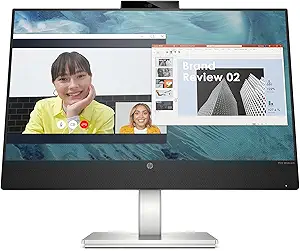
HP approaches affordability through vast supply chain efficiencies and deep corporate distribution channels, which allows them to offer heavily discounted general-purpose displays. Consumer lines like the HP M-Series provide clean, modern visual appeal at competitive entry-level prices, though these displays often trade away advanced ergonomic adjustments and high refresh rates to achieve their low cost. However, HP's budget proposition tends to weaken when stepping into specialized enthusiast hardware; their OMEN gaming line and commercial Z-Series display units carry substantial price premiums that reflect their enterprise-grade tooling and industrial design. While ViewSonic delivers pure feature-per-dollar value across gaming and creative brackets, HP provides superior entry-level volume pricing for standard office setups.
Customer Support & Warranty
Warranty structures heavily influence long-term total cost of ownership, and ViewSonic maintains an exceptionally competitive stance in this category. Most ViewSonic commercial, desktop, and creative displays are backed by an industry-leading three-year limited warranty covering parts, labor, and the backlight, alongside an ISO-compliant zero dead pixel policy for their premium ColorPro line. Furthermore, ViewSonic's Express Exchange service simplifies RMAs by pre-shipping replacement units to minimize operational downtime. For creative professionals and SMBs lacking dedicated IT departments, this straightforward, comprehensive policy mitigates risk and ensures dependable service directly from the display manufacturer.
HP operates on a tiered customer support model that diverges significantly between its retail consumer monitors and its enterprise-focused hardware. Standard consumer monitors from HP typically include a restrictive one-year limited warranty, which falls behind ViewSonic's standard offering and often requires consumers to purchase extended HP Care Packs for parity. Conversely, HP's business-tier Z displays feature comprehensive three-year warranties with robust next-business-day onsite replacement services and guaranteed pixel performance. Consequently, while ViewSonic offers superior uniform protection out-of-the-box for consumer and prosumer buyers, HP delivers a more formidable enterprise ecosystem suited for large-scale corporate fleet management.
Picture Quality
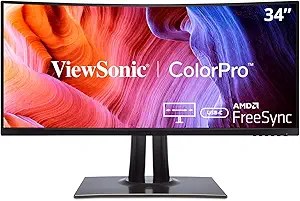
Picture quality exposes fundamental differences in panel tuning, target demographics, and color processing between the two manufacturers. ViewSonic has cultivated a strong reputation among digital content creators, graphic artists, and photographers with its ColorPro (VP) series. These displays routinely offer 100% sRGB, extensive DCI-P3 coverage, hardware calibration capabilities, and Delta E < 2 factory certification, ensuring rigorous color fidelity right out of the box. Even in their gaming tiers, ViewSonic utilizes well-calibrated Fast IPS and modern OLED panels that handle motion clarity and gamut coverage exceptionally well, prioritizing visual accuracy and granular user control through deep OSD color calibration options.
HP leverages high-tier panel sourcing and superior factory anti-glare coatings, producing images that are visually stunning and comfortable for prolonged viewing. In standard consumer models, HP often tunes panels for high contrast, vibrant saturation, and wide viewing angles that enhance multimedia consumption, though they frequently lack deep manual color profiling tools. In the professional space, HP's Z-Series and DreamColor lines represent the gold standard of image fidelity, rivaling reference-grade broadcasting monitors with 10-bit color depth, internal colorimeters, and specialized wide-gamut workflows. ViewSonic offers better accessible fidelity for prosumers, whereas HP reserves its absolute pinnacle picture quality for high-end professional and creative enterprise workstations.
Build Quality & Durability
ViewSonic builds its monitors with functional, utilitarian pragmatism that emphasizes durability and internal thermal management over ultra-sleek minimalist styling. Their chassis designs often utilize robust, matte-textured polycarbonate plastics that resist fingerprint accumulation, scratches, and everyday office wear. Professional and higher-end gaming models feature heavy, steel-reinforced counterbalanced stands with comprehensive tilt, swivel, pivot, and height adjustments that maintain structural stability under frequent repositioning. While the bezels and overall silhouettes may appear slightly more utilitarian compared to modern fashion-forward monitors, ViewSonic displays are mechanically dependable workhorses engineered for longevity.
HP excels in structural refinement and industrial design, routinely delivering monitors that look and feel like premium architectural accents on a modern desk. Even HP's budget consumer displays feature ultra-slim profiles, micro-edge bezels, and visually striking aluminum-accented stands that integrate seamlessly into executive or domestic spaces. For their commercial lines, HP pairs this sophisticated design language with rigorous MIL-STD testing and recycled ocean-bound plastics, resulting in an exceptionally rigid, premium chassis with superior hinge dampening. The practical trade-off is that HP's entry-level models often omit VESA mount compatibility and dynamic ergonomic adjustability in favor of svelte aesthetics, whereas their premium tiers achieve the ultimate union of durability and refined industrial elegance.
Compare current retail pricing, active promotions, and verified stock availability directly from authorized stores: