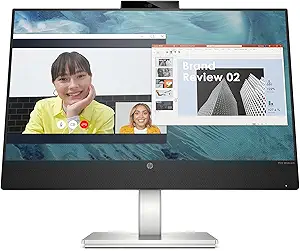
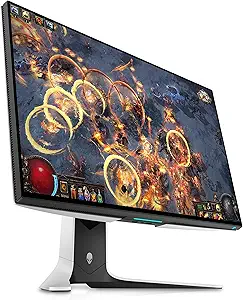
HP vs Alienware: Overview & Brand Philosophy
In the expansive market for computer displays, Hewlett-Packard (HP) and Alienware represent two distinct design philosophies and target demographics. HP approaches the monitor market with a broad, utilitarian vision. As one of the world's largest PC and peripheral manufacturers, HP builds displays designed to seamlessly integrate into diverse environments, ranging from home workstations and corporate conference rooms to mid-tier gaming setups. Through its mainstream Pavilion and Envy lines, its professional Z-series, and its gaming-focused OMEN and Victus subsidiaries, HP emphasizes accessibility, ergonomic compliance, functional aesthetics, and competitive price-to-performance ratios.
Alienware, operating as the specialized high-performance gaming division of Dell Technologies, approaches display engineering from an enthusiast-first mindset. Alienware's brand philosophy is rooted in pushing the boundaries of visual fidelity, mechanical styling, and bleeding-edge specifications. Instead of catering to budget-conscious spreadsheet users, Alienware concentrates its engineering prowess on high-refresh-rate IPS panels, curved ultrawides, and pioneering Quantum Dot OLED (QD-OLED) displays. Their products are characterized by their signature "Legend" industrial design language, premium materials, and deep integration with gaming-centric features such as custom RGB lighting ecosystems and ultra-low latency inputs.
While both brands leverage their massive parent corporations' supply chain strengths, their execution differs fundamentally. HP acts as a versatile generalist, providing dependable, standardized, and cost-efficient visual solutions for millions of everyday users. Alienware acts as a luxury specialist, catering specifically to competitive gamers, multimedia enthusiasts, and creative power users who require tier-one visual performance and are willing to pay a premium for flagship technology.
Key Differences & Technological Comparison
The technological gap between HP and Alienware is most visible when analyzing panel selection, industrial design, and feature prioritization. While HP offers a vast portfolio spanning from entry-level 1080p VA panels to high-color-accuracy 4K IPS panels in their Z-Line, Alienware focuses strictly on high-performance gaming technologies, notably high-frequency Fast-IPS and cutting-edge QD-OLED panels.
In the realm of flagship display technology, Alienware has positioned itself as an industry pioneer. Alienware was among the first major manufacturers to introduce commercial QD-OLED gaming displays, such as the widely praised AW3423DW and its 4K iterations. These panels offer near-infinite contrast ratios, true blacks, exceptionally broad color gamuts (covering upward of 99% DCI-P3), and sub-millisecond response times. In contrast, while HP's gaming arm, OMEN, produces highly capable monitors with 165Hz to 240Hz refresh rates, HP has historically been more cautious in adopting organic self-emissive technologies, relying instead on refined IPS and standard OLED panels in a narrower selection of premium units.
Build quality and aesthetics showcase another major divergence. HP favors minimalist, understated enclosures that blend effortlessly into professional office spaces, utilizing slim bezels, matte plastic finishes, and discreet cable management. Alienware employs an assertive, futuristic design characterized by smooth white or dark metallic chassis, integrated multi-zone AlienFX customizable lighting, and substantial, heavy-duty stands with extensive tilt, swivel, and height adjustability. Alienware's thermal management is also uniquely sophisticated, utilizing passive graphite heat sheets or quiet cooling fans to preserve panel health under sustained high brightness and high refresh rates.
Connectivity options further delineate their respective goals. Professional HP monitors (particularly the Z line) excel in corporate workstation flexibility, often integrating full-featured USB-C hubs with up to 100W Power Delivery, daisy-chaining DisplayPort Out capabilities, and RJ-45 Ethernet ports to serve as single-cable docking solutions. Alienware, on the other hand, tailors its I/O to maximize graphical throughput, emphasizing the latest DisplayPort 1.4 or 2.1 revisions, HDMI 2.1 for current-generation console compatibility at 4K 120Hz/144Hz, dedicated headphone jacks, and specialized latency-reduction hardware modules like dedicated NVIDIA G-Sync processors.
Pros & Cons Comparison
HP Monitors
- Pros:
- Diverse portfolio spanning ultra-budget home options to professional-grade creative monitors.
- Exceptional workstation integration with comprehensive USB-C docking and power delivery capabilities (Z-Series).
- Clean, unobtrusive, minimalist designs that suit any office or home décor.
- Highly competitive pricing across mainstream and mid-range display categories.
- Consistent energy efficiency and environmentally conscious construction utilizing ocean-bound plastics.
- Cons:
- Limited footprint in the ultra-enthusiast QD-OLED and ultra-high-refresh-rate (360Hz+) gaming spaces.
- Entry-to-mid-tier models frequently feature rudimentary stands with limited tilt-only adjustment.
- Gaming line (OMEN/Victus) often lacks the bleeding-edge halo features found in premium gaming brands.
Alienware Monitors
- Pros:
- Industry-leading display technology, including market-defining QD-OLED panels and 360Hz/500Hz esports options.
- Distinctive, high-end "Legend" industrial aesthetic with robust build quality and advanced cable routing.
- Exceptional motion clarity with true 0.03ms to 1ms gray-to-gray response times and minimal ghosting.
- Outstanding factory calibration with comprehensive sRGB and DCI-P3 color mode toggles.
- Dell-backed premium panel warranties, which notably include multi-year coverage for OLED burn-in.
- Cons:
- Significantly higher entry price point with virtually no budget-tier options available.
- Aggressive, gamer-centric styling and integrated RGB lighting may not appeal to professional, conservative workspaces.
- Substantial base footprints that demand considerable desk depth.
- Workstation-centric I/O features (such as 90W+ USB-C charging and Ethernet ports) are rarely prioritized.
Performance, Durability & Value Analysis
When measuring performance, Alienware decisively commands the enthusiast and esports categories. Their gaming panels deliver benchmark-setting input lag figures, virtually imperceptible motion blur, and exceptional HDR presentation powered by high peak nit brightness and pixel-level dimming on their OLED lineup. HP displays, while highly competent in their own rights, target stability and functional color balance rather than raw speed. HP's professional Z-series monitors offer peerless factory calibration for sRGB and AdobeRGB workflows, but outside of select OMEN displays, HP does not attempt to match Alienware's ultra-high refresh thresholds or advanced HDR performance.
From a durability and value perspective, both brands benefit from the mature logistics and quality control protocols of their respective parent entities. HP monitors are rugged workhorses built for longevity in harsh corporate and everyday environments, delivering exceptional value per dollar across the sub-$400 price bracket. Alienware, while considerably more expensive, defends its high price-to-performance ratio through the inclusion of class-leading warranty coverage. Notably, Alienware provides standard 3-year Advanced Exchange warranties on its OLED monitors that explicitly cover burn-in, offering an industry-rare safety net that protects consumer investment in volatile display technologies.
Final Verdict: Which Brand Should You Choose?
The choice between HP and Alienware comes down to your primary use case, aesthetic preference, and budget threshold.
Choose HP if: You are seeking a dependable, cost-effective display for everyday computing, remote office work, standard productivity, or entry-to-mid-tier gaming. HP is also the clear winner if your workspace requires a clutter-free, single-cable docking station via USB-C with high Power Delivery, or if you require an understated monitor that seamlessly blends into a conservative professional environment without flashy lighting or aggressive styling.
Choose Alienware if: You are an uncompromising PC or console gamer, a multimedia enthusiast, or a digital creator who demands top-tier visual performance. If your priorities include unmatched contrast ratios, class-leading refresh rates (240Hz to 500Hz), elite motion handling, and the visually stunning HDR reproduction of QD-OLED panels, Alienware represents a superior technological investment that justifies its premium price tag.
Affordability
When evaluating affordability in the monitor space, HP operates with a wide-spectrum market strategy, engineering displays that span from ultra-budget productivity panels to mid-tier gaming setups under its OMEN and Victus sub-brands. HP achieves aggressive cost-to-performance ratios by leveraging massive supply-chain scale and integrating utilitarian chassis designs with proven, mass-market display panels. For budget-conscious consumers, HP provides essential functionality—such as standard 60Hz to 144Hz refresh rates, Full HD to QHD resolutions, and basic sRGB color accuracy—at accessible price points that frequently undercut the competition. While these cost-saving measures result in trade-offs like predominantly plastic construction, basic tilt-only stands on lower-end models, and modest peak brightness, the technical proposition remains strong for standard home office and entry-level gaming tasks where high-end niche features are unnecessary.
Conversely, Alienware, operating as Dell’s dedicated premium enthusiast arm, intentionally positions itself entirely outside the budget tier, redefining affordability through the lens of long-term value for elite performance. You will not find entry-level pricing in Alienware's lineup; instead, their baseline investments start where HP’s mainstream monitors peak. Alienware commands this premium by incorporating cutting-edge panel technology—such as Quantum Dot OLED (QD-OLED) and ultra-fast Fast IPS matrices—alongside bleeding-edge refresh rates (up to 360Hz or 500Hz), native G-Sync modules, robust thermal cooling designs to mitigate burn-in, and fully ergonomic, customizable industrial chassis. The technical trade-off for the consumer is purely financial: an Alienware monitor demands a substantial upfront capital outlay, making it impractical for general computing, yet highly cost-effective for competitive esports players or color-critical enthusiasts who would otherwise spend substantially more on specialized commercial monitors.
Ultimately, the affordability dynamic between these two brands comes down to baseline utility versus premium specialization. HP represents true accessibility, capturing the best price-to-utility ratio for general consumers, professionals seeking multi-monitor office arrays, and casual gamers watching their spending. In contrast, Alienware offers zero compromises on advanced display engineering, meaning buyers on a strict budget will be priced out immediately. For those demanding top-tier pixel response times, exceptional contrast ratios, and future-proof gaming specifications, Alienware’s elevated cost can be justified as a specialized performance investment, but for everyday computational and standard multimedia needs, HP is unequivocally the more affordable brand.
Customer Support & Warranty
When assessing customer support and warranty coverage in the monitor sector, Alienware—operating under Dell’s robust enterprise-grade infrastructure—sets the industry benchmark, particularly for premium gaming displays. Alienware monitors are backed by a standard 3-year limited hardware warranty that critically includes an Advanced Exchange Service, dispatching a replacement panel to the user the next business day before requiring the return of the defective unit. Furthermore, Alienware’s Premium Panel Exchange guarantees a free panel swap during the limited warranty period even if a single bright pixel is detected. With the advent of QD-OLED technology, Alienware widened this gap by formally integrating a comprehensive 3-year burn-in warranty into their coverage, directly addressing the chief longevity concern of high-end panel consumers and demonstrating immense confidence in their thermal engineering and pixel-refresh architectures.
HP takes a more segmented, pragmatic approach that mirrors its split between general consumer, enterprise (Z-line), and dedicated gaming (OMEN) displays. Standard consumer and mid-range OMEN panels frequently ship with a basic 1-year limited warranty, although higher-end OMEN and commercial Z-monitors are stepped up to a 3-year package with HP’s equivalent pixel policies and parts-and-labor coverage. However, HP’s resolution process often leans toward standard mail-in depot repairs rather than immediate advanced replacement, introducing technical friction and downtime that heavily impacts power users and esports competitors. While HP’s dead-pixel tolerance is competitive on their high-tier professional displays, their consumer tier tolerates higher thresholds of sub-pixel anomalies before triggering an authorized swap, and they have been slower to offer explicit, proactive burn-in protections across their newer high-refresh gaming displays.
From a customer service standpoint, Alienware leverages Dell’s unified diagnostic software, automated service tagging, and responsive, round-the-clock technical support pipelines, which significantly streamline Return Merchandise Authorization (RMA) approvals. HP offers functional multi-channel support, including phone, virtual assistants, and active community forums, but user experiences can feel fragmented across its vast catalog of non-display products. In terms of trade-offs, buyers of Alienware absorb higher upfront retail costs that effectively subsidize elite, no-hassle warranty backing, making it the superior choice for high-stakes gamers and mission-critical workflows. Conversely, HP presents a cost-effective alternative for budget-conscious buyers, though users sacrifice the rapid turnaround, zero-dead-pixel tolerance, and robust burn-in safeguards inherent to Alienware's after-sales ecosystem.
Picture Quality
When evaluating picture quality between HP and Alienware, the fundamental divergence lies in their panel engineering philosophies and target visual performance. HP, primarily through its business, mainstream, and Creator-focused lines (such as the HP Series 7 Pro and Z-displays), prioritizes color accuracy, uniform luminance, and ergonomic visual comfort. Leveraging advanced IPS and IPS Black panel technologies, HP monitors frequently deliver exceptional static contrast ratios for standard LCDs, reaching up to 2000:1, alongside wide color gamut coverage (typically 98% to 100% sRGB and DCI-P3) with factory-calibrated Delta E values below 2. This engineering focus results in exceptionally crisp text rendering, predictable color reproduction for photo and video editing, and anti-glare coatings optimized for brightly lit office environments. While visually stable and highly accurate for static productivity, HP's mainstream visual pipeline often compromises on dynamic range, peak HDR brightness, and high-motion pixel response.
Conversely, Alienware—Dell's premier gaming division—approaches picture quality with an emphasis on high-contrast immersion, HDR impact, and fluid visual fidelity. Alienware has emerged as an industry leader in cutting-edge display tech, heavily championing Quantum Dot OLED (QD-OLED) and Fast IPS panels. Alienware’s QD-OLED offerings, such as the AW3423DWF and AW3225QF, deliver fundamentally superior picture depth compared to HP’s catalog, boasting infinite contrast ratios, true inky blacks, and virtually zero backlight bleed due to per-pixel illumination. The integration of quantum dots allows Alienware to achieve exceptional color volume and peak specular highlights exceeding 1000 nits in HDR modes, far surpassing HP's predominantly SDR-focused luminance. However, this visual prowess introduces practical trade-offs: some Alienware OLED models can exhibit subtle color fringing on fine text due to non-standard subpixel layouts, and their semi-glossy coatings are more susceptible to ambient light reflections compared to HP's aggressive matte finishes.
Ultimately, the choice in picture quality hinges on whether your visual workload prioritizes analytical color precision or dynamic visual depth. HP represents the pragmatic gold standard for visual clarity in productivity, enterprise workflows, and color-critical design, offering consistent white balance, sharp typography, and immunity to image retention. Alienware, by contrast, delivers an objectively superior sensory experience for mixed multimedia, cinematic consumption, and gaming, where the infinite contrast of OLED and vibrant HDR color volume produce a visually transformative image that HP’s predominantly traditional LCD engineering cannot replicate.
Build Quality & Durability
When assessing engineering architecture and physical construction, Alienware decisively establishes a high-water mark, prioritizing robust materials and premium aesthetic durability. As Dell’s enthusiast gaming arm, Alienware builds its displays around ultra-rigid internal metal sub-chassis cloaked in high-grade, thick polycarbonate shells—exemplified by their iconic "Legend" industrial design. The standout technical strength of Alienware displays lies in their uncompromising mechanical stability: the stands feature solid-cast metal uprights and wide-stance bases that mitigate micro-wobble even during aggressive typing or desk movement. The articulation mechanisms, featuring heavy-duty tension springs for tilt, swivel, and height adjustments, demonstrate minimal drift over years of usage. Furthermore, Alienware’s internal thermal management—utilizing customized ventilation pathways and, in flagship OLED lines, dedicated heatsinks and quiet cooling fans—mitigates thermal stress on delicate display panels, substantially extending operational lifespans and preventing early component degradation.
Conversely, HP approaches build quality through a lens of pragmatic minimalism and broad-market utility, yielding disparate results across its portfolio. Mainstream consumer lines, such as the HP M-Series and Pavilion displays, utilize lightweight, ultra-thin profiles relying on cost-engineered plastics and minimal metal framing. While these minimalist designs offer a clean desk footprint, they are prone to torsional flex and exhibit noticeable display wobble due to lightweight, friction-fit or basic hinge assemblies with limited adjustability. However, HP’s enterprise and enthusiast tiers—specifically the Z-Workstation and OMEN gaming lineups—tell a different story. The HP Z displays rival the best in the industry, utilizing rock-solid die-cast aluminum bases, high-tolerance mechanical linkages, and post-consumer recycled metals that resist chassis creak and endure demanding commercial deployment. HP’s technical trade-off lies in this internal fragmentation: while enterprise buyers experience exceptional build rigor, everyday consumer models prioritize featherweight aesthetics and budget margins over heavy-duty structural resilience.
From a longevity and long-term durability perspective, both brands introduce unique practical trade-offs. Alienware’s aggressive thermal engineering and premium chassis components make them virtually impervious to the physical wear-and-tear of heavy desktop use, with ports that resist repeated strain and chassis panels that resist heat warping. However, their complex cooling arrays and reliance on active airflow introduce dust ingress risks that require occasional maintenance. HP, outside of its pro-grade Z-Series, opts for fanless, passive heat dissipation through simple perimeter venting, eliminating mechanical point-of-failure risks at the expense of running chassis interiors warmer. For users demanding industrial-grade survivability, tank-like stand stability, and premium materials designed to handle both mechanical stress and thermal fatigue, Alienware maintains a technical edge. HP offers an appealing alternative for those seeking lightweight, sleek utility, but matching Alienware's structural integrity requires consumers to bypass HP’s mainstream models and invest strictly in their professional Z-tier hardware.