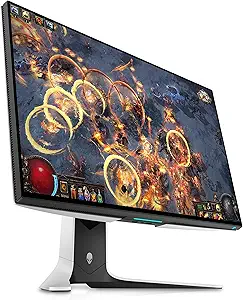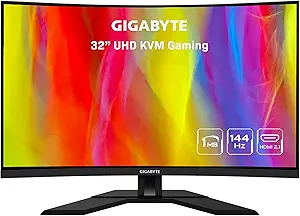







GigaByte vs Alienware: Overview
Comparing GigaByte and Alienware helps you determine which brand is best suited for your needs in Monitors. Both brands offer strong choices depending on your budget and key feature requirements.
Key Features & Comparison
Evaluate factors such as build quality, warranty, customer satisfaction, and total value before making your final purchase choice between GigaByte and Alienware.
Affordability
When evaluating affordability, GigaByte and Alienware occupy starkly different market tiers, with GigaByte consistently positioning itself as a value-driven champion. GigaByte achieves aggressive pricing by focusing on essential performance metrics—such as high refresh rates, low response times, and functional ergonomics—without inflating costs through extravagant industrial design or proprietary RGB ecosystems. Models in their M-series and G-series provide budget-conscious gamers and professionals with advanced features like integrated KVM switches and solid IPS panels at price points that significantly undercut the premium competition. This approach makes high-performance 1440p and 4K gaming accessible to a broader demographic, maximizing raw frame rate per dollar invested.
Alienware, operating as Dell's luxury gaming imprint, unapologetically targets the enthusiast and premium segments where budget is a secondary consideration. While Alienware displays carry premium price tags, their value proposition lies in pioneering adoption of cutting-edge display technologies, such as Quantum Dot OLED (QD-OLED) panels, hyper-fast 360Hz refresh rates, and bespoke aesthetic engineering. Consumers pay not only for the raw panel specifications but also for luxury packaging, proprietary AlienFX lighting systems, and advanced cooling architectures. Consequently, while Alienware rarely competes on pure budget metrics, it offers high value for affluent buyers seeking boundary-pushing technology, whereas GigaByte remains the undisputed victor for practical, cost-to-performance efficiency.
Customer Support & Warranty
Customer support and post-purchase assurance represent an area of significant divergence between the two manufacturers, with Alienware benefiting massively from Dell's enterprise-grade infrastructure. Alienware monitors routinely feature comprehensive three-year standard warranties that stand out in the industry, particularly for their OLED line-up, which includes explicit coverage against panel burn-in and pixel degradation. Furthermore, Dell’s Advanced Exchange Service ensures that replacement units are shipped out prior to returning the defective display, minimizing downtime for competitive gamers and working professionals. Their centralized web portal, automated diagnostic software, and responsive tier-one technical assistance make the RMA process relatively painless and reliable.
GigaByte, by contrast, operates under a more traditional consumer hardware warranty model that can occasionally present friction for the end-user. While GigaByte also typically provides a standard three-year warranty on major display components, its dead-pixel policies are often stricter, requiring a higher threshold of defective sub-pixels before authorizing a replacement. Additionally, users navigating GigaByte's RMA process frequently report longer turnaround times, as displays must generally be shipped to regional service hubs for inspection and repair before a replacement or resolution is issued. For consumers who prioritize peace of mind, rapid logistics, and robust protection against burn-in, Alienware maintains a clear, decisive operational advantage.
Picture Quality
Picture quality reflects the philosophical split between GigaByte's pragmatic panel tuning and Alienware's bleeding-edge visual fidelity. GigaByte focuses heavily on well-calibrated Fast IPS and VA panels that excel in color accuracy, wide color gamut coverage (often exceeding 90% DCI-P3), and reliable factory calibrations targeting the sRGB spectrum. Their higher-tier displays, including select OLED and mini-LED offerings, handle brightness and motion clarity exceptionally well for fast-paced gaming. However, GigaByte's budget and mid-tier monitors frequently struggle with localized contrast, exhibiting noticeable edge-lit IPS glow and mediocre HDR performance that lacks the local dimming zones required for true cinematic depth.
Alienware reigns supreme in pure visual impact, largely driven by its early adoption and aggressive implementation of QD-OLED panels. These displays deliver infinite contrast ratios, true inky blacks with zero haloing, and spectacular HDR highlights exceeding 1000 nits on small window sizes. The Quantum Dot layer enriches spectral color saturation, resulting in wider color volume and superior off-axis viewing angles compared to standard IPS alternatives. While GigaByte provides dependable, color-accurate rendering suitable for competitive gameplay and standard productivity, Alienware produces a transformative visual experience characterized by hyper-responsive pixel transition times, profound dynamic range, and class-leading panel immersion.
Build Quality & Durability
In terms of physical construction and mechanical engineering, Alienware exhibits superior structural integrity, utilizing a blend of high-grade, rigid plastics and internal metal chassis reinforcement. Alienware’s recognizable "Legend" industrial design language is not solely decorative; it incorporates functional multi-channel ventilation systems, robust cable-routing paths, and rock-solid counterbalanced stands that eradicate screen wobble. Furthermore, Alienware's active and passive thermal solutions—crucial for mitigating burn-in on their high-refresh OLED panels—demonstrate a sophisticated approach to long-term component preservation, reflecting the brand's commitment to high-end durability and thermal management.
GigaByte utilizes a more functional, minimalist approach that prioritizes cost savings and practical desk utility over lavish structural detailing. Their monitors are constructed primarily from lightweight, matte-textured plastics that, while sturdy enough for routine desktop use, can exhibit slight flex and creak under mechanical stress. The stands supplied with GigaByte displays are generally stable and offer commendable height and tilt adjustments, but the mechanical articulation often feels less fluid compared to Alienware's precision-tuned hinges. While GigaByte's understated engineering avoids visual distractions and functions reliably over multi-year lifespans, Alienware delivers a far more premium, durable, and acoustically refined product.