




BenQ vs ViewSonic: Overview & Brand Philosophy
In the competitive landscape of display technology, BenQ and ViewSonic represent two seasoned veterans that have adapted to diverse consumer demands over several decades. Taiwanese manufacturer BenQ, an acronym for "Bringing Enjoyment 'N' Quality to Life," spun off from Acer in the early 2000s and quickly carved out a reputation for purposeful engineering. BenQ operates with a human-centric design philosophy, placing substantial research and development into specialized sub-brands: their PD and SW series cater to creative professionals requiring precision color management, their Mobiuz and ZOWIE lines dominate casual and ultra-competitive esports gaming, and their office panels prioritize ergonomic and vision-protection features.
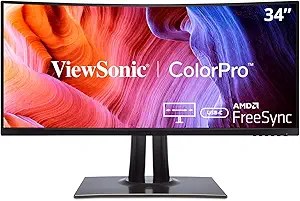
Conversely, ViewSonic—headquartered in California and founded in 1987—is widely recognized for its iconic three Gouldian finches logo, a historical hallmark of desktop computing. ViewSonic approaches the monitor market with a philosophy anchored in value, enterprise dependability, and versatile accessibility. While ViewSonic maintains competitive footprints in professional imaging via its ColorPro series and gaming with its OMNI and ELITE lineups, its core strength lies in delivering reliable, cost-effective corporate displays, education-focused touchscreens, and broad-appeal multi-purpose monitors. Where BenQ emphasizes niche technological mastery, ViewSonic excels at democratizing high-end features at consumer-friendly price points.
Both brands have evolved beyond standard desktop visual output to tackle the growing demands of modern workflows, including hybrid working setups, USB-C single-cable connectivity, and advanced eye-care certifications. However, their divergent brand identities mean that while BenQ often targets the discerning professional or competitive purist willing to pay a premium for precision, ViewSonic frequently champions practical performance, robust warranties, and accessible utility for budget-conscious creators, corporate fleets, and mainstream users.
Key Differences & Technological Comparison
When analyzing these brands side-by-side, their divergence in proprietary technology, panel calibration, and gaming implementations becomes immediately apparent. Understanding these differences is critical to selecting the proper display for your specific workflow.
Eye-Care and Ergonomics
BenQ is widely regarded as an industry leader in vision protection. Their proprietary Eye-Care suite—anchored by Brightness Intelligence Plus (B.I.+) technology—uses integrated ambient light sensors to dynamically adjust both display brightness and color temperature in real-time. ViewSonic provides reliable flicker-free backlighting and software-driven blue light filters, but BenQ's hardware-level integrations and certified TÜV Rheinland low blue light solutions offer a superior, seamless experience during marathon working sessions.
Gaming Engineering: Mobiuz & ZOWIE vs. ViewSonic OMNI & ELITE
In the gaming arena, BenQ operates a bifurcated strategy. For cinematic immersion, the BenQ Mobiuz line integrates dedicated 2.1-channel treVolo audio and HDRi (an intelligent dynamic HDR tuning feature). For esports purists, BenQ’s ZOWIE monitors feature DyAc+ (Dynamic Accuracy), an industry-standard proprietary backlight strobing technology that eliminates motion blur and visual trailing better than almost any competitor on the market. ViewSonic responds with its accessible OMNI series and premium ELITE gaming lines. ViewSonic monitors excel at providing high refresh rates (up to 240Hz+), fast IPS panels, and low response times with native AMD FreeSync and NVIDIA G-Sync compatibility at lower MSRPs. However, ViewSonic’s PureXP backlight strobing, while effective, lacks the fine-tuned motion clarity of BenQ's DyAc+.
Color Precision and Professional Capabilities
For graphic designers, photographers, and video editors, both brands provide dedicated hardware-calibrated lines. BenQ’s PhotoVue (SW) and DesignVue (PD) series come factory-calibrated with exceptionally low Delta E (≤ 2 or ≤ 1.5), comprehensive coverage of Adobe RGB, DCI-P3, and sRGB, and integrate specialized features like uniformity compensation, M-Book mode (for matching Apple MacBook color profiles), and the Hotkey Puck for rapid profile switching. ViewSonic's ColorPro (VP) series matches many of these specifications, providing hardware calibration support, Pantone validation, and innovative additions like integrated color-calibration wheels and built-in pop-up hood shades on flagship models. BenQ, however, remains slightly ahead in firmware stability, panel uniformity consistency, and dedicated CAD/CAM visual modes.
Build Quality, Design, and Connectivity
BenQ monitors generally feature higher-grade plastics, heavier weighted ergonomic stands, and thoughtfully integrated cable management solutions. They also prioritize advanced downstream connectivity, offering modern USB-C power delivery ranging from 65W to 90W along with integrated KVM switches. ViewSonic's chassis designs tend to be more pragmatic and minimalist, especially in the budget and mid-range tiers where utilitarian plastic housings are common. Despite this, ViewSonic excels in multi-monitor setups thanks to ultra-thin bezels, and their enterprise lines often feature broad legacy connectivity (including VGA and DisplayPort daisy-chaining) alongside modern USB-C interfaces.
Pros & Cons Comparison
BenQ: Pros
- Proprietary Motion Technologies: ZOWIE DyAc/DyAc+ provides class-leading motion clarity for competitive first-person shooters.
- Advanced Eye-Care Architecture: Brightness Intelligence (B.I.+) actively regulates luminance and color temperature based on environment.
- Specialized Workflow Optimization: Dedicated modes for CAD/CAM, animation, coding, and MacBook color matching.
- Superior Audio Integration: Mobiuz displays offer legitimate, high-quality integrated 2.1 audio tuned by treVolo.
- Robust Build and Ergonomics: Premium construction, intuitive Hotkey Puck navigation, and heavy-duty stands.
BenQ: Cons
- Price Premium: Consistently priced higher than equivalent-spec competitors across budget and mid-tier categories.
- Aggressive Aesthetic Division: The bold styling of the Mobiuz series may not fit clean, professional office spaces.
- Menu Complexity: Deep on-screen display (OSD) feature sets can be overwhelming for casual users.
ViewSonic: Pros
- Exceptional Price-to-Performance Ratio: Delivers high refresh rates, IPS panels, and high resolutions at accessible price points.
- Industry-Leading Warranty: Most regions benefit from a generous 3-year limited warranty backed by solid enterprise support.
- Clean, Utilitarian Styling: Minimalist designs with ultra-thin bezels ideal for corporate and dual-monitor configurations.
- ColorPro Innovation: Flagship creative monitors offer unique integrated accessories, like color-calibration wheels and hoods.
- Broad Legacy and Modern I/O: Excellent connectivity options that bridge legacy corporate devices and modern laptops.
ViewSonic: Cons
- Backlight Uniformity Variance: Budget and mid-tier units occasionally suffer from minor backlight bleed or IPS glow.
- Basic Eye-Care Implementation: Blue light filters and flicker-free tech rely mostly on static settings rather than dynamic sensors.
- Subpar Integrated Speakers: Built-in audio on non-flagship models is quiet and lacks dynamic range.
Performance, Durability & Value Analysis
From an operational standpoint, both manufacturers exhibit excellent long-term durability, but their quality control profiles differ. BenQ’s strict factory inspection routines result in remarkably low out-of-the-box panel defect rates. In professional SW and PD series panels, BenQ employs dedicated internal chips to balance luminance across dozens of individual screen zones, ensuring that corner-to-corner uniformity persists over thousands of operating hours. Furthermore, their ZOWIE esports monitors are renowned for surviving the rigors of frequent travel and competitive LAN tournaments due to reinforced hinge designs and durable composite shells. While you will pay a 15% to 30% premium for a BenQ monitor compared to a similarly spec'd generic alternative, the investment pays dividends through sustained color accuracy, advanced panel longevity, and reduced digital eye fatigue.
ViewSonic, on the other hand, is the quintessential value champion. Their monitors consistently provide the lowest barrier to entry for users seeking specific milestones, such as 4K productivity displays, 165Hz+ gaming panels, or color-accurate USB-C hubs. ViewSonic mitigates lower chassis production costs by backing their hardware with an industry-praised 3-year warranty policy that frequently includes advanced exchange options for enterprise clients. While extreme budget panels from ViewSonic may experience minor backlight bleeding or stand wobble, their mid-to-high-tier units—especially the ColorPro series—demonstrate reliable long-term performance that rivals panels costing significantly more. ViewSonic delivers exceptional value per dollar, making them ideal for budget-conscious buyers, academic institutions, and business deployments.
Final Verdict: Which Brand Should You Choose?
Selecting between BenQ and ViewSonic ultimately comes down to your primary use case, required technical specifications, and budget tolerance:
Choose BenQ if:
- You are a competitive esports gamer (particularly in titles like CS2, Valorant, or Apex Legends) who demands the visual clarity of ZOWIE's DyAc technology.
- You spend 8 to 12+ hours daily in front of screens and require automated, sensor-driven eye-care protection to minimize strain and headaches.
- You are a professional designer, animator, or Mac user who relies on dedicated color spaces, software-calibrated uniformity, and tactile accessories like the Hotkey Puck.
- You value premium materials, integrated subwoofers, and purpose-built display engineering over aggressive cost-cutting.
Choose ViewSonic if:
- You want the absolute best hardware specifications (such as IPS, 144Hz-240Hz, or 4K resolution) for the lowest possible financial investment.
- You are outfitting a home office, corporate workspace, or educational setting where simple multi-display daisy-chaining and broad I/O are paramount.
- You are an aspiring content creator or photographer who wants a Pantone-validated ColorPro display without paying high-tier studio prices.
- You place a high value on long-term manufacturer warranty coverage and reliable, straightforward corporate support.
Affordability
When evaluating affordability in the monitor market, ViewSonic consistently emerges as the more aggressively budget-friendly manufacturer, employing a value-engineered approach that maximizes core display functionality per dollar spent. ViewSonic’s portfolio, particularly its VA and Omni series, dominates entry-level pricing tiers across basic office and budget gaming sectors. The brand achieves this price advantage by relying on standardized, cost-efficient chassis designs, basic tilt-only ergonomics, and third-party panel sourcing with minimal factory color calibration out of the box. While this means end-users sacrifice premium materials, advanced multi-directional stands, and high-end uniform backlighting, ViewSonic reliably delivers essential performance metrics—such as high refresh rates and decent IPS panel reproduction—at retail price points that undercut nearly every direct tier-one competitor.
Conversely, BenQ positions its products with a focus on value-added utility and segment-specific engineering, which translates to a higher entry barrier and a distinct interpretation of affordability. Rather than stripping down displays to achieve the lowest price tag, BenQ invests in proprietary hardware and software integrations. Its GW and design-focused series frequently feature advanced Brightness Intelligence (B.I. Tech), comprehensive TUV-certified eye-care suites, and integrated ambient light sensors, while its specialized PD (DesignVue) and ZOWIE lines command premiums for factory-calibrated Delta E < 2 color profiles and exclusive DyAc motion-blur reduction technology, respectively. Consequently, a baseline BenQ monitor often costs noticeably more than an identically sized ViewSonic counterpart featuring equivalent refresh rates and resolutions.
The practical trade-off between the two brands ultimately hinges on whether affordability is defined by the initial purchase price or the total feature integration relative to cost. ViewSonic is the indisputable victor for budget-conscious buyers, general enterprise bulk deployments, and entry-level gamers who want standard functionality without paying for supplementary bells and whistles. However, for professionals, digital artists, and users who prioritize integrated ergonomic health and daily visual comfort, BenQ’s higher price floor often represents a more economical long-term investment by eliminating the need to purchase external calibration tools, monitor arms, or aftermarket blue-light management accessories.
Customer Support & Warranty
When evaluating post-purchase reliability, BenQ and ViewSonic both offer robust, enterprise-grade warranty structures, yet they differ significantly in execution, coverage tiers, and dead-pixel policies. ViewSonic holds a distinct advantage in standard consumer coverage by packaging an industry-leading three-year limited warranty across virtually all of its monitor lines, paired with its proactive "48-Hour Quick-Exchange" service. Furthermore, ViewSonic maintains a stringent and transparent ISO 9241-307 pixel policy, offering full panel replacements for even single bright-pixel defects on select professional ColorPro models. BenQ also matches the three-year standard warranty on most displays and extends tailored support for its specialized sub-brands—such as the ZOWIE esports series and AQCOLOR professional units—yet its standard pixel anomaly tolerances are generally more permissive for consumer lines, requiring a cluster of sub-pixel defects before triggering an RMA. BenQ’s engineering support is technically proficient, offering dedicated calibration lookup databases and firmware servicing, but standard consumer turnaround times can be slower compared to ViewSonic's aggressive swap-out logistics.
From an operational customer support perspective, ViewSonic relies on a mature, legacy infrastructure that excels in accessibility via telephone, email, and live chat, making it an exceptionally low-friction option for institutional, corporate, and education buyers who require rapid enterprise-level responsiveness. Conversely, BenQ provides a more modernized, portal-based digital service experience, complete with an extensive community presence and specialized technicians who understand niche hardware demands, such as ICC profile integration, CAD/CAM viewing modes, and DyAc motion blur tuning. The primary trade-off rests between ViewSonic’s superior replacement speed, standardized multi-display deployment protection, and zero-bright-dot guarantees versus BenQ’s highly specialized, enthusiast-centric technical assistance and robust lifecycle support for hardware-calibrated panels. Consequently, commercial and general users benefit from ViewSonic's comprehensive, hassle-free replacement framework, while creative professionals and competitive gamers may favor BenQ for its deep technical product expertise, despite occasionally stricter warranty qualification thresholds.
Picture Quality
When evaluating picture quality between BenQ and ViewSonic, both manufacturers display distinct engineering philosophies tailored to specific user segments. BenQ generally commands an advantage in specialized professional and creative spaces, owing largely to its proprietary AQCOLOR technology found in the PhotoVue and DesignVue lines. These panels undergo rigorous factory calibration, achieving near-flawless Delta E ≤ 2 color accuracy alongside extensive color gamut coverage spanning 99% Adobe RGB and 100% sRGB/Rec.709. BenQ’s high-end displays also excel in panel uniformity, utilizing micro-level hardware compensation algorithms to prevent brightness falloff and color shifting across the screen surface. Conversely, ViewSonic's professional ColorPro (VP) series matches this standard with robust 14-bit 3D look-up tables (LUTs) and factory color certificates, but their mainstream lineup tends to exhibit greater variance in panel uniformity and backlighting consistency compared to BenQ’s tighter manufacturing tolerances.
In contrast, ViewSonic excels in delivering vibrant, visually engaging picture quality at aggressively competitive, consumer-friendly price points. ViewSonic monitors prominently feature SuperClear IPS and advanced MVA panel technologies that prioritize wide viewing angles and deep contrast, which are particularly effective in general productivity and entertainment scenarios. Where ViewSonic often surpasses BenQ on a performance-per-dollar basis is in high-contrast media consumption, offering darker black levels in budget VA segments where comparable BenQ office displays can suffer from noticeable IPS glow. However, BenQ fights back with hardware-level innovations such as its HDRi intelligent optimization, which dynamically balances HDR tone mapping based on ambient lighting conditions, preventing the blown-out highlights or crushed shadow details that occasionally plague ViewSonic’s lower-tier HDR implementations.
Ultimately, the technical trade-offs between the two brands center on targeted visual precision versus accessible dynamism. BenQ is the superior choice for professionals demanding absolute, uncompromising fidelity, offering integrated hardware calibration, superior anti-glare coatings, and finely tuned color profiles (such as M-book mode for Mac users) that prevent color drift over long sessions. ViewSonic, while highly capable in its premium tier, is best understood as the champion of value-driven visual punch. For users who need dependable, color-accurate rendering for print and design, BenQ provides better engineering quality; for consumers seeking vibrant, contrast-rich imaging for mixed office use, gaming, and multimedia without paying a specialty premium, ViewSonic delivers exceptional visual competence.
Build Quality & Durability
When assessing engineering integrity and chassis construction, BenQ generally holds an edge over ViewSonic, particularly in the mid-to-high-tier categories. BenQ monitors—especially those within the professional PhotoVue (SW), designer DesignVue (PD), and gaming-centric ZOWIE lineups—feature dense, industrial-grade plastics, reinforced internal metal shielding, and exceptionally sturdy stands. ZOWIE esports monitors, in particular, are engineered like tanks to survive the rigors of frequent LAN travel and aggressive desk impacts, featuring zero-wobble bases and high-tension adjustment mechanisms. In contrast, ViewSonic focuses heavily on cost-to-performance efficiency. While their premium ColorPro and Elite series showcase admirable craftsmanship with solid metal accents, their high-volume budget and enterprise offerings often utilize thinner, lighter matte plastics that exhibit slight flex under torsion and audible creaking when adjusting tilt or swivel.
Internal durability and long-term hardware reliability also reflect differing manufacturing philosophies. BenQ invests heavily in proprietary environmental stabilization technologies, such as advanced heat dissipation channeling that mitigates thermal stress on the internal power supply units (PSUs) and backlight arrays, thereby extending panel longevity and reducing premature LED degradation. ViewSonic monitors are resilient workhorses in their own right, frequently chosen for corporate and educational deployments due to their dependable, low-failure logic boards and solid warranty support. However, ViewSonic’s reliance on third-party supply-chain integration for components leads to slightly more variance in long-term panel uniformity and occasional backlight bleed over years of heavy operation compared to BenQ’s tightly regulated quality control processes.
The practical trade-offs ultimately center on the relationship between price point and structural refinement. ViewSonic delivers completely functional, durable-enough hardware at a substantially lower cost per feature, making them a practical choice for budget-conscious users who intend to mount their displays on third-party VESA arms, rendering chassis build compromises negligible. BenQ commands a noticeable price premium, but that cost translates directly into tactile durability: buttery-smooth ergonomic hinges, weighted stands that resist accidental desk nudges, premium braided cabling, and an overall structural solidity that consistently outlasts budget alternatives. For absolute longevity in demanding professional or competitive environments, BenQ is the superior build investment, while ViewSonic represents pragmatic, cost-effective resilience.