BenQ vs Alienware: Overview & Brand Philosophy
In the competitive monitor landscape, few brands exhibit as distinct engineering philosophies as BenQ and Alienware. BenQ (an acronym for "Bringing Enjoyment 'N' Quality to Life") approaches display technology with a pragmatic, utility-driven ethos. The Taiwanese manufacturer has diversified its portfolio across specialized user verticals, establishing dominant positions in esports via its ZOWIE line, creative professional environments with its color-critical DesignVue (PD) and PhotoVue (SW) series, and general productivity through its Eye-Care lineup. BenQ focuses heavily on ergonomics, panel tuning, proprietary motion-clarity algorithms, and hardware-level vision protection, prioritizing pure functional performance over aesthetic extravagance.
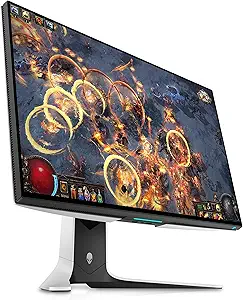
Conversely, Alienware—the high-performance gaming subsidiary of Dell Technologies—champions bleeding-edge visual technology, premium industrial design, and an unapologetic gaming pedigree. Founded on the principle of delivering uncompromised hardware to enthusiasts, Alienware monitors rarely cater to the budget-conscious or entry-level productivity sectors. Instead, the brand focuses on premium gaming experiences, being among the first to bring revolutionary display technologies, such as Quantum Dot OLED (QD-OLED) and ultra-high refresh rate Fast IPS panels, to mainstream consumers. Alienware displays are instantly recognizable by their futuristic "Legend" design language, integrated AlienFX RGB lighting, and halo-tier build quality.
Ultimately, this comparison highlights a clash of design fundamentals. BenQ engineers display tools calibrated for specific workloads—whether that means stripping away all distractions to help a competitive counter-strike player hit a target, or ensuring Delta-E < 2 color accuracy for a video editor. Alienware designs immersive consumer centerpieces that combine hyper-modern panel technology, rapid response times, and aggressive design styling backed by Dell's formidable enterprise warranty and supply chain infrastructure.
Key Differences & Technological Comparison
When dissecting the monitor technologies between these two titans, the differences manifest across panel implementation, motion clarity processing, target demographics, and hardware calibration.
Panel Technology and Innovation: Alienware has positioned itself at the vanguard of modern panel tech. By aggressively adopting QD-OLED panels in monitors like the AW3423DWF and AW3225QF, Alienware delivers virtually infinite contrast ratios, true inky blacks, and instantaneous 0.03ms gray-to-gray (GtG) response times. Their LCD offerings utilize advanced Fast IPS and Nano IPS configurations for vibrant, wide-gamut reproduction. BenQ, while fielding excellent IPS and VA panels in their Mobiuz entertainment and professional lineups, still relies heavily on specialized, fast-response TN (Twisted Nematic) panels for their flagship ZOWIE esports monitors. While TN panels suffer from narrow viewing angles and mediocre color reproduction, BenQ extracts every ounce of raw speed from them to eliminate latency.
Motion Clarity and Backlight Strobing: Motion blur reduction is a major battleground. BenQ is industry-renowned for its proprietary DyAc (Dynamic Accuracy) and DyAc2 technology. Unlike generic backlight strobing implementations that significantly dim display brightness or introduce micro-stutter, DyAc controls the backlight pulsing at the panel's native refresh rate, reducing dynamic motion blur in fast-paced shooters to near-CRT levels. Alienware relies on high native refresh rates (up to 360Hz and 500Hz on select models), FreeSync Premium Pro, and G-Sync Ultimate hardware modules, alongside the intrinsic instantaneous pixel response of QD-OLED, to mitigate motion blur without relying as heavily on aggressive strobing algorithms.
Ecosystem and Feature Sets: BenQ displays feature purpose-built utility. The ZOWIE lineup includes the S-Switch (an external control puck for on-the-fly profile switching) and physical side-shield hoods. Their professional lines include factory calibration certificates, uniform brightness technology, and built-in KVM switches with USB-C 90W Power Delivery. Alienware prioritizes gamer-centric immersion: expansive curved ultrawides, robust On-Screen Displays (OSD) with hardware crosshairs and frame-rate counters, custom thermal venting (often including quiet cooling fans for OLED processing), and seamless synchronization with the Alienware Command Center ecosystem.
Pros & Cons Comparison
BenQ
- Pros:
- Industry-leading motion clarity with proprietary DyAc/DyAc2 backlight strobing technology.
- Highly diverse product catalog addressing competitive esports, high-end photography, CAD/CAM, and daily office productivity.
- Advanced Eye-Care suite, including TUV Rheinland-certified Low Blue Light, Flicker-Free backlights, and Brightness Intelligence (B.I.+).
- Superior physical utility, including S-Switch controllers, monitor hoods, and versatile ergonomics.
- Cons:
- Reliance on TN panel technology in flagship esports models results in poor viewing angles and washed-out colors.
- Slower than Alienware to adopt cutting-edge QD-OLED consumer panels across broad price segments.
- Mobiuz gaming line often features polarising, bulky aesthetic designs and mediocre built-in speakers.
Alienware
- Pros:
- Pioneering implementation of QD-OLED panels offering unmatched contrast, vibrant colors, and deep blacks.
- Exceptional industrial build quality utilizing the distinctive, premium "Legend" aesthetic.
- Backed by Dell's elite customer support, which often includes a 3-year advance exchange warranty that explicitly covers OLED burn-in.
- Superb HDR performance with dedicated G-Sync Ultimate hardware options and broad DCI-P3 color coverage.
- Cons:
- High entry price points with virtually no representation in the true budget or entry-level tiers.
- Aggressive, gamer-forward styling may look out of place in conservative professional office environments.
- Large, deep stand footprints demand significant desk depth (often necessitating aftermarket VESA mounting).
Performance, Durability & Value Analysis
From a longevity and reliability perspective, both brands score well above the industry median, though they diverge in risk profiles. Alienware benefits directly from Dell’s rigorous enterprise-grade manufacturing standards. Their chassis use high-density plastics, reinforced internal metal subframes, and sophisticated thermal cooling to prevent thermal throttling and hardware degradation. However, Alienware’s heavy deployment of QD-OLED introduces inherent long-term considerations regarding organic pixel wear and burn-in. Dell mitigates this by backing their premium displays with an exceptional 3-year Advanced Exchange Service that explicitly covers OLED burn-in—an industry benchmark for consumer peace of mind. In terms of value retention, high-end Alienware monitors generally hold strong resale value due to their enthusiast appeal.
BenQ’s durability profile is legendary, particularly within the ZOWIE line. Designed to withstand the abuse of esports LAN tournaments, frequent travel, and grueling daily practice, ZOWIE monitors are essentially mechanical tanks with minimal moving parts or delicate display films. BenQ's mature implementation of traditional IPS, VA, and TN panels eliminates pixel burn-in risks entirely. On the value spectrum, BenQ offers far superior accessibility. A user can acquire a feature-rich BenQ monitor for under $250 that delivers top-tier office ergonomics or reliable 144Hz casual gaming. Alienware does not compete at this price level; their value proposition is strictly localized in the enthusiast space, where they deliver high performance per dollar when compared to boutique luxury rivals like ASUS ROG or Corsair.
Final Verdict: Which Brand Should You Choose?
Choosing between BenQ and Alienware depends on whether you value absolute precision in a specific discipline or peak technological immersion.
Choose BenQ if:
- You are an ultra-competitive FPS/esports gamer (CS2, Valorant, Apex Legends) who requires the zero-smear motion clarity of DyAc2 and high-frame-rate TN responsiveness.
- You are a creative professional requiring hardware-calibrated color spaces (Adobe RGB, DCI-P3) with factory-certified Delta-E accuracy via the PhotoVue/DesignVue lines.
- You need an ergonomic, eye-friendly workstation monitor for intensive coding or office work without paying a gaming tax.
Choose Alienware if:
- You demand the current absolute pinnacle of visual fidelity, contrast, and response times provided by QD-OLED technology.
- You play a balanced mix of cinematic AAA games, fast-paced titles, and consume high-dynamic-range (HDR) media.
- You want a bold, high-end aesthetic paired with market-leading warranty coverage and advance replacement guarantees.
Affordability
When evaluating affordability, BenQ adopts a broad-spectrum, value-driven market approach, engineering monitors that cater to budget-conscious gamers, remote office professionals, and enterprise deployments without sacrificing baseline performance. BenQ achieves exceptional cost-to-performance ratios by heavily leveraging mature display technologies, such as cost-efficient IPS and fast TN or VA panels, particularly across its GW and MOBIUZ product lines. The brand excels at delivering purpose-built feature sets—such as proprietary eye-care suites (Brightness Intelligence), robust ergonomic stands, and dedicated sound engineering by treVolo—at accessible price tiers. While their ultra-budget displays feature utilitarian plastic chassis designs, BenQ's technical trade-offs are calculated carefully, ensuring that latency, color fidelity, and panel longevity remain competitive even in monitors positioned well under the mainstream price average.
Conversely, Alienware deliberately eschews the budget and entry-level tiers, operating as a luxury, enthusiast-grade brand where pricing directly reflects bleeding-edge gaming engineering and aesthetic status. The financial barrier to entry for an Alienware display is fundamentally higher because the Dell-owned sub-brand prioritizes cutting-edge panel technology—such as premium Quantum Dot OLED (QD-OLED) and ultra-high-refresh Fast IPS matrices—paired with extensive factory calibration and bespoke industrial enclosures featuring customizable AlienFX lighting. When assessing raw feature-per-dollar metrics, Alienware rarely wins on traditional affordability; buyers pay a pronounced premium for top-tier contrast, near-instantaneous response times, and an industry-leading three-year burn-in warranty. Consequently, Alienware's investment value hinges entirely on premium longevity and peak technological execution rather than upfront fiscal frugality.
In a direct analytical comparison, BenQ presents far superior economic accessibility and overall utilitarian value for everyday users and budget-restricted esports contenders. While BenQ does offer premium SKUs, such as its professional-tier PhotoVue and high-end ZOWIE esports monitors, the brand maintains a comprehensive portfolio that accommodates virtually every price bracket, allowing buyers to strictly pay for the technical capabilities they need. Alienware, by contrast, enforces an all-or-nothing pricing model geared toward affluent gamers and hardware purists seeking benchmark-setting visual fidelity. For consumers prioritizing maximum cost-efficiency, utilitarian engineering, and a lower total financial expenditure, BenQ is the definitive victor; Alienware only justifies its premium pricing to enthusiasts for whom budget constraints are secondary to apex gaming performance.
Customer Support & Warranty
When evaluating customer support infrastructure and warranty protections, Alienware—operating under Dell’s robust enterprise-grade service ecosystem—holds a decisive advantage over BenQ, particularly in the premium and gaming segments. Alienware monitors are backed by Dell’s standard three-year hardware warranty, which famously includes Advanced Exchange Service and, crucially, a Premium Panel Exchange. This guarantee covers a replacement unit dispatched the next business day if even a single bright pixel is detected during the warranty period. Furthermore, Alienware set a benchmark for gaming displays by explicitly covering OLED burn-in for three years on its popular QD-OLED models (such as the AW3423DWF and AW3225QF). Dell's extensive global logistics pipeline ensures that RMA (Return Merchandise Authorization) turnarounds are among the fastest in the consumer monitor industry, supported by a 24/7 web portal, diagnostic automation, and responsive live-chat support.
BenQ offers a technically proficient and fair warranty structure, but it lacks the enterprise fluidity and risk-mitigation features seen with Alienware. BenQ generally provides a three-year limited warranty covering parts, labor, and the LCD backlight across its standard, MOBIUZ (gaming), and DesignVue (creator) lines, though specialized models like the ZOWIE esports series may carry distinct limitations. While BenQ does offer a zero-bright-dot policy for its high-end creator and photo-editing displays (like the SW series), standard gaming and office monitors fall under a more traditional, tiered ISO pixel-defect standard that requires multiple dead or stuck sub-pixels before qualifying for replacement. Additionally, BenQ’s claims process relies more heavily on standard depot service—where the consumer frequently must ship the defective unit in for evaluation before a replacement or repair is issued—leading to noticeable operational downtime compared to Alienware’s advance-dispatch approach.
The practical trade-offs come down to ecosystem scale and specific display technology liabilities. For users investing in cutting-edge display types like OLED, Alienware's unambiguous burn-in coverage and rapid cross-shipping eliminate significant financial and practical anxiety. BenQ’s customer support remains highly competent and technically knowledgeable—often providing better-informed assistance regarding calibration profiles, firmware updates, and color management directly from regional technicians. However, for sheer post-purchase convenience, enterprise-level logistics, and strict pixel tolerance, Alienware’s support framework is far superior for consumers who cannot afford extended desk downtime.
Picture Quality
When evaluating picture quality, BenQ and Alienware pursue fundamentally different engineering philosophies, catering to distinct segments of visual fidelity. BenQ excels in surgical precision and specialized image processing, particularly with its creator-focused DesignVue (PD) and PhotoVue (SW) series. These monitors leverage IPS and specialized matte-coated panels with factory calibration achieving Delta E ≤ 2, extensive color space coverage (often exceeding 99% of AdobeRGB and DCI-P3), and uniform luminance via integrated uniformity-correction technologies. In contrast, Alienware, Dell's premier gaming arm, prioritizes visual immersion, ultra-high contrast, and dynamic range. Alienware has pioneered the consumer adoption of Quantum Dot OLED (QD-OLED) technology. These panels deliver true infinite contrast ratios, per-pixel local dimming, perfect black levels, and a wider color volume under high brightness compared to traditional IPS panels, resulting in an arresting, vibrant image that standard backlit displays cannot replicate.
The technical trade-offs between the two brands become pronounced when examining backlight architecture, motion clarity, and environmental adaptability. Alienware’s flagship QD-OLED displays offer unparalleled HDR performance, achieving peak brightness levels up to 1000 nits in localized windows and near-instantaneous response times (0.03ms GtG) that virtually eliminate motion blur, ghosting, and backlight bleed. However, these displays face drawbacks including potential subpixel fringing that softens fine text rendering and the passive risk of permanent burn-in over sustained static use. BenQ, while historically more conservative with its reliance on standard W-LED backlights and lower native contrast ratios (typically 1000:1 to 2000:1 on IPS), provides superior edge-to-edge color consistency, matte anti-glare coatings that prevent ambient reflections, and robust internal 14-to-16-bit 3D Look-Up Tables (LUTs) for hardware-level calibration, ensuring color critical work remains completely unshifted over time.
Ultimately, your choice in picture quality hinges on whether your workflow demands objective color accuracy or visual dynamism. BenQ represents the pinnacle of predictability and technical color fidelity, making it the superior choice for professional video colorists, photographers, and prepress proofing where absolute chromatic accuracy is non-negotiable. Alienware is the definitive victor for high-end cinematic gaming and high-fidelity media consumption, where the sheer impact of pure blacks, zero haloing, and radiant specular highlights in HDR content dramatically outshines BenQ’s more clinical, calibrated presentation.
Build Quality & Durability
When evaluating build quality and engineering integrity, BenQ and Alienware represent two distinct design philosophies tailored to different professional and enthusiast demands. BenQ focuses on utilitarian, industrial-grade durability, using robust, matte-textured plastics that resist smudges, scratches, and long-term wear. This focus is particularly evident in their specialized lines: the esports-focused ZOWIE series employs heavy, steel-reinforced bases and exceptionally stiff, mechanical-feeling adjustment tracks designed to withstand violent adjustments and frequent transport, while their professional PhotoVue (SW) and DesignVue (PD) series offer seamless panel integration, heavy metal-core stands, and factory-fitted shading hoods. Conversely, Alienware, Dell's premium gaming brand, champions an aerospace-inspired "Legend" design language. Alienware monitors feature a high-end combination of thick internal steel framing encased in sculpted, high-density ABS plastics with two-tone finishes and customizable AlienFX RGB zones. Alienware’s stands are among the most stable and aesthetically cohesive in the industry, offering fluid, effortless articulation that feels more luxurious to adjust than BenQ’s stiffer, purely functional mechanisms.
From a technical durability and component-level perspective, both brands exhibit distinct strengths and notable vulnerabilities dictated by their target audiences. Alienware excels in thermal management and internal longevity, especially on their industry-leading QD-OLED and ultra-high-refresh panels. Alienware integrates sophisticated passive cooling solutions, including molded graphite heat spreaders and strategically designed ventilation pathways, allowing them to provide an aggressive 3-year warranty that explicitly covers OLED burn-in—an industry benchmark in panel durability. BenQ counters with an outstanding track record in the longevity of its backlights, proprietary circuit boards, and integrated eye-care sensors (Brightness Intelligence Plus), which are rated for tens of thousands of continuous operational hours. Additionally, BenQ’s internal power supply implementations are exceptionally resilient against voltage fluctuations, making them a common sight in tournament venues and commercial design studios where monitors run continuously.
The practical trade-offs between the two come down to operational environment and long-term aesthetics versus visual prestige. Alienware’s build quality delivers an undeniable sense of luxury, but its glossy accents and intricate chassis venting can become dust traps and are more prone to scuffing over time. Furthermore, Alienware's expansive, wide-legged stand geometry requires significant desk depth, trade-offs made strictly for visual statement and aggressive stabilization. BenQ prioritizes workspace pragmatism; its designs often incorporate compact, weighted footprints, built-in carry handles, mechanical OSD switches with high actuation ratings rather than fragile joysticks, and clean, modular cable management pathways. While an Alienware monitor offers superior aesthetic fit-and-finish and cutting-edge thermal safeguards for high-performance panels, BenQ provides superior structural resilience and a rugged, no-nonsense construction built to endure years of intensive daily operation.