




Asus vs ViewSonic: Overview & Brand Philosophy
In the modern display market, few names carry as much historical weight or broad-market presence as Asus and ViewSonic. Both manufacturers have cultivated distinct brand identities over decades, catering to overlapping yet fundamentally divergent consumer segments. Asus, established as a Taiwanese computing hardware powerhouse, approaches the monitor sector through the lens of cutting-edge engineering, aggressive innovation, and dominance in the gaming and prosumer creative spaces. Through its sub-brands—most notably Republic of Gamers (ROG), TUF Gaming, and ProArt—Asus consistently pushes boundaries with bleeding-edge panel technology, custom cooling solutions, ultra-high refresh rates, and class-leading firmware integration.
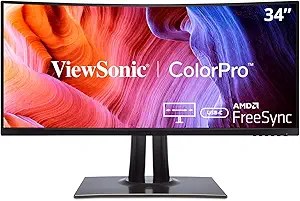
Conversely, ViewSonic stands as one of the original stalwarts of dedicated display technology. Founded in California with a global footprint, the brand built its reputation on reliability, ergonomic utility, and exceptional price-to-performance metrics for enterprise and education environments. While ViewSonic also produces competitive gaming displays (under its Omni and Elite banners) and professional creator panels (the ColorPro series), the brand's foundational philosophy centers on practical dependability, color fidelity out of the box, and accessible pricing across the entire market spectrum. ViewSonic prioritizes intuitive setup, robust build ergonomics, and value-engineered panels that maximize utility per dollar spent.
When choosing between Asus and ViewSonic, buyers are fundamentally deciding between two different design ethos: Asus's bleeding-edge, high-spec approach that commands premium price tags for class-leading performance, versus ViewSonic's pragmatic, balanced approach that often delivers near-parity performance at significantly more accessible price points.
Key Differences & Technological Comparison
To evaluate these brands objectively, it is crucial to analyze their respective display technologies, panel sourcing, firmware tuning, and specialized market segments:
- Gaming Performance & Panel Innovation: Asus is an indisputable market leader in monitor innovation. Under its ROG umbrella, Asus frequently debuts world-first specifications, such as 540Hz eSports TN panels, tandem OLEDs, and custom heatsink-cooled QD-OLED displays with proprietary Extreme Low Motion Blur (ELMB) Sync. ViewSonic competes vigorously in the mainstream gaming space with its Omni series, offering exceptional response times and adaptive sync at budget-friendly price tiers. However, its flagship gaming line, Elite, lacks the rapid deployment of next-gen panel tech (such as fourth-gen OLED or high-zone Mini-LED) seen in Asus's lineup.
- Color Accuracy & Creative Workflows: ViewSonic’s ColorPro (VP) series punches far above its weight class, featuring factory-calibrated Delta E < 2 accuracy, integrated color wheel peripherals on select models, and extensive hardware calibration capabilities via third-party colorimeters. Asus counters with its prestigious ProArt series. While entry-level ProArt displays offer similar value, high-tier ProArt models incorporate professional broadcast features like built-in motorized colorimeters, support for multiple HDR formats (Dolby Vision, HDR10, HLG), and true 10-bit color pipelines that rival reference displays costing thousands more.
- Build Quality, Ergonomics & Design: ViewSonic favors practical, understated aesthetics suitable for office and studio spaces, often featuring matte black plastics, compact desktop footprints, and highly versatile stands with generous swivel, pivot, and height adjustments. Asus adopts a bifurcated strategy: ProArt units feature minimalist, brushed-aluminum industrial designs with precise measurement scales etched onto the bezel, while ROG monitors feature cybernetic motifs, integrated Aura Sync RGB lighting, and robust, wide-stance tripod bases that consume significant desk depth.
- OSD, Firmware & Feature Sets: Asus provides one of the most comprehensive on-screen display (OSD) interfaces in the industry, driven by responsive tactile joysticks and companion desktop software (DisplayWidget) that allows software-level control of display profiles and hotkeys. ViewSonic’s OSD systems are stable and functional, but older button layout implementations and less cohesive companion software make deep customization somewhat more cumbersome compared to the Asus ecosystem.
Pros & Cons Comparison
Asus: Pros & Cons
- Pro: Consistently leads the industry in implementing cutting-edge technologies (Mini-LED, high-refresh OLED, custom heatsinks).
- Pro: ProArt and ROG monitor firmware provide exceptional calibration, custom gaming overlays, and extensive profile switching.
- Pro: Patented ELMB-Sync allows simultaneous use of backlight strobing and variable refresh rate (VRR).
- Con: Premium product tiers (ROG Swift, high-end ProArt) command steep pricing premiums over competitors.
- Con: Aggressive ROG styling and large tripod-style stands demand significant desk real estate.
ViewSonic: Pros & Cons
- Pro: Superior price-to-performance ratio across entry-level, business, and mid-tier gaming displays.
- Pro: ColorPro monitors offer studio-grade color accuracy and uniform panel consistency at accessible prices.
- Pro: Functional, clean designs with small desk footprints and versatile ergonomic articulation.
- Con: Slow to roll out the latest display innovations compared to Asus.
- Con: Elite gaming series lacks the brand prestige and bleeding-edge specifications of Asus ROG.
Performance, Durability & Value Analysis
From a longevity perspective, both manufacturers demonstrate reliable component sourcing, predominantly utilizing panels from industry giants such as LG Display, AU Optronics, BOE, and Samsung Display. Asus sets a benchmark for performance durability in the enthusiast segment by engineering bespoke cooling solutions. For its high-brightness Mini-LED and high-refresh OLED monitors, Asus routinely implements custom internal heatsinks and intelligent thermal throttling algorithms to effectively mitigate burn-in and maintain peak panel luminance over years of sustained operation. ViewSonic achieves commendable long-term reliability through simplicity; its thermal management relies on proven passive cooling, and its internal power supply units across the enterprise lines have proven resilient in continuous-duty workplace environments.
Value analysis reveals a stark divergence based on market segment. ViewSonic represents an undisputed champion of value in the $150 to $500 category. Whether you are outfitting an office fleet, buying a reliable 144Hz–180Hz IPS gaming display, or purchasing a 4K creative display with factory-calibrated accuracy, ViewSonic routinely undercuts comparable Asus units by 15% to 30% without sacrificing essential performance. However, once your budget extends into enthusiast territory ($700 and beyond), Asus justifies its price tag through superior firmware, best-in-class motion blur handling, premium materials, and state-of-the-art visual hardware that ViewSonic simply does not manufacture.
Final Verdict: Which Brand Should You Choose?
Your choice between Asus and ViewSonic should be dictated by your specific performance requirements, budget ceilings, and aesthetic preferences:
Choose Asus if: You demand uncompromised performance and have the budget to match. Competitive eSports players seeking the highest available refresh rates and lowest motion blur should look directly at Asus ROG displays featuring ELMB-Sync. High-end video editors, colorists, and VFX artists requiring hardware-level calibration, Dolby Vision compliance, and true reference performance will find the Asus ProArt series to be an industry benchmark that outclasses ViewSonic’s top offerings.
Choose ViewSonic if: You are seeking maximum return on investment. If you want a dependable, color-accurate monitor for graphic design and photography without spending thousands, the ViewSonic ColorPro series is unmatched in value. Furthermore, everyday gamers looking for fluid 1080p, 1440p, or entry 4K gaming will find ViewSonic’s Omni series exceptionally capable, highly ergonomic, and far more cost-effective than Asus's premium-priced alternatives.
Affordability
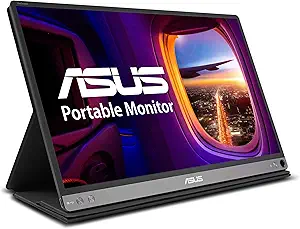
When evaluating affordability in the monitor market, Asus and ViewSonic approach price-to-performance from distinct engineering and demographic angles. Asus generally structures its catalog with a value-add pricing strategy, prioritizing aggressive feature sets tailored toward performance tiers like its TUF Gaming and ProArt lines. In the sub-$300 category, Asus often integrates proprietary software features, higher native refresh rates (such as 165Hz to 180Hz on budget panels), and adaptive sync enhancements like Extreme Low Motion Blur (ELMB). However, achieving these competitive price points in entry-level Asus displays sometimes involves noticeable compromises in mechanical chassis rigidity, uniformity of backlighting, and the inclusion of bare-minimum, tilt-only ergonomic stands that frequently compel users to purchase aftermarket VESA mounts.
Conversely, ViewSonic represents the quintessential budget-conscious, utility-first brand, dominating the strictly economical and enterprise-procurement spheres with its VA and Omni series. ViewSonic consistently undercuts Asus at baseline price tiers by focusing on core display fundamentals rather than elaborate gamer-centric aesthetics or aggressive marketing branding. While their budget monitors may feature utilitarian plastic housings and slower, utilitarian on-screen display (OSD) menus, ViewSonic frequently provides superior factory color calibration and remarkably low out-of-the-box delta-E values in its budget-friendly productivity panels. The structural engineering of low-cost ViewSonic monitors is intentionally spartan, saving manufacturing costs to invest in reliable panel longevity and comprehensive three-year warranties with zero-dead-pixel policies that outshine Asus's budget-tier warranty coverage.
Ultimately, the better-value choice hinges on how consumers define their display priorities per dollar spent. ViewSonic is the objectively superior option for raw affordability, offering the lowest initial financial barrier for standard office workflows, casual content consumption, and cost-effective multi-monitor workplace deployments. Asus, by comparison, provides a higher ceiling of functional affordability; although buyers pay a slight premium relative to ViewSonic at the absolute entry level, Asus delivers substantially greater pixel-response engineering, higher refresh bandwidth, and gaming-oriented firmware that make their affordable monitors punch far closer to high-end performance benchmarks.
Customer Support & Warranty
When evaluating the post-purchase experience and long-term reliability in the monitor market, Asus presents a sophisticated, tiered warranty ecosystem closely tied to its specific product lines. Standard business displays and mainstream TUF Gaming monitors generally include a robust 3-year limited warranty, but Asus truly distinguishes itself with its flagship Republic of Gamers (ROG) and ProArt series. ProArt displays benefit from advanced color-accuracy guarantees and, in some regions, exclusive perks like the Asus Onsite Exchange service, while select high-end OLED displays now feature up to a 3-year warranty that explicitly covers burn-in—a significant engineering and financial commitment for consumers worried about organic panel degradation. Furthermore, Asus monitors often incorporate a Zero Bright Dot (ZBD) policy for high-tier models. However, the brand’s technical support network experiences friction due to its massive, decentralized global infrastructure; navigating Asus’s RMA portals can be cumbersome, and users frequently report inconsistent turnaround times and bureaucratic friction when dealing with tier-one customer service representatives.
Conversely, ViewSonic offers one of the most reliable and consumer-friendly warranty frameworks in the display industry, prioritizing transparency and straightforward support execution. ViewSonic stands out by offering a standardized 3-year limited warranty across virtually its entire commercial, gaming (OMNI/XG), and professional (ColorPro) monitor portfolio, which covers parts, labor, and the LCD backlight panel. Where ViewSonic holds a distinct competitive edge is in its clear-cut pixel policies and customer-centric support programs. Notably, ViewSonic frequently utilizes an industry-leading "Express Exchange" service for both enterprise and consumer tiers, ensuring minimal operational downtime by shipping a replacement display to the user before the defective unit is even received back at their service center. While ViewSonic’s high-end engineering may not possess the sprawling ecosystem prestige of Asus ROG, its North American and European support infrastructure is significantly more accessible, featuring direct, domestic-based phone support with far less automated runaround.
Ultimately, the practical trade-off between Asus and ViewSonic in customer support and warranty comes down to specialized panel protection versus operational reliability. Asus delivers an aggressive, highly engineered safety net specifically designed for high-risk, cutting-edge hardware—such as its proactive OLED panel care and burn-in warranties—making it the preferable choice for enthusiasts who demand bleeding-edge performance and are willing to endure a potentially sluggish ticketing system if repairs arise. In contrast, ViewSonic is the superior pick for commercial deployers, content creators, and mainstream gamers who prioritize logistical efficiency and stress-free service. With fewer hidden warranty caveats, a superior rapid-replacement framework, and consistently praised human-centered customer service, ViewSonic provides a more frictionless long-term ownership experience.
Picture Quality
When evaluating picture quality between Asus and ViewSonic, both brands demonstrate distinct engineering philosophies shaped by their primary market segments. Asus leverages its dominant position in gaming and pro-tier content creation via its ROG and ProArt lineups, respectively. In high-end Asus displays, engineering focus is directed toward cutting-edge panel technology, including advanced Mini-LED backlighting, factory-calibrated QD-OLEDs, and proprietary color processing. Asus ProArt monitors are distinguished by exceptional delta E color accuracy (often ΔE < 1), extensive color space coverage (100% sRGB, 99% DCI-P3/Adobe RGB), and robust internal Look-Up Tables (LUTs) that support hardware-level calibration. On the gaming side, ROG monitors excel in dynamic contrast, HDR tone-mapping, and extreme motion clarity with minimal overshoot, though entry-to-mid-range TUF Gaming models sometimes compromise on uniform black levels and exhibit noticeable IPS glow or backlight bleed.
ViewSonic, by contrast, grounds its image quality in a legacy of workplace color precision and enterprise reliability, predominantly through its ColorPro and Elite series. ViewSonic panels, particularly within the ColorPro line, routinely challenge top-tier creative displays by integrating uniform screen technology that actively combats luminance variations across the panel surface. ViewSonic also excels in out-of-the-box accuracy; their displays frequently offer superior pre-set color tuning compared to budget-to-mid Asus offerings, minimizing the immediate need for user calibration. However, where ViewSonic occasionally trails Asus is in the ultra-premium high dynamic range (HDR) segment. While ViewSonic delivers commendable contrast and deep blacks on its IPS and VA displays using standard local dimming, it has been slower to deploy dense Full-Array Local Dimming (FALD) architectures and rapid-refresh OLED variants, leading to less impactful peak luminance and minor blooming in high-contrast scenes.
The practical trade-off between the two brands ultimately hinges on dynamic performance versus static precision across price tiers. For consumers demanding bleeding-edge visual fidelity—such as vibrant HDR rendering, deep OLED blacks for cinematic multimedia, or ultra-responsive panels with zero motion blur—Asus holds a technical advantage due to its aggressive implementation of state-of-the-art display innovations. Conversely, for graphic designers, digital artists, and everyday users prioritizing consistent color balance, uniform edge-to-edge brightness, and dependable out-of-the-box color fidelity at a more accessible price point, ViewSonic represents a remarkably stable and cost-effective choice.
Build Quality & Durability
When assessing engineering architecture and physical durability, Asus exhibits a highly segmented, precision-oriented approach tailored to distinct user tiers. Within its gaming and creator flagships—notably the Republic of Gamers (ROG) and ProArt series—Asus utilizes heavy-gauge aluminum alloy chassis, reinforced steel sub-frames, and premium matte-textured plastics that aggressively resist flex, creaking, and thermal degradation. ROG models often incorporate specialized heatsinks and custom heat-dissipation layouts to preserve internal panel health and minimize component burnout during prolonged high-refresh sessions. However, Asus’s entry-to-mid-range offerings, such as the budget TUF Gaming and standard ZenScreen lines, make notable trade-offs: the exterior shells transition rapidly to lighter, prone-to-scratch ABS plastics, and the included ergonomic stands exhibit moderate wobble when subjected to mechanical keyboard reverberations, reflecting a design ethos heavily skewed toward high-end structural investment.
Conversely, ViewSonic prioritizes industrial resilience and uniform structural stability across its commercial, enterprise, and ColorPro portfolios. Eschewing the sharp, angular aesthetic common to gaming brands, ViewSonic focuses on robust, utilitarian casework characterized by thick, uniform polycarbonate plastics and rugged, wide-footprint bases. Models within their VG and VP series feature commercial-grade metal-core pivot hinges and internal power deliveries rated for exhaustive duty cycles in enterprise and professional environments. Furthermore, ViewSonic's monitor casings are typically engineered with generous passive convective venting, mitigating internal thermal buildup without resorting to fragile internal cooling fans. While ViewSonic’s consumer and entry-level Omni gaming displays may visually lack the sophisticated structural polish and micro-bezel tolerance of premium Asus panels, their structural execution feels systematically more uniform, rarely suffering from the flimsy, hollow sensation found in Asus’s lower-tier monitors.
Ultimately, the practical trade-off between the two brands centers on localized high-end engineering versus consistent utility. Asus captures the absolute upper boundary for build sophistication; a high-end ProArt or ROG display delivers unmatched torsional rigidity, aerospace-grade materials, and superior mechanical precision across its articulation points. However, consumers purchasing Asus hardware at lower price points must accept compromises in stand stability and bezel uniformity. ViewSonic, meanwhile, offers fewer high-fashion design accents but establishes a higher baseline of functional durability, meaning an everyday ViewSonic panel is often better built for long-term mechanical abuse, commercial wear, and physical longevity than a comparably priced consumer model from Asus.