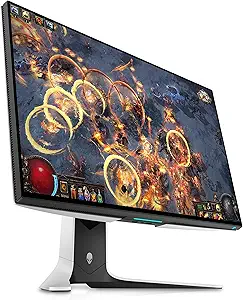
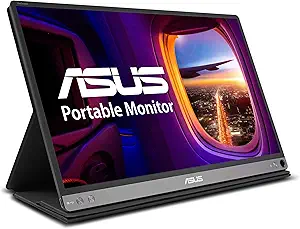
Asus vs Alienware: Overview & Brand Philosophy
In the competitive realm of desktop displays, Asus and Alienware represent two distinct philosophies toward performance, aesthetics, and target demographics. Asus, a Taiwanese hardware giant, operates with an expansive, engineering-driven ethos. Rather than confining itself to a single market tier, Asus spans the entire spectrum of monitor technology through dedicated sub-brands: Republic of Gamers (ROG) for uncompromising eSports and enthusiast gaming, TUF Gaming for budget-conscious performance, and ProArt for high-precision creative professionals. Asus often functions as an industry pioneer, frequently being among the first to bring cutting-edge panel technologies—such as 540Hz refresh rates and tandem OLED configurations—directly to retail shelves.
Conversely, Alienware—the premium gaming subsidiary of Dell Technologies—takes a more curated, luxury-focused approach. Alienware rarely targets the budget or professional color-grading sectors, choosing instead to dominate high-end gaming and immersive workstation displays. Its brand philosophy leans heavily into the "Legend" industrial design language, featuring sculpted white-and-gray chassis, integrated cable management, and customizable AlienFX RGB lighting. Dell’s backing affords Alienware significant supply-chain leverage, enabling them to lead major hardware transitions, most notably championing Samsung’s Quantum Dot OLED (QD-OLED) technology before many competitors while coupling it with Dell’s enterprise-grade warranty infrastructure.
Key Differences & Technological Comparison
When assessing core display technologies, the primary divergence lies in catalog breadth versus specialized implementation. Asus embraces almost every display paradigm available: Fast IPS, ultra-fast TN panels for competitive eSports, Mini-LED with thousands of local dimming zones, and both WOLED (White OLED) and QD-OLED. This variety ensures that whether a buyer needs extreme motion clarity for counter-strike or uniform color accuracy across DCI-P3 and Adobe RGB spaces via Asus ProArt, there is a dedicated solution. Asus's on-screen displays (OSD) also cater extensively to enthusiasts, offering hardware-level crosshairs, shadow boost algorithms, and granular trace-free overdrive adjustments.
Alienware focuses intensely on panel refinement, particularly within curved ultrawide form factors and next-generation QD-OLED panels. By utilizing Quantum Dot layers over blue OLED self-lit pixels, Alienware's premier displays deliver higher color volume and brighter perceived specular highlights than standard WOLED alternatives. Furthermore, Alienware prioritizes clean integration and cooling; their monitors frequently utilize custom thermal designs with passive or near-silent active cooling systems designed to prevent image retention without causing acoustic distraction. Alienware’s physical build quality often feels more unified and substantial, whereas Asus designs—particularly in the ROG lineup—tend to feature aggressive geometric lines, external power bricks, and gamer-centric motifs that may not blend as easily into minimalist home offices.
Pros & Cons Comparison
Asus Monitors
- Pros:
- Extremely diverse catalog catering to budget gamers (TUF), professionals (ProArt), and high-end enthusiasts (ROG).
- Pioneering performance specs, including industry-leading refresh rates (up to 540Hz) and advanced Mini-LED implementations.
- Comprehensive OSD settings, offering deep calibration features, custom color profiles, and gaming overlays.
- Broad integration of custom heatsinks on OLED models to maintain peak brightness without noisy fans.
- Cons:
- Aggressive "gamer" styling on ROG models that can feel polarizing in professional setups.
- Customer support and RMA service can be inconsistent depending on the geographic region.
- Lower-tier TUF models often have mediocre HDR performance and average contrast ratios.
Alienware Monitors
- Pros:
- Industry-standard 3-year premium warranty that explicitly includes coverage for OLED burn-in.
- Distinctive, modern "Legend" industrial design that looks sophisticated in both gaming and office spaces.
- Superb factory color calibration on high-end QD-OLED models right out of the box.
- Robust Dell-backed logistics, offering rapid advanced panel exchanges during warranty claims.
- Cons:
- Narrower portfolio, with virtually zero options for budget buyers under the mid-tier price point.
- Lack of a dedicated color-critical creative line comparable to Asus ProArt.
- Heavy stands with broad footprints that consume substantial desk depth.
Performance, Durability & Value Analysis
From an objective performance and durability perspective, both manufacturers demonstrate exceptional engineering, but their paths diverge regarding long-term ownership security. Asus typically squeezes the absolute maximum performance from its silicon and panels. Their ROG Swift monitors consistently push response times to their absolute physical limits with minimal overshoot artifacts, making them the default choice for competitive players where milliseconds matter. However, Asus’s standard manufacturer warranties are often standard 1-to-3 year coverage that historically possessed ambiguities regarding OLED burn-in, though recent policies have begun to adapt to market pressures.
Alienware commands a decisive advantage in long-term ownership confidence and customer peace of mind. By providing a comprehensive 3-year warranty that explicitly covers burn-in on their OLED models—backed by Dell’s Advanced Exchange Service, which ships a replacement monitor before you return the defective unit—Alienware mitigates the single largest consumer anxiety surrounding next-gen displays. In terms of value, Alienware's high-end monitors are often priced aggressively against Asus’s flagship ROG displays, frequently undercutting them by $100 to $200 while offering equivalent or superior QD-OLED technology and better post-purchase service.
Final Verdict: Which Brand Should You Choose?
The optimal choice between Asus and Alienware ultimately hinges on your specific use case, aesthetic tastes, and tolerance for post-purchase risk:
Choose Asus if: You are an ultra-competitive eSports gamer demanding the highest refresh rates on the market (360Hz to 540Hz), a creative professional requiring the verified color gamuts and hardware-calibration features of the ProArt series, or a budget-focused builder looking for strong price-to-performance within the TUF Gaming lineup. Asus is unmatched if you want cutting-edge niche technology and granular control over your display's internal processing.
Choose Alienware if: You are shopping for a mid-to-high-end gaming or productivity display—especially in the QD-OLED or ultrawide categories—and demand best-in-class customer support. Alienware is the superior option for consumers who prioritize refined aesthetics, out-of-the-box color fidelity, and the long-term safety net of a clear, comprehensive burn-in warranty backed by Dell’s reliable global logistics network.
Affordability
When evaluating affordability in the monitor space, Asus demonstrates a far more dynamic and stratified approach than Alienware. Asus achieves budget diversity through distinct sub-brands: their entry-level Eye Care and VP series dominate the sub-$150 market, the TUF Gaming line targets the hyper-competitive $200–$400 mid-range, and the elite Republic of Gamers (ROG) tier commands top-dollar pricing. This vertical integration allows Asus to engineer displays for price-conscious consumers by systematically shedding non-essential luxuries—such as complex multi-directional stands, metal accents, or proprietary backlighting systems—in favor of high-value technical performance, like 144Hz-plus refresh rates and 1ms response times on cost-effective IPS or VA panels. Consequently, Asus democratizes modern display technology, granting budget-constrained gamers and office workers access to high-performance features without an aggressive financial barrier to entry.
Conversely, Alienware operates almost strictly in the premium-to-enthusiast price bracket, effectively abandoning the entry-level segment altogether. Under Dell’s gaming umbrella, Alienware monitors routinely start where mainstream Asus models peak, commanding prices upward of $400 and frequently climbing past $1,000 for their flagship QD-OLED and ultra-high-refresh G-Sync Ultimate panels. From an engineering standpoint, Alienware justifies its steep price premium by eschewing budget-tier compromises; they integrate heavy-gauge aluminum stands, custom cable-routing channels, premium alienFX lighting, and industry-leading thermal cooling solutions engineered to mitigate OLED burn-in. While this high floor means Alienware is virtually inaccessible to consumers with rigid budget constraints, the brand offers a surprisingly high rate of technological return at the top end of the market, frequently undercutting rival ROG monitors that carry similar enthusiast-grade QD-OLED specifications.
Ultimately, the trade-off regarding affordability boils down to structural market coverage versus holistic, high-end out-of-the-box value. For shoppers seeking raw price-to-performance efficiency under $500, Asus is the indisputable victor, allowing buyers to secure cutting-edge refresh rates and resolutions while trimming build extravagance. However, for consumers shopping exclusively in the premium OLED or ultra-wide sphere, Alienware often delivers superior net affordability; their flagship monitors often carry standard three-year advanced exchange warranties that include burn-in protection, offsetting high upfront costs with superior longevity and peace of mind. Nevertheless, due to its ubiquitous presence across every tier of purchasing power, Asus captures the crown for overall affordability in the broader monitor landscape.
Customer Support & Warranty
When evaluating customer support and warranty coverage in the gaming monitor space, Dell’s Alienware division holds a decisive industry advantage, particularly concerning post-purchase reliability and service infrastructure. Alienware monitors are backed by Dell’s enterprise-grade logistics, typically featuring a standard 3-year warranty that includes an Advanced Exchange Service, ensuring a replacement panel is shipped next business day before the defective unit is even returned. Furthermore, Alienware set the benchmark for high-end display assurance by offering an explicit 3-year warranty covering OLED burn-in on their QD-OLED lineup, coupled with Dell’s Premium Panel Guarantee, which permits a free panel replacement even if a single bright sub-pixel is detected during the limited warranty period. This direct, low-friction RMA process minimizes user downtime and reflects a customer-first engineering philosophy aimed at mitigating the anxieties inherent to bleeding-edge display tech.
Conversely, Asus—operating primarily through its Republic of Gamers (ROG) and TUF Gaming sub-brands—presents a more fragmented and historically contentious customer support ecosystem. While Asus generally matches the standard 3-year limited warranty framework and has recently integrated a 2-year to 3-year burn-in warranty on select newer OLED displays to stay competitive, its execution often relies on standard depot repair models where users must ship the unit in for inspection first. Asus's technical support quality is often hindered by centralized third-party repair centers and stringent dead-pixel thresholds; their standard ZBD (Zero Bright Dot) policy is frequently limited to specific, ultra-premium models and capped at an initial 30-day to 1-year window rather than the full term. Reports of protracted RMA turnaround times, administrative hurdles, and disputed physical damage claims can introduce significant friction for consumers facing technical hardware faults.
Ultimately, the trade-off comes down to logistical peace of mind versus aggressive hardware variety. Asus engineers some of the most technologically advanced displays on the market, pushing the envelope in refresh rates and cutting-edge panel implementations, but consumers bear a higher support risk if hardware anomalies occur. Alienware, leveraging Dell's formidable global logistics and user-friendly replacement protocols, offers demonstrably superior after-sales support with concrete guarantees against burn-in and pixel defects. For gamers and professionals who prioritize zero-downtime reliability and pain-free warranty fulfillment, Alienware remains the undisputed leader in monitor post-purchase care.
Picture Quality
When evaluating picture quality between Asus and Alienware, the distinction largely boils down to panel technology implementation and target audience tuning. Asus boasts an exceptionally diverse display portfolio, spanning from color-critical ProArt creative displays to bleeding-edge ROG (Republic of Gamers) gaming monitors. In its premium gaming segment, Asus frequently integrates cutting-edge tandem OLED and fast IPS panels engineered with proprietary optical coatings to mitigate ambient glare while preserving native contrast. Where Asus truly shines in picture fidelity is its out-of-the-box color science and granular user control. High-end Asus displays typically ship with factory calibration certifications (often achieving a Delta E of less than 2), extensive custom color space clamping (sRGB, DCI-P3, and Adobe RGB), and robust heat management systems that maintain uniform luminance across the panel, effectively preventing color shifting during prolonged use.
Alienware, Dell's enthusiast gaming division, takes a more focused and aggressive approach by heavily investing in Samsung’s Quantum Dot OLED (QD-OLED) technology. This architectural choice gives Alienware a distinct visual advantage in color volume and peak specular highlights compared to conventional W-OLED or IPS competitors. By leveraging quantum dots to generate pure RGB primaries, Alienware displays achieve breathtaking saturation levels at high brightness states without washing out white subpixels. In dark-room environments, their infinite contrast ratios, deep blacks, and exceptional HDR metadata tracking produce arguably the most visually striking and immersive imagery on the market. However, this engineering focus presents practical trade-offs: early-generation QD-OLED models suffer from ambient light scattering that can lift black levels to a purplish tint in brightly lit rooms, and minor color-fringing on text can slightly detract from fine detail clarity during desktop productivity.
Ultimately, both manufacturers achieve elite tiers of picture quality, but they cater to slightly different visual priorities. Asus is the superior choice for users seeking versatile fidelity, broad panel choice, and strict color accuracy. Whether handling color grading via a ProArt monitor or engaging in fast-paced gaming with a tuned ROG IPS or modern OLED panel, Asus provides superior anti-reflective treatments, consistent brightness limiting (Uniform Brightness features), and accurate color tracking suitable for dual-purpose workstations. Conversely, Alienware is the premier destination for pure, cinematic gaming and high-impact HDR consumption. If your setup allows for controlled ambient lighting, Alienware's mastery of QD-OLED provides class-leading color purity, punchier dynamic range, and near-instantaneous pixel response times that create an unrivaled sense of visual depth.
Build Quality & Durability
When evaluating engineering quality and structural integrity, Alienware—operating as Dell’s premium gaming subsidiary—generally sets the benchmark for industrial robustness, while Asus presents a wider spectrum ranging from utilitarian designs to over-engineered enthusiast frames. Alienware monitors (such as the AW3423DWF and AW3225QF) boast a remarkably cohesive and dense construction, distinguished by their signature "Legend" design language. Built around rigid internal metal substructures clad in premium, fingerprint-resistant, matte polymers, Alienware displays exhibit virtually zero chassis flex and boast exceptionally smooth, fluidly counterbalanced stands that suppress desk-shake with ease. In contrast, Asus approaches durability through two distinct lenses: the mainstream TUF Gaming line and the high-end Republic of Gamers (ROG) series. While TUF models often rely on standard, somewhat lightweight textured plastics that favor cost-efficiency over tank-like rigidity, Asus ROG monitors match and occasionally exceed Alienware’s physical heft with cast-aluminum tripod stands, aggressive internal bracing, and integrated heatsinks. However, the sheer mechanical complexity and sharper geometries of higher-end Asus panels introduce more potential stress points compared to Alienware’s rounded, seamless unibody philosophy.
Thermal management and panel longevity represent the most critical technical dimensions of modern monitor durability, particularly in the premium OLED and high-refresh-rate IPS sectors. Asus frequently distinguishes itself by embedding massive, custom heatsinks—and occasionally passive vapor chambers—into their flagship ROG monitors (like the Swift PG32UCDM), completely eschewing active cooling fans to guarantee silent, maintenance-free longevity. Alienware, utilizing Dell’s enterprise-grade thermal engineering, relies on sophisticated, highly calibrated, whisper-quiet micro-fans paired with direct thermal pads to prevent thermal throttling and mitigate OLED burn-in. While some purists may worry about active fan lifespans over a decade of use, Alienware's cooling architecture has proven exceptionally reliable. Furthermore, Dell backs Alienware OLED displays with an industry-leading, hassle-free three-year advanced exchange warranty that explicitly covers burn-in, conferring substantial consumer confidence and long-term security that Asus has only recently begun to mirror in specific regions, often with more stringent RMA stipulations.
Ultimately, the practical trade-offs regarding build quality hinge on mechanical resilience versus aesthetic functionality. Alienware monitors deliver consistent, enterprise-level quality control, offering minimal panel housing creak, class-leading panel-to-bezel seam tolerances, and highly durable integrated cable management channels that withstand frequent positional adjustments. Asus provides incredible technical extremes; while budget TUF models may exhibit modest panel wobble and thinner plastic enclosures, the ROG lineup provides unmatched customizability and technical utility, including heavy-duty 1/4-inch tripod sockets for streaming gear and industrial-grade port arrays. If your priority is unfaltering build consistency, robust warranty protection, and refined structural isolation, Alienware holds a slight edge; if you demand aggressive, enthusiast-grade thermal hardware and versatile physical utility, Asus ROG remains a dominant, albeit costlier, contender.