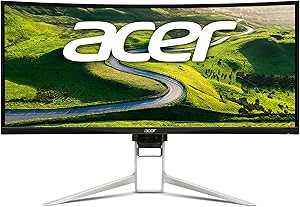
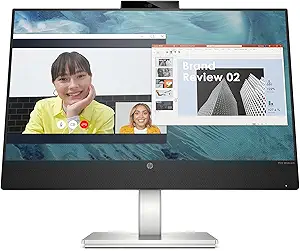
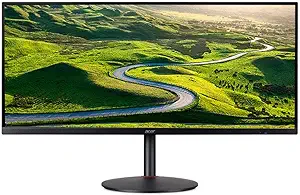
Acer vs HP: Overview
Comparing Acer and HP helps you determine which brand is best suited for your needs in Monitors. Both brands offer strong choices depending on your budget and key feature requirements.
Key Features & Comparison
Evaluate factors such as build quality, warranty, customer satisfaction, and total value before making your final purchase choice between Acer and HP.
Affordability
When evaluating affordability, Acer generally holds the advantage, particularly for budget-conscious consumers and competitive gamers seeking aggressive price-to-performance ratios. Acer’s approach centers on maximizing core technical specifications—such as elevated refresh rates, low response times, and adaptive sync technologies—at entry-level and mid-range price points. Through lines like the Nitro and SB series, Acer consistently undercuts competitors by prioritizing essential panel performance over luxurious chassis materials. This makes them a dominant force in the sub-$200 market, where buyers can easily find fast 1080p or even budget 1440p displays that punch well above their weight class in raw speed.
HP approaches affordability through a lens of general-purpose utility and office productivity rather than high-octane gaming specs. Their budget-tier offerings, such as the HP V and M series, are priced competitively against Acer, but the value proposition is distributed differently. Instead of pushing for the highest possible refresh rates, HP tends to allocate budget toward sleek aesthetic integration, minimalist micro-edge bezels, and reliable everyday color performance. While HP’s premium lines like Omen and Envy command higher price tags that reflect their sophisticated industrial design, buyers looking for the absolute cheapest route to high-performance gaming or decent everyday computing will typically find Acer the more cost-effective option.
Customer Support & Warranty
Acer offers a standard consumer warranty package that usually covers parts and labor for one to three years depending on the model tier, with their high-end Predator and ConceptD displays receiving priority treatment. However, consumer feedback regarding Acer's customer support is mixed, particularly when it comes to RMA turnaround times and pixel-defect policies. Navigating Acer’s automated service portals can be cumbersome, and users often report strict adherence to standard ISO dead-pixel thresholds before warranty claims are accepted. For standard repairs, shipping costs may occasionally fall on the consumer, making the post-purchase process feel transactional and sometimes frustrating for those encountering intermittent panel issues.
HP, backed by its massive enterprise and corporate footprint, provides a more mature and robust customer support infrastructure. Standard warranties mirror the industry average of one to three years, but HP’s service ecosystem benefits from widespread authorized repair centers and more responsive web-based troubleshooting utilities. For their enterprise and professional displays, such as the Z series, HP offers exceptional coverage, including zero-bright-dot guarantees and rapid advance-replacement options where a new unit is dispatched before the defective one is returned. While consumer-tier support for basic home monitors can still encounter standard call-center bottlenecks, HP generally outpaces Acer in consistency, parts availability, and corporate-backed accountability.
Picture Quality
Picture quality reveals fundamental differences in panel tuning and target audiences between the two manufacturers. Acer relies heavily on fast IPS and VA panels sourced from leading manufacturers like AU Optronics (AUO), prioritizing motion clarity, reduced ghosting, and low input latency. In their gaming segments, Acer calibrates displays to maintain visibility in dark scenes via proprietary black-boost algorithms, though this can sometimes result in washed-out black levels and lower static contrast ratios. At the higher end, their ConceptD creator series demonstrates exceptional color accuracy with factory-calibrated Delta E < 2 ratings and broad Adobe RGB coverage, proving Acer is capable of serious visual fidelity when departing from its gaming-first focus.
HP, by contrast, emphasizes natural color rendition, viewing comfort, and uniform backlighting across its broader consumer and professional catalog. HP’s M-series and Z-series displays excel in color realism, factory calibration out of the box, and anti-glare panel treatments that effectively mitigate ambient reflections in brightly lit office spaces. While HP's Omen gaming line delivers competitive response times and deep contrasts, HP’s overarching panel philosophy leans toward balanced, eye-friendly productivity with features like Eyesafe certified low-blue-light hardware. For pure visual fidelity in office, graphic design, and mixed-media environments, HP often provides a more cohesive, color-accurate image, whereas Acer takes the lead in fluid motion rendering and competitive visual clarity.
Build Quality & Durability
In the realm of build quality and durability, Acer frequently makes functional concessions in order to keep prices accessible. Many entry-to-mid-range Acer monitors feature lightweight plastic enclosures, glossy finishes that attract fingerprints, and rudimentary tilt-only stands that can feel wobbly during intense typing or desk movement. The internal components and panel longevity are generally dependable, but the tactile feel of their chassis and on-screen display (OSD) control buttons can feel utilitarian. To obtain premium build characteristics—such as solid metal bases, robust articulation, and integrated cable management—buyers must step up to Acer’s flagship Predator or ConceptD models, where structural integrity improves substantially.
HP exhibits a clear superiority in structural design and material refinement, drawing heavily from its heritage in commercial and enterprise hardware. Even entry-level HP monitors frequently feature aluminum accents, clean lines, and remarkably rigid, low-profile bases that maximize desk space while minimizing vibration. The fit and finish across the chassis, seam tolerances, and the tactile feedback of navigation buttons are noticeably superior to comparable budget models from Acer. In the mid-to-high tier, such as the HP Envy, Z, and Omen series, the build quality reaches premium standards with robust height, swivel, and pivot mechanisms that endure heavy, long-term daily use without developing hinge play or structural fatigue.