Definitive Technology vs Energy: Overview
Comparing Definitive Technology and Energy helps you determine which brand is best suited for your needs in Home Theaters. Both brands offer strong choices depending on your budget and key feature requirements.
Key Features & Comparison
Evaluate factors such as build quality, warranty, customer satisfaction, and total value before making your final purchase choice between Definitive Technology and Energy.
Features
Definitive Technology distinguishes itself through an array of proprietary acoustic technologies engineered to maximize spatial depth and low-end extension. Central to DefTech's feature set is Forward-Focused Bipolar Array (FFBA) technology, which fires sound both forward and backward to create an expansive, realistic soundstage without sacrificing pinpoint imaging accuracy. Furthermore, their flagship floorstanding models often incorporate Integrated Powered Subwoofers with Intelligent Bass Control, allowing users to fine-tune deep low-frequency output directly from the speaker while bypassing the need for dedicated floor-standing sub enclosures. Add-on elevation modules for Dolby Atmos and DTS:X seamlessly clip into top-tier cabinets, providing high-channel count 3D audio without requiring intrusive in-ceiling installations.
Energy, conversely, relies on precision passive engineering and specialized driver mechanics rather than active electronics within the speaker cabinets. Their standout technical hallmark is the patented Convergent Source Module (CSM), which closely aligns the tweeter and midrange drivers to act as a single point source, minimizing phase anomalies and expanding the listening sweet spot. Energy also integrates Elliptical Surround technology (Ribbed Elliptical Surround) into its woofers, which reduces driver distortion and increases linear excursion compared to conventional half-roll rubber surrounds. While Energy systems lack the onboard active amplification, Atmos-integrated modules, and complex driver arrays found in Definitive Technology's portfolio, their straightforward, high-efficiency passive configurations make them remarkably easy to drive with budget or mid-range AV receivers.
Performance
In terms of performance, Definitive Technology excels in dynamic scale, cinematic punch, and sub-bass authority. The integration of powered subwoofers coupled with passive bass radiators allows DefTech towers to achieve flat response curves down into true infrasonic frequencies, delivering tactile visceral impact during heavy movie action sequences. Midrange delivery is articulate and transparent thanks to their Balanced Double Surround System (BDSS) drivers, which prevent unwanted cone breakup during high-volume transients. Aluminum dome tweeters reproduce upper frequencies with crystal clarity and crisp decay, rendering movie Foley effects with surgical precision. The bipolar dispersion pattern broadens the soundstage, making medium-to-large listening rooms sound cavernous and deeply layered.
Energy focuses on a smooth, flat frequency response that favors vocal accuracy, micro-detail, and cohesive multi-channel blending. Because of the NRC-backed acoustic tuning, Energy speakers exhibit minimal colorations in the vocal range, making dialogue exceptionally legible even at lower listening levels. High frequencies, handled by hyperbolic aluminum dome tweeters, are clean and airy without becoming overtly harsh or fatiguing during extended listening sessions. However, due to smaller cabinet volumes and passive architectures, Energy systems cannot rival the sheer dynamic slam, maximum SPL levels, or low-frequency depth of Definitive Technology. In compact to medium living rooms, Energy provides exceptional balance, but it will encounter strain in sprawling, dedicated theater rooms where Definitive Technology thrives effortlessly.
Design
The aesthetic approach of Definitive Technology emphasizes a sleek, architectural, and monolithic presence that blends seamlessly into contemporary luxury interiors. Many of their modern towers and satellite speakers feature acoustically transparent fabric wraps crowned by aircraft-grade extruded aluminum top plates and sturdy cast aluminum bases. This minimalist, fabric-sock design hides the complex multi-driver arrays underneath, presenting a clean silhouette that avoids visual clutter. Cabinet construction is heavily braced with resonance-free medite, engineered to handle the immense internal pressures generated by active subwoofers without introducing cabinet buzz or acoustic distortion.
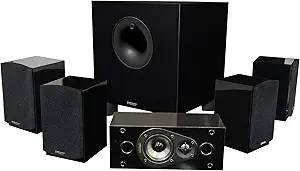
Energy takes a more conventional, utilitarian approach to design, characterized by compact footprints and classic audio styling. High-gloss piano-black finishes and smooth satin baffles are common across their satellite and bookshelf lines, giving compact packages like the Take Classic an upscale look that complements flat-panel televisions. The diminutive stature of Energy's satellite speakers makes them exceptionally easy to wall-mount or place on standard bookshelves, offering high domestic acceptance in multi-purpose family rooms. While DefTech relies on structural heft, premium acoustic fabrics, and striking industrial materials, Energy focuses on space-saving practicality, clean lines, and unobtrusive placement that avoids overwhelming a room's decor.