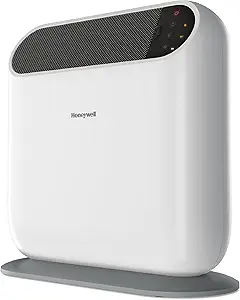

Honeywell vs NewAir: Overview & Brand Philosophy
When selecting a supplemental space heater, consumers frequently weigh mass-market accessibility against specialized, heavy-duty performance. Honeywell, a legacy industrial conglomerate operating under the Kaz/Helen of Troy consumer licensing umbrella for home comfort, represents the epitome of ubiquitous, reliable household heating. Built around a philosophy of accessible safety, energy efficiency, and broad consumer utility, Honeywell manufactures heaters that cater primarily to residential living rooms, bedrooms, and home offices. Their design approach emphasizes digital climate control, multi-layered safety certifications, and intuitive usability aimed at standard consumer environments.
NewAir approaches the space heating market from a distinctly different vantage point. Established as a compact appliance innovator, NewAir leans heavily into robust, high-output utility, commercial-grade engineering, and rugged construction. The brand frequently targets environments where standard consumer heaters fail: uninsulated garages, dedicated workshops, basements, and job sites. NewAir’s brand philosophy prioritizes sheer heating capacity, heavy-gauge materials, and industrial styling, producing units capable of moving significant volumes of air through harsher, demanding environments while still maintaining a niche line of high-aesthetic residential options.
Understanding these divergent philosophies is critical for prospective buyers. While Honeywell optimizes for silent, ambient comfort and energy-conserving daily routines inside modern, insulated homes, NewAir engineers its flagship hardware to solve localized heating deficits through raw thermal power and durable steel chassis. Consequently, this comparison is not merely a brand contest, but a direct assessment of domestic refinement versus utilitarian durability.
Key Differences & Technological Comparison
The core technological divergence between Honeywell and NewAir lies in their choice of heating elements, air-displacement mechanics, and intended electrical footprints.
Honeywell predominantly leverages advanced ceramic PTC (Positive Temperature Coefficient) elements, micathermic panels, and forced-fan quartz systems engineered for localized 120V/1500W residential circuits. A prime example of Honeywell’s proprietary engineering is its 360-degree surround technology and "ThermaWave" heat distribution, which uses angled louvers to maximize convection currents without noisy fan operation. Honeywell also integrates sophisticated digital thermostats equipped with EnergySmart® technology, which automatically modulates wattage consumption between 750W and 1500W based on the ambient room temperature, preventing energy spikes and overshooting setpoints.
In contrast, NewAir excels in high-voltage industrial heating, with a heavy emphasis on 240V, high-draw tubular heating coils alongside standard residential ceramic towers. Models like the NewAir G-series utilize commercial-grade, heavy-duty fan blades encased in powder-coated steel enclosures that resist physical impacts, dust, and corrosive workshop environments. Rather than gentle ambient radiant dispersion, NewAir heaters are built for high CFM (Cubic Feet per Minute) air delivery, designed to penetrate drafts and uninsulated spaces quickly. While Honeywell relies on plastic, cool-touch exterior housings for domestic safety, NewAir prioritizes heavy-gauge steel shells, adjustable mounting brackets, and hardwired installations suitable for ceiling or wall mounting in garages.
Safety systems also reflect these differing use cases. Honeywell incorporates redundant domestic protections, including 360-degree tip-over switches, dual overheat shutoff sensors, and flame-resistant plastic housings tested rigorously to UL standards. NewAir counters with high-temperature cut-off switches and thermal overload protection engineered specifically for high-amperage draw, with motor designs enclosed to resist sawdust and particulate intrusion that would otherwise choke a residential-style Honeywell unit.
Pros & Cons Comparison
Honeywell Heaters
- Pros:
- Advanced EnergySmart® technology actively reduces electricity draw.
- Exceptional domestic safety integration (cool-touch housings, 360-degree tip-over protection).
- Quiet operation suitable for bedrooms, nurseries, and focused office work.
- Compact, lightweight footprints with intuitive digital user interfaces.
- Cons:
- Predominantly plastic construction limits resilience in workshops or job sites.
- Restricted to standard 1500W domestic capacities; struggles in uninsulated spaces.
- Lower CFM fan throughput compared to industrial-style competitors.
NewAir Heaters
- Pros:
- High-output thermal capacity with dedicated 240V, high-wattage garage models available.
- Rugged, heavy-gauge steel construction designed to withstand industrial wear and tear.
- High CFM fan output capable of quickly heating large, drafty, or poorly insulated areas.
- Versatile mounting solutions, including heavy-duty ceiling and wall brackets.
- Cons:
- Higher acoustic footprint; industrial fans produce noticeable ambient noise.
- Utilitarian designs lack the sleek aesthetic refinement expected in modern living rooms.
- Higher initial retail price points, particularly for hardwired and high-voltage units.
Performance, Durability & Value Analysis
From a performance standpoint, the distinction between these two brands comes down to thermal strategy. In a controlled 250-square-foot bedroom, a Honeywell ceramic or surround-heat model will reach thermal equilibrium with smooth, gradual heat distribution, operating almost silently and maintaining target temperatures within a two-degree margin. However, place that same Honeywell unit in a 500-square-foot uninsulated garage during midwinter, and it will run continuously at 1500W with negligible impact on ambient temperature. This is where NewAir decisively outperforms: its high-wattage and 240V utility units deliver immediate, penetrating forced heat that conquers high ceilings, concrete floors, and cold air drafts that overwhelm residential units.
Regarding durability and long-term value, NewAir holds a physical advantage in harsh environments thanks to its metal enclosures, protected motors, and industrial switches, which resist physical damage far better than Honeywell's lightweight composites. However, for interior domestic use, Honeywell represents an outstanding value-to-cost ratio. Honeywell heaters are priced accessibly, offer long-term electronic reliability, and run efficiently enough to prevent substantial spikes on monthly power bills. NewAir commands a premium price tag, but for homeowners converting garages, outbuildings, or basements into livable workspaces, the brand provides commercial-grade durability that standard domestic heaters cannot replicate.
Final Verdict: Which Brand Should You Choose?
Your choice between Honeywell and NewAir should be dictated entirely by your heating environment, electrical setup, and structural demands:
Choose Honeywell if: You need an affordable, energy-efficient, and quiet supplemental heater for standard indoor living spaces such as bedrooms, living rooms, or home offices. Honeywell is the optimal choice for families seeking lightweight, portable units packed with failsafe domestic safety features, digital temperature moderation, and whisper-quiet operation.
Choose NewAir if: You need to heat an uninsulated garage, woodworking shop, basement, or large open space where standard 1500W space heaters fall short. NewAir is worth the premium investment if you require rugged steel construction, wall- or ceiling-mounted hardware, high-CFM air movement, or high-voltage (240V) thermal output engineered to withstand harsh, dust-prone environments.
Features
When evaluating the feature ecosystems of Honeywell and NewAir in the heating category, consumers are presented with two distinctly engineered philosophies: Honeywell leans into intelligent, user-centric safety and residential climate automation, whereas NewAir prioritizes industrial-grade thermal output and heavy-duty utility. Honeywell space heaters consistently incorporate sophisticated digital interfaces, offering features such as multi-directional oscillation (up to 360-degree heat dispersion), programmable 1-to-8 hour timers, and precise electronic thermostats. Crucially, Honeywell leads the mass-residential market in proprietary safety technology, engineering features like the SafeGuard alert badge, SafeGuard 360-degree tip-over switches, and cool-touch housing. Additionally, Honeywell frequently integrates dedicated energy-saving modes, such as their proprietary EnergySmart technology, which automatically modulates wattage consumption based on ambient room temperature to optimize efficiency without user intervention.
Conversely, NewAir structures its feature sets around high-capacity performance and specialized environments, catering to consumers needing to heat large basements, workshops, and garages. Rather than focusing on lightweight composite plastics and sleek touchpads, NewAir engineering favors rugged steel housings, commercial-grade ceramic elements, and heavy-duty fan-forced systems capable of operating on both 120V and 240V circuits. While NewAir units do include standard safety essentials—such as overheat auto-shutoff sensors and tip-over protection—their functional strengths lie in utilitarian mechanics: hardwired thermostat options, industrial mounting brackets, adjustable louvers for directional airflow targeting, and massive CFM (cubic feet per minute) output ratings. Advanced NewAir models provide remote controls and digital displays, yet the focus remains squarely on sustained thermal volume over automated ambient monitoring.
The practical trade-offs regarding features between these two brands ultimately reflect the intended usage environment. Honeywell is the superior option for bedrooms, home offices, and living spaces where low acoustic output, precise micro-climate management, and advanced touch-safe housing are non-negotiable requirements. However, Honeywell lacks the electrical infrastructure and rugged durability required for sub-zero garages or uninsulated outbuildings. NewAir excels in these demanding environments, offering the raw power, durable metal construction, and high-wattage capacities that Honeywell deliberately avoids. The trade-off for NewAir’s industrial feature set is a relative lack of energy-modulating automation and higher baseline power draw, making Honeywell the smarter choice for nuanced residential comfort and NewAir the undisputed leader for heavy-duty, large-area utility heating.
Performance
When evaluating heating performance, Honeywell and NewAir approach thermal regulation with fundamentally different engineering philosophies and target environments. Honeywell focuses heavily on balanced, energy-conscious residential climate control, utilizing advanced ceramic elements and proprietary 360-degree or ThermaWave oscillation designs to provide gentle, even ambient warmth. While typically operating within the standard 1,500-watt residential threshold, Honeywell’s technical strength lies in its precision digital thermostats, quiet blower systems, and energy-saving modes—such as EnergySmart technology—which modulate wattage automatically to maintain consistent temperatures without heavy power cycling. In contrast, NewAir engineers its lineup for raw thermal output, rapid heat dispersal, and heavy-duty utility. NewAir frequently steps beyond standard household ceramic heaters, utilizing high-velocity fans, heavy-gauge stainless steel resistive elements, and higher-voltage capacities (including 240V models drawing up to 4,000 to 5,600 watts) designed to overcome severe drafts and massive, uninsulated volumes like garages, workshops, and high-ceilinged spaces.
The practical trade-offs between these two brands center on the balance between thermal velocity and targeted comfort. A NewAir unit delivers an aggressive cubic-feet-per-minute (CFM) airflow and a rapid temperature rise over a large footprint, making it the superior performer for demanding, cold-soak environments where quick, high-intensity heat is essential. However, this high-output performance often comes with increased ambient noise and a lack of the nuanced low-wattage modulation found in Honeywell’s home-centric models. Conversely, Honeywell excels in personal and medium-room thermal comfort, minimizing cold spots and eliminating acoustic disruption through refined air-pathing and convection-assisted airflow. While Honeywell heaters lack the sheer BTU capacity to effectively warm an unheated pole barn or open commercial space, their rapid localized heat transfer and dependable thermal equilibrium make them significantly more efficient, comfortable, and practical for daily bedroom, nursery, or home office use.
Design
From an architectural standpoint, Honeywell and NewAir approach space heater design through fundamentally different philosophies: Honeywell prioritizes mass-market utility and domestic safety, while NewAir emphasizes heavy-duty resilience and specialized environmental functionality. Honeywell’s lineup largely employs high-grade, cool-touch flame-retardant thermoplastics structured into compact, rounded silhouettes that blend seamlessly into bedrooms and offices. Their engineering focuses heavily on ergonomics and spatial efficiency, featuring recessed carry handles, internal cord storage, and lightweight chassis often weighing under eight pounds. In contrast, NewAir leans toward industrial-grade ruggedness, utilizing heavy-gauge stamped steel housings, powder-coated finishes, and structural tubular roll cages capable of withstanding the mechanical stress of workshops, garages, and commercial jobsites. While Honeywell’s structural choices maximize portability and residential hazard prevention, NewAir sacrifices lightweight mobility in favor of high-impact durability and thermal resilience under extreme operational loads.
When evaluating control interfaces and thermal dispersion mechanics, the two brands diverge sharply in their technical execution. Honeywell champions advanced consumer electronics, frequently integrating digital capacitive-touch panels, programmable ambient thermostats, multi-stage oscillation (up to 360-degree radial coverage), and ultra-quiet centrifugal fan impellers designed to minimize decibel output in living spaces. NewAir adopts a more mechanical and purist approach; their garage and patio units typically rely on sealed, moisture-resistant rotary dials or heavy-duty rocker switches that can be operated while wearing work gloves, paired with high-velocity axial fans calibrated for maximum volumetric airflow (CFM) rather than silent operation. Additionally, NewAir excels in directional versatility through hardwired ceiling/wall-mounting swivel brackets and adjustable louver arrays, addressing macro-climate heating challenges that Honeywell’s floor-bound, convective-radiant designs cannot physically accommodate.
The practical trade-offs regarding design center on target-use optimization versus environmental versatility. Honeywell delivers a polished, family-safe, and acoustically insulated design package, complete with proprietary visual safety indicators like SafeGuard caution lights, but its plastic construction lacks the thermal envelope to support the ultra-dense heating elements required for spaces over 300 square feet. NewAir delivers formidable thermal engineering capable of handling sub-freezing drafts and demanding uninsulated spaces, but this comes at the expense of aesthetic integration, ambient sound levels, and tactile domestic comfort—its steel exteriors can become intensely hot, making them unsuitable for homes with small children or pets. Ultimately, consumers seeking sleek, whisper-quiet micro-climate control will favor Honeywell’s thoughtful domestic ergonomics, whereas those needing high-durability, high-output structural heating must accept NewAir’s utilitarian, industrial footprint.
Compare current retail pricing, active promotions, and verified stock availability directly from authorized stores: