








SteelSeries vs HyperX: Overview
Comparing SteelSeries and HyperX helps you determine which brand is best suited for your needs in Headphones & Earbuds. Both brands offer strong choices depending on your budget and key feature requirements.
Key Features & Comparison
Evaluate factors such as build quality, warranty, customer satisfaction, and total value before making your final purchase choice between SteelSeries and HyperX.
Features
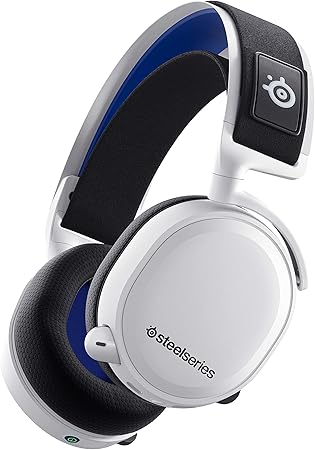
SteelSeries holds a decisive advantage in technological breadth and software integration, primarily driven by its Sonar Audio Software Suite embedded within the SteelSeries GG platform. Sonar offers pro-grade parametric EQ, independent audio routing for game, chat, and media channels, and AI-driven background noise cancellation for microphones. Beyond software, SteelSeries hardware showcases elite engineering perks such as Infinity Power Systems—featuring hot-swappable external batteries in higher-end models—alongside concurrent 2.4GHz wireless and Bluetooth streaming, allowing users to take phone calls while maintaining in-game spatial cues without interruption.
HyperX counters with a design philosophy centered on plug-and-play efficiency and unmatched endurance rather than hyper-granular customization. While the HyperX NGENUITY software provides fundamental EQ adjustments and DTS Headphone:X spatial audio, it offers noticeably less depth and algorithmic polish compared to SteelSeries Sonar. However, HyperX dominates battery performance, most notably exemplified by the Cloud Alpha Wireless, which boasts an astounding 300 hours of continuous playback on a single charge. HyperX also focuses on tangible, physical convenience—such as robust onboard volume dials, quick-detach microphones with physical LED mute indicators, and universal multi-platform compatibility that requires minimal setup across consoles and PC.
Performance
From an acoustic engineering standpoint, both brands deliver sound profiles tuned to heighten competitive awareness, but they approach frequency response with distinct signatures. SteelSeries' modern Arctis Nova lineup utilizes custom high-fidelity drivers that emphasize clarity, midrange presence, and expansive spatial imaging, making it easier to pinpoint directional audio cues like footfalls and reloading sounds in tactical shooters. While their baseline bass response can feel slightly lean out of the box compared to traditional consumer headphones, the depth of their proprietary drivers allows them to handle complex EQ curves exceptionally well without introducing harmonic distortion.
HyperX headphones, particularly the flagship Cloud and Cloud Alpha series, utilize dual-chamber driver technology designed to physically separate bass frequencies from mids and highs. This mechanical separation results in a rich, punchy, yet clear acoustic profile with energetic sub-bass that adds immersion to cinematic experiences while keeping dialogue intelligible. In terms of microphone performance, both brands utilize bidirectional and cardioid noise-canceling capsules with Discord and TeamSpeak certifications; however, SteelSeries leverages its Sonar ClearCast AI algorithms to strip out room ambiance more aggressively, whereas HyperX delivers a warmer, slightly more natural raw broadcast tone directly through its hardware capsule.
Design
SteelSeries distinguishes itself through sleek, lifestyle-oriented Scandinavian industrial design, moving away from aggressive gamer tropes toward a streamlined, contemporary aesthetic. A signature element of the Arctis series is the ski-goggle suspension headband, paired with breathable AirWeave fabric ear cushions, engineered to distribute weight evenly and minimize top-of-head pressure points. While their high-end models incorporate brushed aluminum and magnetic speaker plates for customization, their mid-tier and budget chassis utilize more plastic components, which, while lightweight, require mindful handling around the ear-cup yokes over years of extended stress.
HyperX prioritizes mechanical resilience and plush, clamping-force optimization. Built around thick, solid aluminum fork frames and heavily stitched leatherette headbands, HyperX headsets like the Cloud II and Cloud III are renowned for exceptional structural durability capable of withstanding rough daily abuse. The physical comfort of HyperX is legendary due to its ultra-dense proprietary memory foam cushions, which create an immediate, pressure-free seal around the ears that also delivers superior passive noise isolation compared to SteelSeries' fabric meshes. The trade-off is breathability: HyperX leatherette traps more heat over long sessions, whereas SteelSeries breathes better but allows more ambient room noise to bleed through.