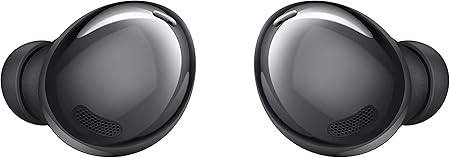
Sony vs Samsung: Overview & Brand Philosophy
When evaluating the personal audio landscape, few names carry the historical weight of Sony. With a legacy spanning decades—from the inception of the original Walkman to the modern era of high-resolution digital audio—Sony approaches headphones and earbuds through an acoustic-first lens. The Japanese titan targets audiophiles, commuters, and media professionals alike, leaning heavily into proprietary sound processing, cutting-edge active noise cancellation (ANC), and premium acoustic engineering. Sony's philosophy is rooted in standalone audio excellence, ensuring that whether a user connects to an iPhone, an Android device, or a Windows PC, the sound quality and noise suppression remain top-tier.
Samsung, by contrast, approaches the personal audio sector from an ecosystem-first vantage point. Leveraging its acquisition of Harman International and the acoustic pedigree of AKG, Samsung has systematically refined its Galaxy Buds line into essential lifestyle peripherals. Rather than trying to be a specialized audio brand for all hardware platforms, Samsung prioritizes seamless connectivity, compact ergonomics, and deep software integration within the broader Galaxy ecosystem of smartphones, tablets, and smartwatches. Their design ethos focuses on everyday convenience, portability, and lifestyle-driven utility.
The philosophical divide between the two brands is stark yet complementary: Sony builds specialized, high-performance audio hardware that adapts universally, whereas Samsung crafts intuitive, ecosystem-locked smart wearables designed to enhance the modern mobile workflow. Choosing between them requires a clear understanding of whether pure acoustic performance or integrated platform convenience takes priority.
Key Differences & Technological Comparison
The technological divergence between Sony and Samsung is most evident in their approaches to active noise cancellation, audio codecs, and form factor engineering. In the noise-canceling arena, Sony remains the industry benchmark. Devices like the WH-1000XM5 over-ear headphones and WF-1000XM5 earbuds employ dedicated silicon—such as the Integrated Processor V2 and HD Noise Cancelling Processor QN2e—working alongside high-density multi-microphone arrays to neutralize low-frequency transit hums and mid-frequency human speech with surgical precision. Samsung’s ANC on the Galaxy Buds series is competent and highly effective against continuous ambient sounds, but it often struggles with sporadic, high-frequency spikes compared to Sony’s sophisticated hardware-level dampening.
Bluetooth codec support represents another critical divergence. Sony actively champions LDAC, a high-resolution codec capable of transmitting up to 990 kbps at 24-bit/96kHz. Because LDAC is natively supported by modern Android devices and widely accepted across the industry, Sony offers accessible high-fidelity listening without hardware lock-in. Samsung relies on its proprietary Samsung Seamless Codec (SSC), which supports 24-bit/96kHz transmission but functions strictly when paired with a compatible Samsung Galaxy device. On non-Samsung hardware, Galaxy Buds drop down to standard AAC or SBC codecs, drastically limiting their fidelity.
In terms of product design and physical architecture, Sony leans toward robust, feature-dense enclosures that occasionally sacrifice compactness for thermal headroom, larger dynamic drivers, and complex acoustic chambers. Samsung excels at hyper-ergonomic, miniature designs. The Galaxy Buds portfolio consistently features smaller cases, lighter chassis, and better ingress protection ratings (such as IPX7 water resistance on premium models, compared to Sony’s standard IPX4 splash resistance), making Samsung the superior hardware option for vigorous workouts and pocketable daily carry.
Pros & Cons Comparison
Sony: Advantages
- Class-Leading Noise Cancellation: Market-leading active noise suppression capable of dampening a broader frequency spectrum than almost any competitor.
- Universal Hi-Res Audio: Broad adoption of the LDAC codec ensures high-resolution playback across nearly all modern Android smartphones.
- Comprehensive App Customization: The Sony Headphones Connect app delivers granular parametric EQ, spatial sound mapping, and intelligent location-based switching.
- Broad Product Catalog: Offers everything from entry-level wired units to industry-standard over-ear travel headphones and elite in-ear monitors.
Sony: Disadvantages
- Bulky Industrial Design: Both over-ear frames and in-ear models tend to be larger and heavier than Samsung's minimalist counterparts.
- Lower Ingress Protection: Flagship earbuds typically cap out at IPX4, offering protection only against light sweat and minor splashes.
- Higher Price Ceiling: Flagship models routinely launch at significantly higher price points than Samsung's top-tier offerings.
Samsung: Advantages
- Seamless Ecosystem Synergy: Instant pairing, auto-switching between Galaxy devices, and deep integration with One UI make setup and daily use effortless.
- Compact & Ergonomic Fit: Lightweight, discreet housings provide superior comfort for small ears and extended wear sessions.
- Superior Water Resistance: Flagship Galaxy Buds feature IPX7 or better ratings, allowing for brief water submersion and intense workouts.
- Balanced AKG Sound Signature: Tuned close to the Harman Target curve, delivering accurate, lively mids and clean bass out of the box without excessive EQ tweaking.
Samsung: Disadvantages
- Platform Lock-in: Advanced features, spatial audio head tracking, and the Samsung Seamless Codec are inaccessible on iOS and non-Samsung Android devices.
- Absence of Over-Ear Options: Samsung focuses almost exclusively on in-ear true wireless form factors, leaving the over-ear segment entirely to Sony.
- Average Battery Longevity: The miniature form factors often yield modest single-charge battery runtimes, especially with ANC continuously enabled.
Performance, Durability & Value Analysis
From an acoustic and durability perspective, both manufacturers demonstrate exceptional engineering, but with distinct wear profiles over time. Sony's structural choices favor long-haul longevity in home and transit environments. Their over-ear headphones feature replaceable ear cushions and strain-relieved hinges, though synthetic leatherette can peel after years of heavy perspiration exposure. In earbuds, Sony's proprietary polyurethane foam tips provide stellar passive isolation and grip, but they degrade faster than standard silicone tips and necessitate periodic replacements. Samsung's all-silicone ear tips and hard plastic shells resist sweat, dirt, and drop impacts exceptionally well, delivering superior longevity for gym enthusiasts and outdoor athletes who demand high ingress resistance.
When assessing value, Samsung regularly undercuts Sony on MSRP while offering aggressive carrier discounts, trade-in programs, and promotional bundles with Galaxy smartphones. For a consumer already invested in the Galaxy hardware universe, a pair of Galaxy Buds delivers outstanding return on investment through integrated software convenience. However, Sony delivers superior cross-platform value. Because a pair of Sony WH-1000XM5 or WF-1000XM5 units performs with identical acoustic precision on an iPhone, Google Pixel, MacBook, or dedicated digital audio player, the initial investment retains its utility regardless of future mobile device upgrades.
Final Verdict: Which Brand Should You Choose?
Choose Sony if: You prioritize class-leading active noise cancellation for travel, desire a pair of premium over-ear headphones, or demand high-fidelity LDAC audio across multiple hardware brands. Sony is the definitive pick for frequent flyers, home-office professionals, commuters, and critical listeners who want the highest audio quality and sound customization available without being tethered to a single smartphone manufacturer.
Choose Samsung if: Your daily driver is a Samsung Galaxy smartphone or tablet, and your lifestyle demands ultra-compact, comfortable earbuds for workouts, phone calls, and casual commuting. Samsung provides the best usability-to-price ratio for Android users inside the Galaxy fold, offering a clean, balanced sound profile, excellent physical durability, and frictionless daily operation in a pocket-friendly package.
Features
When evaluating the feature ecosystem of personal audio, Sony establishes a high benchmark with an engineering philosophy centered on acoustic versatility, device-agnostic performance, and audiophile-grade processing. Sony's flagship WH-1000XM5 and WF-1000XM5 earbuds demonstrate technical dominance through their proprietary Integrated Processor V2 and HD Noise Canceling Processor QN2e, which fuel their industry-leading adaptive active noise cancellation (ANC) and Ambient Sound modes. Sony’s features appeal broadly to audio enthusiasts due to full support for the LDAC high-resolution codec across all major operating systems. Additionally, their accompanying Sony Headphones Connect app offers unparalleled customization, including precise 20-level ambient sound adjustments, sophisticated location-based sound profiling, "Speak-to-Chat" automation, and deeply granular equalization. The primary strength of Sony’s feature set is its universality; whether connected to an Android device, an iPhone, or a PC, users retain virtually full access to every technical capability, including seamless multipoint connectivity.
Conversely, Samsung approaches personal audio with a walled-garden philosophy reminiscent of Apple, engineering its Galaxy Buds lineup to function as integrated extensions of the broader Galaxy ecosystem. While lacking the cross-platform flexibility of Sony, Samsung excels in specialized hardware integration and streamlined ease of use. Equipped with proprietary technologies like 24-bit Hi-Fi audio via the Samsung Seamless Codec (SSC) and 360 Audio with direct head-tracking, Samsung provides an exceptionally cohesive media experience—provided the user is tethered to a modern Galaxy smartphone or tablet. The Galaxy Buds feature set is heavily streamlined, leveraging automated ecosystem switching, seamless Auto Switch between Samsung devices, and deep integration with SmartThings Find and Galaxy AI for live real-time translation. However, the trade-off is stark: non-Samsung Android users lose access to proprietary high-resolution streaming, and iOS users are almost entirely locked out of app-based customization, rendering Samsung's technical strengths largely inert outside its native hardware umbrella.
From a practical standpoint, the feature comparison between Sony and Samsung pivots on the trade-off between platform neutrality and ecosystem cohesion. Sony wins on sheer technical depth, cross-device utility, and manual audio control, making it the superior choice for users who switch between mixed-brand operating systems or demand granular authority over their sound signature and noise canceling thresholds. Samsung counters with lower-latency ecosystem convenience, intelligent background automation, and innovative, lifestyle-oriented features that outshine Sony only when operating inside a unified Galaxy matrix. Ultimately, while Samsung delivers a frictionless, highly automated feature package for brand loyalists, Sony delivers a more capable, powerful, and universally accessible set of features that does not compromise technical fidelity based on the logo on the user’s smartphone.
Performance
When evaluating core audio performance, Sony firmly establishes itself as an industry benchmark through dedicated acoustic engineering and high-fidelity signal processing. Utilizing proprietary hardware such as the Integrated Processor V2 and HD Noise Canceling Processor QN2e, alongside physical features like carbon fiber composite drivers, Sony consistently delivers expansive soundstages with rich, articulate low-end and nuanced highs. Furthermore, Sony’s native support for the LDAC codec ensures high-resolution 24-bit/96kHz audio streaming over Bluetooth, appealing directly to audiophiles regardless of their source device. In contrast, Samsung relies heavily on its collaboration with AKG and computational audio algorithms to deliver a pristine, Harman-curve-tuned profile that prioritizes vocal clarity, balanced mid-tones, and dynamic separation. However, Samsung's ultimate fidelity is conditionally tied to its proprietary Seamless Codec (SSC), meaning listeners only unlock true 24-bit studio quality when paired with a modern Galaxy smartphone or tablet, leaving users on third-party Android or iOS devices with standard, lossy AAC or SBC compression.
The performance divergence extends significantly into Active Noise Cancellation (ANC), ambient processing, and microphone reliability. Sony’s multi-sensor arrays and adaptive atmospheric pressure optimization yield an industry-leading ANC experience, excelling at neutralizing not just repetitive low-frequency hums, but also unpredictable mid-range chatter and sudden transient spikes. Samsung counters with highly sophisticated beamforming voice pickup units and machine-learning DNN (Deep Neural Network) filters that arguably surpass Sony in real-world telephony, excelling at isolating human speech from high wind noise and urban cacophony. Samsung also delivers exceptionally natural-sounding Ambient Modes and ultra-low latency profiles tailored for mobile gaming. However, from a pure noise attenuation standpoint, Sony's algorithmic strength and superior passive acoustic isolation provide a noticeably deeper and more immersive threshold of silence in challenging environments like airplanes and crowded transit.
Ultimately, the practical trade-offs regarding performance reflect fundamentally different design philosophies between audio-first dominance and platform-centric integration. Sony achieves superior raw performance in spatial audio, acoustic depth, and noise cancelation without restricting its best features behind a hardware walled garden; its companion application allows comprehensive EQ sculpting and platform-agnostic optimization. Samsung, while delivering remarkably refined sound reproduction and exceptional call fidelity, optimizes its processing power around the broader Galaxy ecosystem. Features such as seamless audio handoff, 360 Audio with head tracking, and the highest-bitrate transmission require a Galaxy host device to operate at peak efficiency. For pure, uncompromising audio fidelity and elite noise suppression, Sony remains the superior performance choice, whereas Samsung provides an ultra-responsive, highly competent performance package explicitly engineered for the modern connected mobile user.
Design
From an industrial design standpoint, Sony prioritizes functional acoustic engineering and professional minimalism, resulting in a cohesive identity across its over-ear and in-ear lineups. The flagship WH-1000XM series exemplifies this with a matte-finished, stealthy silhouette that utilizes soft-fit synthetic leather and an ergonomic headband engineered for weight distribution and passive noise attenuation. However, recent generations like the WH-1000XM5 trade the space-saving collapsibility of their predecessors for a rigid, silent-joint mechanism that increases the case footprint—a notable trade-off for frequent travelers. In the true wireless earbud space, Sony’s WF-1000XM5 demonstrates remarkable miniaturization, shrinking the chassis by approximately 25% compared to the XM4 while utilizing glossy outer surfaces that, while sleek, can compromise grip and tactile security when extracting them from the compact, Qi-compatible charging case.
Samsung approaches audio design through the lens of modern, lifestyle-centric consumer electronics, heavily emphasizing organic contours and pocketability. The Galaxy Buds portfolio is defined by rounded, pebble-inspired ergonomics that sit flush within the concha, minimizing wind resistance and lateral profile compared to Sony’s more protruding driver housings. While Sony generally relies on utilitarian matte plastics, Samsung experiments with contrasting finishes, ranging from the high-gloss metallic sheen of older models to the soft-touch tactile coatings of the Galaxy Buds2 Pro, anchored by IPX7 water-resistance ratings that dramatically outclass Sony’s standard IPX4 protection. The trade-off for Samsung’s ultra-compact, uniform "jewelry box" cases and button-less form factors is a reliance on somewhat finicky touch surfaces and a fit profile that demands careful tip-selection, as the shallow-insertion design may feel less physically secure during vigorous physical activity.
Ultimately, the design philosophies reflect divergent technical priorities: Sony engineers from the sound cavity outward, prioritizing acoustic seal, physical passive isolation, and understated elegance, even if it results in slightly bulkier hardware and lower ingress protection. Samsung engineers from the human interface inward, optimizing for ultra-lightweight daily carry, seamless integration with mobile lifestyle accessories, and maximum weather resistance. Users prioritizing professional-grade build stability, tactile physical controls, and deep, isolating ear-canal engagement will favor Sony’s engineering, whereas consumers seeking discreet, ultra-portable, and water-resilient audio hardware will find Samsung’s industrial aesthetic superior.