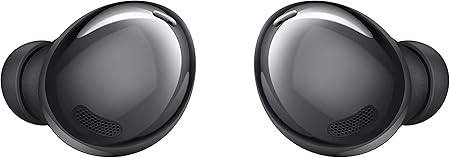
Samsung vs Bose: Overview
Comparing Samsung and Bose helps you determine which brand is best suited for your needs in Headphones & Earbuds. Both brands offer strong choices depending on your budget and key feature requirements.
Key Features & Comparison
Evaluate factors such as build quality, warranty, customer satisfaction, and total value before making your final purchase choice between Samsung and Bose.
Features
Samsung’s feature architecture is deeply rooted in seamless smart ecosystem functionality. Within the Galaxy universe, users enjoy frictionless auto-switching across tablets, phones, and watches, alongside proprietary innovations like Samsung Seamless Codec (SSC) for high-bitrate 24-bit audio transmission. The Galaxy Wearable application offers nuanced ambient sound controls, low-latency gaming modes, Voice Detect (which automatically lowers media volume and engages transparency mode when you speak), and Bixby voice integration. While many core functionalities work on standard Android devices, Samsung gatekeeps its most advanced features—such as 360 Audio with head tracking and high-resolution codecs—exclusively for paired Galaxy hardware, presenting a distinct limitation for iOS users.
Bose adopts a universally accessible, platform-agnostic feature set centered on acoustic control and situational awareness. Utilizing the Bose Music/Bose app, users gain access to comprehensive multi-point Bluetooth pairing that reliably transitions audio streams between iOS, Android, macOS, and Windows hardware without artificial ecosystem walls. Bose’s feature highlight is its proprietary ActiveSense technology within Aware Mode, which dynamically suppresses sudden loud environmental spikes while maintaining natural ambient transparency. Additionally, the introduction of Bose Immersive Audio provides proprietary spatial sound processing onboard the hardware itself, ensuring spatialized tracks function universally regardless of the connected source device or streaming platform.
Performance
In terms of acoustic performance, Samsung relies heavily on Harman-target tuning via its AKG heritage, yielding a remarkably balanced, crowd-pleasing sound profile characterized by crisp highs, clear midrange separation, and controlled, punchy sub-bass. The dual-driver configurations found in models like the Galaxy Buds Pro series allow for distinct separation between treble articulation and bass depth, resulting in minimal harmonic distortion across diverse musical genres. However, Samsung’s Active Noise Cancellation, while competent at mitigating consistent low-frequency ambient hums in office or commuter environments, falls noticeably short against sudden mid-to-high frequency disruptions like sharp transit squeals or nearby conversations.
Bose dominates the performance conversation with its benchmark-setting Active Noise Cancellation and deeply refined acoustic imaging. Utilizing proprietary digital signal processing (DSP) and complex internal and external microphone arrays, Bose QuietComfort headphones and earbuds eliminate external ambient noise with a degree of authority that Samsung cannot match, creating an eerily silent listening canvas even in chaotic aircraft cabins. Musically, Bose delivers a warm, rich, and dynamic sound signature supported by Active EQ that automatically adjusts tonal balance depending on listening volume, preventing the tinny treble or anemic bass falloff that can occur at lower amplitude levels.
Design
Samsung prioritizes pocketability, minimalist elegance, and water resistance in its industrial design. The Galaxy Buds family is celebrated for having some of the most compact, pocket-friendly charging cases on the market, paired with sleek, ergonomic earbud bodies that eschew long stems in favor of discreet, contoured shells. Furthermore, Samsung frequently outperforms Bose regarding environmental durability ratings, outfitting flagship models with IPX7 water resistance that provides robust defense against heavy sweat and accidental submersion, making them exceptionally well-suited for intense workouts and adverse weather conditions.
Bose designs its products around ergonomic longevity, physical usability, and luxurious tactile refinement. Renowned for plush protein-leather ear cushions, balanced clamping force, and featherweight headband distributions, Bose over-ear headphones set the standard for fatigue-free, all-day wearing comfort. On their earbuds, Bose utilizes proprietary StayHear Max or stability-band silicone tips that spread contact evenly across the concha rather than relying on deep canal intrusion. While their charging cases and earbud shells are visibly bulkier and typically offer more modest IPX4 water resistance ratings, Bose offsets this with resilient structural plastics, replaceable ear pads, and intuitive physical control buttons that prove more reliable than touch-sensitive panels.