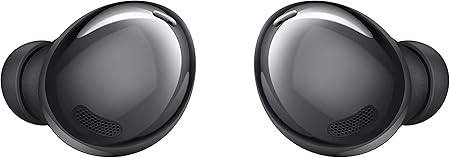
Samsung vs Audio-Technica: Overview
Comparing Samsung and Audio-Technica helps you determine which brand is best suited for your needs in Headphones & Earbuds. Both brands offer strong choices depending on your budget and key feature requirements.
Key Features & Comparison
Evaluate factors such as build quality, warranty, customer satisfaction, and total value before making your final purchase choice between Samsung and Audio-Technica.
Features
In terms of smart capabilities, Samsung operates at the cutting edge of consumer technology. The Galaxy Buds portfolio is packed with computational audio features, including intelligent Active Noise Cancellation (ANC), ambient sound pass-through with voice detection, and advanced 360-degree spatial audio with head tracking. Integration with Samsung’s One UI allows for instantaneous device switching, auto-pause sensing, deep Bixby integration, and specialized low-latency gaming modes. Furthermore, Samsung's continuous firmware enhancements ensure that their algorithmic features, such as adaptive equalizers and beamforming microphone arrays for crystal-clear telecommunications, remain among the most sophisticated in the mainstream market.
Audio-Technica takes a much more purist, hardware-centric approach to features, often eschewing heavy algorithmic intervention in favor of signal integrity. While modern wireless models like the ATH-M50xBT2 feature companion app support, multipoint pairing, and selectable low-latency modes, their feature suite is utilitarian rather than transformative. Active noise cancellation is available on select consumer models, but it generally lags behind Samsung’s aggressive ambient attenuation. Instead, Audio-Technica emphasizes audiophile-grade codecs such as LDAC, high-resolution DAC integration, physical button controls for tactile reliability, and flexible wired/wireless modularity that allows professional monitoring without internal DSP coloration.
Performance
Performance benchmarks highlight the distinct acoustic goals of each manufacturer. Samsung leverages multi-driver configurations—frequently combining dynamic woofers with balanced armature tweeters tuned to the Harman target curve. This yields an energetic, accessible sound profile characterized by punchy, well-controlled sub-bass, clean midrange presence, and crisp highs that flatter modern streaming, hip-hop, and pop tracks. Their computational microphones also deliver exceptional voice clarity during voice and video calls, utilizing specialized deep neural network algorithms to filter out ambient wind and transit noise effectively.
Audio-Technica, conversely, achieves performance through expansive physical drivers—such as their proprietary 45mm large-aperture transducers—and meticulous chamber dampening. Across both their open-back reference sets and closed-back monitor designs, Audio-Technica provides analytical clarity, exceptional instrumental separation, and a remarkably wide, neutral soundstage. Frequency response is less artificial and less compressed, allowing subtle harmonic details and micro-dynamics to surface without DSP masking. While their true wireless microphones and ANC capabilities perform adequately, Audio-Technica’s raw musical presentation, dynamic headroom, and faithful stereo imaging vastly outperform Samsung’s consumer-tuned algorithms.
Design
Samsung’s design ethos is defined by minimalism, ergonomic compactness, and sleek modern aesthetics. Their earbuds consistently feature jewelry-like or smooth pebble-inspired finishes with subtle touch-capacitive surfaces and lightweight builds that sit flush within the concha. The charging cases are uniformly engineered to be among the most pocket-friendly on the market, offering wireless charging and snug magnetic retention. Samsung also places significant emphasis on ingress protection, frequently achieving IPX7 water resistance ratings on flagship models, which makes their hardware exceptionally resilient against heavy sweat and inclement weather during workouts or commutes.
Audio-Technica’s industrial design is unapologetically utilitarian, built around durability, modularity, and prolonged comfort in demanding environments. Models like the iconic M-Series utilize robust professional plastics, aluminum headbands, and heavily cushioned ear pads designed for hours of fatigue-free tracking in the studio. Rather than touch interfaces that can misfire, Audio-Technica frequently relies on physical switches and buttons that can be operated accurately by touch. Furthermore, their over-ear and select in-ear models often feature detachable, field-replaceable cables and modular ear pads, ensuring that the hardware can survive years of intensive, professional wear and tear, even if they lack the sleek, pocketable elegance of Samsung’s lifestyle hardware.