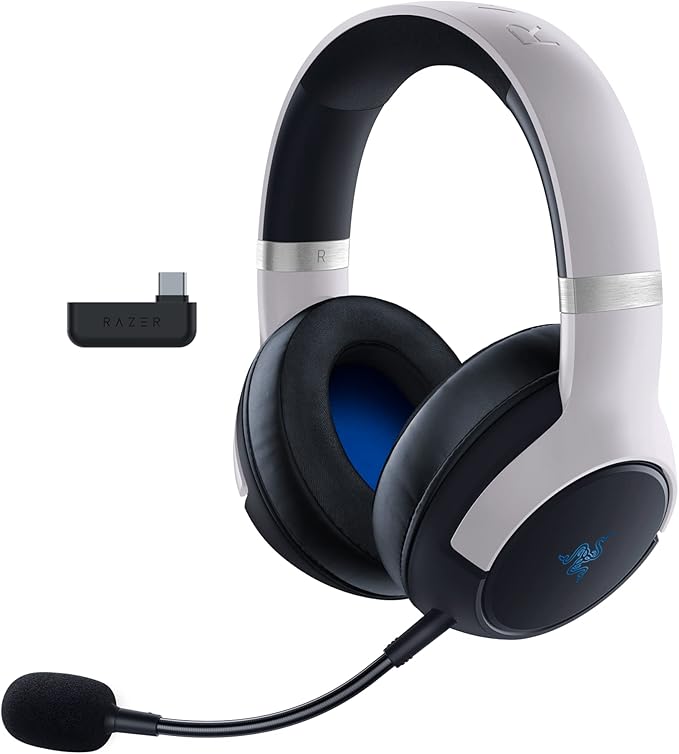
Razer vs Philips: Overview
Comparing Razer and Philips helps you determine which brand is best suited for your needs in Headphones & Earbuds. Both brands offer strong choices depending on your budget and key feature requirements.
Key Features & Comparison
Evaluate factors such as build quality, warranty, customer satisfaction, and total value before making your final purchase choice between Razer and Philips.
Features
Razer sets the benchmark for utility-driven digital features, offering exhaustive integration with its proprietary software suite, Razer Synapse. Across wireless and USB models, users gain granular control over parametric EQ profiles, THX Spatial Audio, RGB lighting patterns, and advanced broadcast microphone settings. For mobile users, Razer’s wireless earbuds boast dedicated ultra-low latency gaming modes (often dropping below 60ms) and integrated hybrid active noise cancellation, engineered to suppress PC fan whirring and ambient chatter while preserving positional acoustic cues.
Philips counters with a focus on core acoustic and everyday convenience features rather than software-centric gamification. Advanced models in the Fidelio series utilize active noise cancellation technologies powered by multi-mic arrays with dedicated awareness modes, multipoint Bluetooth pairing, and high-resolution codec support such as LDAC and aptX HD. Instead of companion apps packed with cosmetic customizers, Philips focuses on hardware-level acoustic features, incorporating premium double-layered earcups, neodymium acoustic drivers, and detachable, oxygen-free copper cables designed to maintain uninterrupted signal purity.
Performance
Performance benchmarks highlight fundamentally contrasting acoustic tunings between the two manufacturers. Razer's signature sound profile leans heavily into low-frequency impact and pronounced treble clarity, optimized to render in-game footsteps, environmental cues, and cinematic explosions with tactile vigor. While the latest models utilizing TriForce Titanium drivers offer significantly better midrange separation than earlier iterations, Razer headsets can still present a V-shaped sound signature that may overshadow nuanced vocal harmonies or orchestral layering in critical music playback.
Philips, on the other hand, is widely lauded in the audiophile community for its exceptional acoustic performance, expansive soundstage, and balanced frequency response. Open-back models like the Philips Fidelio X2HR or SHP9500 deliver an airy, transparent sound profile with effortless spatial imaging that closed-back gaming headsets rarely match. Bass is accurate and controlled rather than artificially boosted, midranges are lush and articulate, and the high frequencies provide crisp detail without sibilance, making Philips the vastly superior option for pure fidelity and multi-genre music listening.
Design
From an aesthetic and structural perspective, Razer embraces a bold, modern, and unapologetically gamer-centric design language. Characterized by matte-black finishes, sharp contours, tactile volume wheels, and customizable Razer Chroma RGB illumination, their hardware looks right at home in a streaming battlestation. Ergonomically, Razer relies heavily on lightweight plastics paired with cooling-gel-infused memory foam ear cushions and hybrid fabric covers, optimizing comfort for marathon gaming sessions, though extended durability can vary among entry-level plastic chassis.
Philips adopts an understated, classic European design ethos centered on premium materials and enduring durability. Flagship models often integrate genuine Scottish Muirhead leather headbands, brushed aluminum yokes, and plush velour or high-density memory foam ear cushions that distribute weight evenly across the skull. The result is a refined, timeless aesthetic that looks elegant in professional studios and living rooms alike, prioritizing long-term physical sustainability, modular repairs, and breathable open-air architecture over aggressive styling and dynamic lighting.