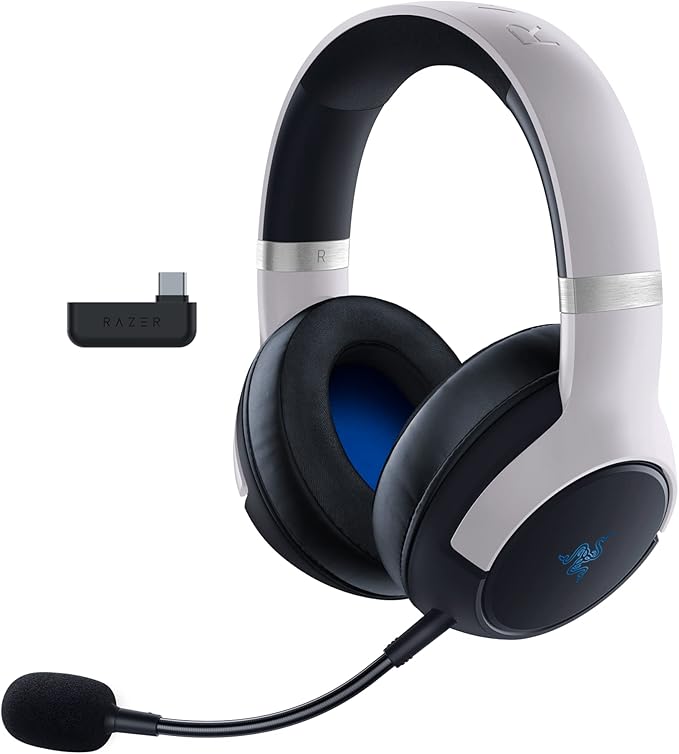
Razer vs Logitech: Overview
Comparing Razer and Logitech helps you determine which brand is best suited for your needs in Headphones & Earbuds. Both brands offer strong choices depending on your budget and key feature requirements.
Key Features & Comparison
Evaluate factors such as build quality, warranty, customer satisfaction, and total value before making your final purchase choice between Razer and Logitech.
Features
In terms of feature sets, Razer consistently explores boundary-pushing technology designed to heighten immersion. A prime example is their HyperSense intelligent haptics, which convert audio signals into dynamic tactile feedback, alongside their THX Spatial Audio platform that provides expansive soundstage customization. Razer's Synapse software unlocks deep equalization, microphone modulation, and complex lighting profiles, though it is often criticized for its heavy system footprint and occasional instability. Razer also frequently integrates dual-wireless connectivity—allowing concurrent 2.4GHz low-latency wireless and Bluetooth—across mid-to-high tier models like the BlackShark V2 Pro, providing seamless flexibility for users juggling PC gaming and mobile calls.
Logitech approaches features with a focus on professional functionality and software stability. Their Logitech G HUB software is generally more streamlined and less resource-intensive than Synapse, housing crucial sound customization alongside the highly regarded Blue VO!CE broadcast filters. By integrating Blue’s microphone algorithms, Logitech headsets such as the G Pro X offer studio-grade voice processing, including real-time noise reduction, compression, and de-essing, which vastly outperforms Razer's native microphone clarity. Furthermore, Logitech’s Lightspeed wireless technology sets the benchmark for interference-free, ultra-low latency transmission, prioritizing robust connection integrity over flashier, secondary feature sets.
Performance
Acoustic performance highlights the core divergence between these two manufacturers. Historically, Razer has favored a bass-heavy sound signature tuned to make explosions and low-frequency in-game events feel commanding and cinematic. While recent iterations, particularly those equipped with TriForce Titanium 50mm drivers, have significantly tamed the muddy midrange and elevated treble clarity, their sound profile remains unapologetically energetic. In competitive titles, Razer headsets provide clear directional awareness and punchy transient response, though they may lack the flat frequency response desired by audiophiles listening to complex, acoustic-driven musical genres.
Logitech focuses on acoustic balance and vocal articulation, utilizing proprietary Pro-G hybrid mesh drivers designed to minimize distortion across the frequency spectrum. The resulting sound profile is noticeably flatter and more neutral out of the box, making positional footsteps and subtle audio cues easier to dissect during tense esports scenarios without being masked by overwhelming sub-bass. For communication, Logitech routinely outpaces Razer; their microphones capture a broader dynamic range and natural vocal warmth. While Razer’s audio profile excels at high-drama, single-player cinematic adventures, Logitech delivers the analytical precision preferred by tactical gamers and content creators.
Design
Design and build philosophies between the two brands reflect distinct visual and ergonomic priorities. Razer embraces a striking, gamer-centric aesthetic, ranging from the chunky, rounded earcups of the Kraken line to the aviation-inspired wire-frame design of the BlackShark series. They make extensive use of plush memory foam infused with cooling gel to combat heat buildup during extended sessions. While their premium models feature robust aluminum structural elements, lower-tier models can incorporate a higher proportion of plastic, which occasionally leads to squeaks or wear at stress points over time. Visually, Razer relies on bold silhouettes, matte black finishes, and signature green or Chroma RGB accents.
Logitech favors a sleek, minimalist industrial design that borrows heavily from professional broadcast equipment. Headsets like the Logitech G Pro X feature steel headbands, aluminum forks, and premium leatherette and velour earpad options, resulting in an understated aesthetic that blends seamlessly into an office or stream setup. In terms of ergonomics, Logitech models tend to offer a firmer clamping force, ensuring high passive noise isolation and stability, though this can cause mild fatigue for users with larger heads. Overall, Logitech’s structural engineering emphasizes clean contours, structural longevity, and professional sobriety, whereas Razer focuses on supreme immediate comfort and an unmistakable gaming identity.
Compare current retail pricing, active promotions, and verified stock availability directly from authorized stores: