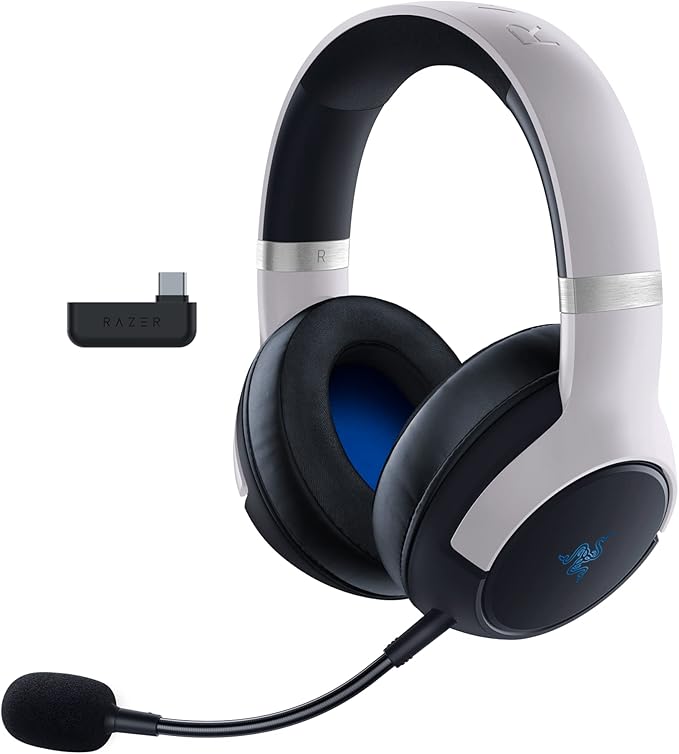
Razer vs JBL: Overview
Comparing Razer and JBL helps you determine which brand is best suited for your needs in Headphones & Earbuds. Both brands offer strong choices depending on your budget and key feature requirements.
Key Features & Comparison
Evaluate factors such as build quality, warranty, customer satisfaction, and total value before making your final purchase choice between Razer and JBL.
Features
Razer's feature set is heavily engineered to solve the specific bottlenecks encountered during interactive entertainment. Many of their premium headsets, such as the BlackShark and Kraken series, incorporate proprietary 2.4GHz Razer HyperSpeed wireless technology alongside standard Bluetooth, ensuring near-zero latency that Bluetooth alone cannot match. Furthermore, Razer often integrates detachable broadcast-grade microphones, such as the HyperClear Supercardioid mic, designed to isolate the user's voice from mechanical keyboard clatter. On the software side, Razer Synapse and the Razer Audio app provide granular soundstage customization, THX Spatial Audio profiles tailored for specific game engines, and customizable Chroma RGB lighting that syncs across peripheral ecosystems.
JBL focuses its feature architecture on outdoor convenience, daily versatility, and acoustic adaptability. The JBL Headphones companion app provides multi-point connectivity management, parametric EQ presets, and sophisticated active noise cancellation (ANC) alongside Ambient Aware and TalkThru technologies, which are typically more refined than Razer's ANC offerings. JBL also integrates smart cases with interactive touchscreens on select flagship earbuds (such as the Tour Pro series), allowing users to adjust settings without opening their phones. Additionally, JBL features broader voice assistant integration (Google Assistant and Amazon Alexa) and higher IP water-resistance ratings across their sporty Endurance and Live lineups, making them far more capable of withstanding sweat and unpredictable weather.
Performance
From an acoustic performance perspective, Razer tunes its drivers with an emphasis on spatial localization, transient response, and frequency separation necessary for competitive gaming. Using their proprietary TriForce titanium drivers, Razer physically divides the driver into three parts to tune highs, mids, and lows independently, preventing the muddy low-end bloat that historically plagued gaming audio. This results in clear directional cues, such as footsteps and weapon reloads, alongside punchy cinematic explosions. However, when transitioning to complex musical genres, Razer headsets can sometimes exhibit a somewhat hollow midrange or overly bright treble response that sounds artificial compared to studio-grade monitors.
JBL delivers an acoustic profile informed by decades of psychoacoustic testing, generally conforming closely to the Harman curve, which provides a consumer-pleasing, warm, and energetic sound. Bass response on JBL devices is characterized by deep sub-bass extension and tight mid-bass impact that enhances hip-hop, electronic, and pop music without severely bleeding into the vocal ranges. For general music reproduction, JBL consistently outperforms Razer in natural timbre, vocal warmth, and instrumental separation. However, in gaming scenarios, JBL's reliance on standard Bluetooth codecs often introduces latency that is noticeable in fast-paced shooters, and their soundstage is tuned for musical intimacy rather than hyper-accurate three-dimensional spatial tracking.
Design
Razer’s industrial design ethos is defined by distinct gaming ergonomics, aggressive geometry, and high-tech branding. Their headsets frequently feature bold aesthetics, including exposed wire frames, large circular earcups, and signature neon green accents or customizable Chroma RGB lighting. In terms of comfort, Razer prioritizes marathon session wearability; ear cushions are often stuffed with high-density memory foam wrapped in cooling-gel infused fabric to prevent heat buildup during multi-hour gaming sessions. While their build quality is robust, the extensive use of lightweight plastics in mid-tier models can occasionally feel less premium in hand, though it serves the functional purpose of minimizing clamping force and neck fatigue.
JBL leans toward sleek, urban, and utilitarian design philosophies that fit seamlessly into office spaces, gyms, and public transit. Utilizing smooth matte finishes, foldable hinges for travel portability, and subtle branding, JBL's headphones and earbuds avoid the overt flashiness of gaming peripherals. Ergonomically, JBL prioritizes a secure, movement-resistant fit, especially in their sport-oriented lines which feature ergonomic ear hooks and TwistLock technology. Materials across the JBL range are durable and tactile, often incorporating aluminum headband reinforcements and sweat-resistant silicone, resulting in a product that feels exceptionally rugged and ready for the rigors of everyday mobile use.