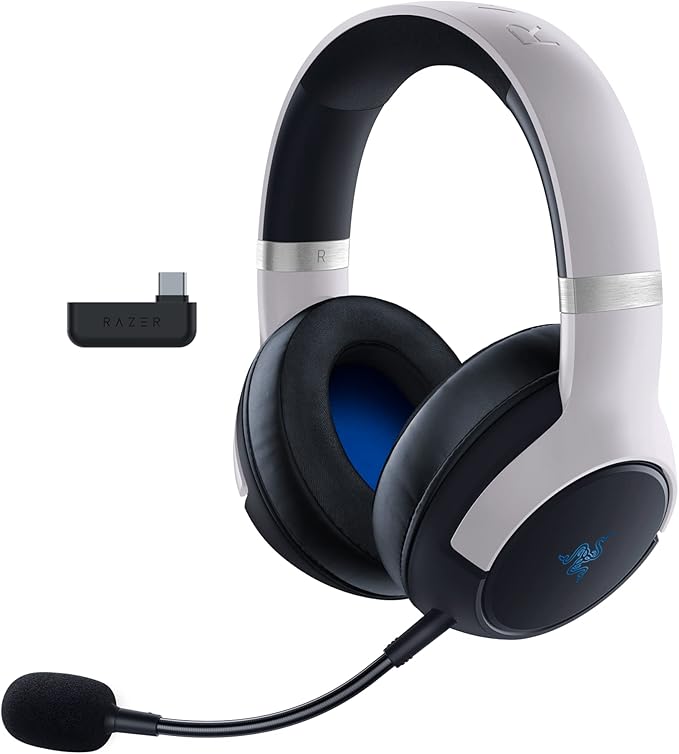






Razer vs HyperX: Overview
Comparing Razer and HyperX helps you determine which brand is best suited for your needs in Headphones & Earbuds. Both brands offer strong choices depending on your budget and key feature requirements.
Key Features & Comparison
Evaluate factors such as build quality, warranty, customer satisfaction, and total value before making your final purchase choice between Razer and HyperX.
Features
Razer holds a decisive edge in software integration, advanced customization, and high-tier feature implementation. The brand consistently outfits its headsets with proprietary innovations like Triforce Titanium drivers, HyperSpeed low-latency 2.4GHz wireless, and HyperClear broadcast-grade microphones. Through Razer Synapse, users gain deep control over multi-band parametric equalizers, mic monitoring, ambient noise rejection, and THX Spatial Audio tuning for precise directional soundscapes. High-end models also introduce unique tactile features like HyperSense haptic technology and dual-mode simultaneous Bluetooth/2.4GHz connections, making them versatile across PC, consoles, and mobile devices.
HyperX approaches features through the lens of utility and frictionless operation, favoring hardware-level execution over dense software layers. While the HyperX NGENUITY software provides basic EQ and surround sound adjustments, the hardware often speaks for itself through plug-and-play convenience, intuitive onboard physical controls, and detachable noise-cancelling microphones. HyperX's most astonishing technical triumph in recent years is battery efficiency, showcased by headsets like the Cloud Alpha Wireless, which delivers an unprecedented 300 hours of continuous playback on a single charge. Where Razer offers granular tweakability and experiential flair, HyperX delivers high-impact, practical features that eliminate common user headaches like frequent recharging.
Performance
From an acoustic standpoint, Razer designs its sound signatures with cinematic immersion, impact, and high-octane gaming in mind. Their Triforce driver design separates low, mid, and high audio frequencies into discrete tuning chambers, resulting in punchy bass that does not excessively muddy the mid-range. While competitive lines like the BlackShark V2 are tuned specifically for crisp directional footstep cues and mid-frequency clarity, Razer's consumer headsets generally favor a thrilling, V-shaped sound profile that brings explosions and dramatic musical scores to life. Their microphone performance has also surged forward, with wide-band mic capsules delivering natural, broadcast-tier vocal reproduction that outperforms many competitors.
HyperX, by contrast, targets balanced frequency response, natural timbre, and clinical acoustic separation. The dual-chamber driver technology found in the Cloud Alpha line significantly reduces distortion by separating bass frequencies from mids and highs, producing a clean, accurate sound signature that handles competitive gaming audio and musical fidelity with equal grace. Imaging and spatial cues on HyperX headsets are organic and reliable even without virtual surround processing enabled. While their microphones are tuned primarily for clear speech intelligibility with aggressive background noise isolation rather than broadcast-level warmth, the overall audio output delivers a transparent, fatigue-free analytical profile that audiophile-leaning gamers often favor.
Design
Razer's design language is modern, tactical, and unmistakably distinct, ranging from bold gamer aesthetics to sleek lifestyle crossover designs. Lines like the Kraken feature thick, circular earcups, plush cooling-gel cushions, and optional Chroma RGB lighting, while the BlackShark series borrows aviation-inspired silhouettes with wire-frame hinges and passive noise-isolating leatherette seals. Razer makes frequent use of lightweight polymers to keep headset weight manageable during long tournaments, although extensive plastic usage on some entry and mid-tier models can occasionally exhibit structural creaking over extended use. Overall, Razer's ergonomics are engineered for modern aesthetics, breathability, and focused acoustic isolation.
HyperX sets the standard for physical build quality and mechanical durability in this market segment. Utilizing flexible, solid aluminum and steel yokes, HyperX headsets like the Cloud series withstand severe daily wear, flex, and drops far better than most plastic-bodied competitors. Ergonomically, HyperX is celebrated for its signature memory foam ear pads wrapped in premium leatherette or breathable velour, distributing clamping force evenly across the crown to prevent pressure hotspots. The design aesthetic is conservative, clean, and utilitarian, eschewing flashy lighting in favor of functional elegance and unmatched long-term wearability, making HyperX the perennial favorite for marathon gaming sessions.