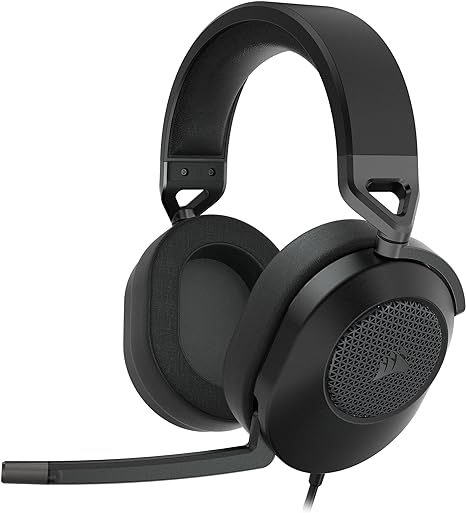
Razer vs Corsair: Overview & Brand Philosophy
In the competitive realm of gaming peripherals, Razer and Corsair represent two distinct ideological approaches to audio engineering. Razer, established in 2005 with its iconic triple-headed snake insignia and vibrant Chroma RGB lighting, treats gaming audio as an immersive, sensory-driven lifestyle. The brand primarily targets competitive esports athletes, streaming creators, and mainstream gamers who prioritize immediate cinematic immersion, aggressive aesthetics, and feature-packed software integration. In recent years, Razer has significantly broadened its catalog, expanding from wired esports headsets to lifestyle wireless earbuds equipped with active noise cancellation and specialized haptic feedback technology.
Corsair, by contrast, emerged from high-performance PC component manufacturing, bringing an engineering-first, industrial ethos to the gaming audio sector. Rather than chasing lifestyle trends, Corsair focuses on functional reliability, structural resilience, and multi-platform utility. Their audio design philosophy emphasizes minimalist, mature silhouettes featuring machined aluminum yokes, breathable memory foam materials, and neutral-leaning sound profiles that cross seamlessly over from competitive gameplay to remote office productivity. Corsair caters heavily to PC enthusiasts who value acoustic consistency, modular microphone designs, and unified ecosystem control via their comprehensive iCUE software.
When choosing between these two industry titans in the headphones and earbuds space, consumers are effectively choosing between Razer's high-octane immersion and rapid acoustic innovation versus Corsair's structural durability, refined enterprise styling, and balanced audio engineering.
Key Differences & Technological Comparison
The technological divide between Razer and Corsair is most evident across four critical pillars: acoustic driver design, spatial audio processing, microphone engineering, and product portfolio breadth.
Acoustic Driver Architecture: Razer primarily utilizes proprietary TriForce and TriForce Titanium drivers (typically 50mm), which feature a unique design that partitions the diaphragm into three separate tuning zones. This separation allows Razer to tune highs, mids, and lows independently, resulting in cleaner separation and a prominent V-shaped sound signature that elevates footsteps and environmental cues without completely muddying vocal frequencies. Corsair leans on custom-tuned 50mm high-density neodymium drivers in its mainstream Void and HS lines, while elevating to premium 50mm matched pairs in its flagship Virtuoso line, offering an expansive frequency range from 20Hz up to 40,000Hz (Hi-Res certified). Corsair's tuning favors a flatter, more analytical sound profile out of the box, which audiophile-leaning users can more easily shape through parametric equalization.
Spatial Audio & Virtualization: Razer integrates THX Spatial Audio across its mid-to-high tier products, such as the BlackShark and Kraken series. This integration provides granular positional accuracy, customizable game-specific profiles, and superior object-based 360-degree sound staging. Corsair predominantly relies on native Dolby Atmos integration via Windows 10/11 licenses bundled with their hardware, alongside multi-channel 7.1 virtual surround in their iCUE software suite. While Corsair's Dolby Atmos implementation offers clean multi-directional placement, Razer's THX software provides deeper customization for competitive title-specific equalizers.
Microphone Quality: Corsair holds a definitive lead in broadcast-grade voice capture, especially on its Virtuoso and HS80 lineups. The HS80's broadcast-grade omnidirectional microphone offers exceptional clarity, natural tonal warmth, and dynamic range that rivals dedicated USB desktop microphones. Razer utilizes its HyperClear Cardioid and Supercardioid microphones. While Razer's microphones feature strong passive noise rejection tuned to block mechanical keyboard clicks, they can occasionally sound compressed and digitalized out of the box without extensive Synapse post-processing.
Form Factor Diversity: Razer has established a massive footprint in true wireless stereo (TWS) earbuds with the Hammerhead series, offering low-latency Bluetooth modes, active noise cancellation, and hybrid work-play compatibility. Corsair has largely avoided the in-ear market, choosing instead to focus almost exclusively on over-ear wireless and wired headsets designed for desk and console usage.
Pros & Cons Comparison
Razer Headphones & Earbuds
- Pros:
- Diverse catalog including over-ear headsets, console-specific models, and ANC gaming earbuds.
- Class-leading esports tuning via TriForce drivers that effectively isolates tactical footsteps.
- Advanced spatial audio powered by customizable THX Spatial profiles.
- Innovative features like HyperSense haptic drivers available in select models.
- Ultra-comfortable, lightweight chassis designs in the BlackShark lineup.
- Cons:
- Heavy reliance on plastics in entry and mid-tier builds, leading to long-term wear concerns.
- Microphones tend to produce a more nasal, compressed vocal profile.
- Razer Synapse software can be resource-heavy and occasionally prone to update-related bugs.
Corsair Headphones & Earbuds
- Pros:
- Superior build quality utilizing machined aluminum, durable hinges, and premium fabrics.
- Industry-best microphone clarity on the HS80 and Virtuoso lines.
- Hi-Res 24-bit/96kHz audio support over wired USB connections.
- Sophisticated, non-gamified aesthetics suitable for office and conference use.
- Seamless integration with the Corsair iCUE ecosystem for unified PC control.
- Cons:
- Near-total lack of true wireless earbud options for mobile and on-the-go gamers.
- Flagship models (e.g., Virtuoso) feature heavier clamping force and round earcups that can cause fatigue.
- Bass response can feel flat and uninspired for users seeking cinematic punch out of the box.
Performance, Durability & Value Analysis
From an acoustic and competitive standpoint, both brands deliver exceptional wireless latency via proprietary 2.4GHz connections (Razer HyperSpeed vs. Corsair Slipstream), both reliably maintaining sub-20ms latency figures free from drops or interference. However, longevity tells a different story. Corsair consistently wins the durability metric: models like the HS80 and Virtuoso series utilize metal-reinforced bands, robust cast aluminum yokes, and securely bolted joints that hold up against heavy twisting and accidental drops far better than Razer's lightweight, plastic-dominant frames. While Razer has improved structural resilience with the BlackShark V2 series, issues with slider tension loosening and headband pleather flaking after 18 to 24 months of heavy usage remain more prevalent in user feedback.
When assessing value, the two brands cater to differing priorities. Razer dominates the entry-to-mid-range price brackets ($50 to $130). A model like the Razer BlackShark V2 X or V2 USB delivers class-defining comfort, passive noise isolation, and competitive acoustic tuning that is virtually unmatched at its price point. Corsair, on the other hand, provides significantly higher return on investment in the upper-mid to premium tiers ($140 to $230). The build materials, studio-grade microphones, and dual USB/wireless high-resolution audio processing of Corsair's HS80 RGB Wireless and Virtuoso SE warrant their premium, effectively replacing the need for an external streaming microphone for entry-level content creators.
Final Verdict: Which Brand Should You Choose?
Your ideal audio brand boils down to your primary use case, aesthetic preference, and platform requirements:
Choose Razer if: You are an active esports competitor, console/mobile gamer, or someone seeking intense cinematic immersion. If you play fast-paced shooters like Valorant, Apex Legends, or Call of Duty, Razer's BlackShark line offers superior directional cues, lighter long-session comfort, and highly effective passive sound isolation. Razer is also your only choice between the two if you require compact, ultra-low-latency wireless earbuds for mobile gaming, handheld consoles (like the Steam Deck or Nintendo Switch), and daily commuting.
Choose Corsair if: You are a PC-centric gamer, streamer, or professional working in a hybrid environment. Corsair headsets are ideal if you demand a mature aesthetic that will not look out of place on a Zoom call, premium aluminum construction built to last multiple hardware generations, and a pristine broadcast microphone that eliminates the immediate need for a standalone desktop mic. If you already run Corsair fans, RAM, or peripherals, the convenience of the unified iCUE software ecosystem further solidifies Corsair as the smarter desktop investment.
Features
When evaluating the feature ecosystem of gaming-focused headphones and earbuds, Razer consistently pushes the envelope of sensory immersion and proprietary audio processing. Driven by their Synapse software suite, Razer integrates advanced capabilities such as THX Spatial Audio, which offers exceptionally granular, game-specific EQ profiles and superior 360-degree positional mapping. On the hardware front, Razer’s hallmark feature remains its HyperSense intelligent haptics—dynamic tactile drivers that convert sound signals into localized physical vibrations, creating a deeply visceral gaming experience. Additionally, Razer equips its flagship wireless headsets, like the BlackShark and Kraken series, with versatile SmartSwitch dual-wireless connectivity (allowing simultaneous 2.4GHz low-latency and Bluetooth connections), broadcast-grade detachable hyperclear microphones, and extensive Chroma RGB lighting customization across compatible models.
Corsair takes a more utilitarian, productivity-conscious approach to feature engineering, centered around the comprehensive iCUE software ecosystem. Corsair's major technical strength lies in unified hardware integration, allowing seamless cross-peripheral macro mapping, custom RGB synchronization, and deep system monitoring alongside audio controls. In terms of acoustic features, Corsair frequently leverages Dolby Atmos licensing for immersive spatial virtualization, delivering a clean, precise soundstage that avoids the sometimes aggressive processing of Razer's THX system. High-end Corsair headsets, particularly within the Virtuoso lineup, emphasize superior multi-platform transmission capabilities, boasting uncompressed 24-bit/96kHz high-resolution audio over wired USB connections, alongside Slipstream 2.4GHz wireless and 3.5mm analog options, paired with some of the most natural-sounding, broadcast-grade omnidirectional microphones in the consumer gaming space.
The practical trade-off between the two brands hinges on whether a user values visceral, gaming-centric novelties or refined, workflow-friendly versatility. Razer delivers an undeniably flashier feature set tailored specifically for competitive tracking and extreme immersion, though this sometimes results in heavier power draw, bloated companion software, and niche hardware features that go unused in casual listening scenarios. Corsair offers a more mature, technically restrained feature profile that prioritizes high-fidelity voice transmission, cross-device utility, and uncompressed acoustic bandwidth over experimental features like haptics. Ultimately, gamers seeking cutting-edge audio effects, tactile feedback, and tournament-grade spatial tuning will favor Razer, while audiophile-leaning gamers and hybrid content creators who value pure signal fidelity, robust mic monitoring, and seamless ecosystem control will find Corsair’s feature suite more practical.
Performance
When evaluating acoustic engineering and overall audio performance, Razer demonstrates a stronger focus on dynamic, low-end impact tailored explicitly for competitive and immersive gaming. Razer’s proprietary TriForce Titanium drivers—frequently found in their flagship BlackShark and Kraken lines—allow for discrete tuning of high, mid, and low frequencies. This engineering choice results in exceptional spatial awareness, punchy bass, and crisp highs that accentuate in-game environmental cues like footsteps and reload sounds. Corsair, by contrast, favors custom-tuned 50mm neodymium drivers engineered for a flatter, more balanced frequency response. While Corsair's baseline sound signature can sometimes lack the cinematic rumble preferred by casual gamers, it offers superior technical clarity in the midrange, making their headsets versatile enough for music production and media consumption right out of the box without aggressive equalization.
Microphone reproduction and wireless transmission stability represent a significant technical battleground between the two brands. Corsair traditionally holds a performance edge in voice capture through models like the Virtuoso series, which incorporate broadcast-grade, omnidirectional capsules that capture full-bodied vocal tones with wide dynamic range and minimal compression. Razer has significantly closed this gap with its HyperClear Super Wideband mics, which prioritize aggressive noise isolation and clarity in chaotic environments. Regarding wireless fidelity, both manufacturers excel with low-latency 2.4GHz protocols—Razer’s HyperSpeed and Corsair’s Slipstream. Corsair’s Slipstream provides unique multiplexing capabilities that allow multiple peripherals to connect via a single dongle without performance degradation, whereas Razer’s architecture consistently achieves microsecond latency advantages and superior penetration through physical obstructions, minimizing packet loss during high-stakes gaming sessions.
The ultimate trade-off in performance centers on software-driven virtualization versus raw hardware acoustic design. Razer leans heavily into spatial software integration via THX Spatial Audio, delivering pinpoint 360-degree directional accuracy that creates a competitive advantage in tactical shooters, though it can occasionally introduce slight digital processing artifacts. Corsair relies on native Dolby Atmos integration across many of its mid-to-high-tier offerings, producing a more natural, expansive soundstage with truer object-based placement for multi-channel content. While Razer provides an acoustically aggressive, esports-optimized performance envelope with superior low-latency software tuning, Corsair offers a more audiophile-leaning execution characterized by pristine vocal transmission and uncolored sound reproduction.
Design
When evaluating industrial design and engineering quality, Razer and Corsair approach the gaming audio market with distinct visual philosophies and structural methodologies. Razer leans heavily into an aggressive, gamer-centric aesthetic characterized by pronounced earcups, stealth-black matte finishes, and signature Chroma RGB integration. Structurally, Razer relies on a combination of high-density bauxite aluminum sliders and lightweight reinforced plastics, as seen in the BlackShark and Kraken lineups. While the BlackShark series excels in functional, esports-inspired engineering with its ultra-lightweight aviation-style wire-frame adjustments, other models like the Kraken rely on bulky, round earcups that can produce excessive clamping force over extended sessions. Corsair, on the other hand, embraces a more mature, understated design language that blends seamlessly into both gaming stations and professional environments. Lines like the HS and Virtuoso series utilize robust, machined aluminum yokes, cross-stitched headbands, and micro-perforated metal ear plates that convey an immediate sense of premium density and structural rigidity that often outclasses Razer's primarily plastic-welded chassis.
From an ergonomic and functional design standpoint, the technical trade-offs between the two brands center on weight distribution, thermal management, and user interaction. Razer holds a technical edge in prolonged thermal comfort due to its proprietary cooling-gel-infused ear cushions and breathable memory foam weaves, which effectively dissipate heat buildup far better than Corsair’s standard leatherette offerings. Razer also prioritizes instantaneous tactile feedback, often integrating oversized, textured volume dials directly onto the earcup face for seamless on-the-fly adjustments. Conversely, Corsair excels in mechanical refinement and streamlined modularity; the Virtuoso line features precision-milled aluminum construction with 180-degree lay-flat pivot hinges, offering superior neck-resting portability and adaptable head-contouring that Razer's fixed-angle frames rarely achieve. However, Corsair's heavier metal composition frequently results in higher overall headset mass, shifting the center of gravity and causing crown fatigue during marathon use if the headband padding compresses completely.
Ultimately, the design divergence between Razer and Corsair reflects a choice between high-performance tactical utility and executive-level build cohesion. Razer's design ecosystem is optimized for competitive immersion, prioritizing featherlight agility, thermal mitigation, and bold aesthetic synchronization within its peripheral lineup, albeit occasionally at the expense of premium tactile materials. Corsair trades away that ultra-lightweight profile to deliver superior structural integrity, timeless minimalist contours, and sophisticated metal engineering that resists long-term torsional wear. Consumers prioritizing featherweight, breathable ergonomics for intense competitive gaming will favor Razer's technical blueprint, whereas users demanding an upscale, durable build with understated desktop aesthetics will find Corsair’s industrial craftsmanship distinctly superior.
Compare current retail pricing, active promotions, and verified stock availability directly from authorized stores:
Compare current retail pricing, active promotions, and verified stock availability directly from authorized stores: