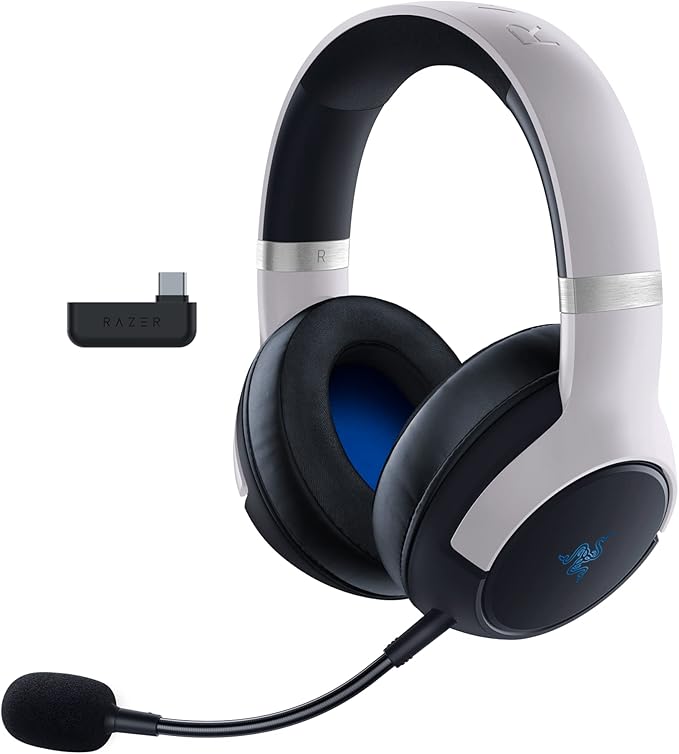
Razer vs Bowers & Wilkins: Overview
Comparing Razer and Bowers & Wilkins helps you determine which brand is best suited for your needs in Headphones & Earbuds. Both brands offer strong choices depending on your budget and key feature requirements.
Key Features & Comparison
Evaluate factors such as build quality, warranty, customer satisfaction, and total value before making your final purchase choice between Razer and Bowers & Wilkins.
Features
Razer's feature set is optimized for functional synergy across gaming setups, live streaming, and cross-platform play. Many Razer headsets incorporate proprietary 2.4 GHz HyperSpeed Wireless technology alongside Bluetooth, facilitating simultaneous audio mixing from a PC and a mobile device. Further technological highlights include integrated THX Spatial Audio for calibrated 360-degree soundscapes, detachable broadcast-grade cardioid microphones, and Chroma RGB lighting integration customizable via Razer Synapse software. Even in their lifestyle-leaning models, active noise cancellation and ambient sound modes are tuned primarily to dampen computer fan whirs and domestic distractions rather than outdoor transit.
Bowers & Wilkins approaches feature engineering through an audiophile lens, avoiding computational gimmicks in favor of pristine signal preservation and travel-oriented convenience. Their headsets feature high-resolution Bluetooth codecs including aptX Adaptive and aptX Lossless, backed by robust Digital Signal Processing (DSP) and high-performance 24-bit DACs capable of direct, uncompressed playback via USB-C. Active noise cancellation is powered by precision-tuned microphone arrays designed to neutralize low-frequency transit rumble and urban noise without introducing phase distortion or coloration to the underlying music. While lacking gaming-specific perks like boom mics or ultra-low-latency 2.4 GHz dongles, Bowers & Wilkins excels in wear sensors, intuitive physical controls, and clean companion app interfaces.
Performance
Performance benchmarks highlight the divergent tuning priorities of both manufacturers. Razer specializes in transient response and acoustic localization, utilizing custom TriForce titanium drivers to isolate high, mid, and low frequencies. This tuning emphasizes footsteps, weapon reloads, and spatial cues, complemented by a substantial low-end presence that provides dramatic weight to explosions and cinematic set-pieces. While excellent for immersion and tactical gameplay, Razer's sound profile can exhibit slight midrange recession or uneven treble spikes when scrutinized with complex, acoustic musical arrangements, revealing its gaming-first DNA.
Bowers & Wilkins delivers reference-level acoustic performance characterized by exceptional linearity, natural tonal balance, and expansive dynamic range. Utilizing custom-angled drivers constructed from biocellulose or ultra-rigid carbon cones (as seen in the flagship Px8), these headphones eliminate unwanted mechanical resonance to produce crystalline highs, organic midranges, and deep, controlled bass with zero overhang. Instrument separation and micro-detail retrieval are masterclass, offering an intimate, three-dimensional stereo image that faithfully reflects the original studio mix. For critical music listening and transparent audio playback, Bowers & Wilkins effortlessly outperforms Razer, though it lacks the custom spatial surround virtualization required for competitive esports.
Design
The industrial design of Razer headsets leans into tactical utility, durability, and bold modern ergonomics. Utilizing lightweight aluminum sliders, reinforced steel headbands, and high-density memory foam ear cushions wrapped in breathable hybrid fabric or leatherette, Razer builds products capable of withstanding long, grueling competitive gaming sessions. Aesthetic flourishes range from understated matte black finishes to the brand's iconic neon green accents and customizable RGB illumination. The architecture is decidedly functional, built to accommodate glasses wearers with pressure-relieving foam channels and provide structural resilience against heavy daily desk use.
In stark contrast, Bowers & Wilkins champions haute-couture industrial design, employing artisanal craftsmanship and peerless luxury materials. Their chassis utilize cast aluminum arms, precision-machined metal detailing, and sumptuously soft Nappa leather on the headband and memory foam ear pads. Every structural curve and pivot mechanism is engineered with tight mechanical tolerances, resulting in an ultra-refined, noise-free folding action and balanced clamp force that feels sophisticated and weightless. Where Razer’s visual language signals technological aggression and streamer culture, Bowers & Wilkins radiates timeless elegance, boardroom luxury, and understated acoustic authority.