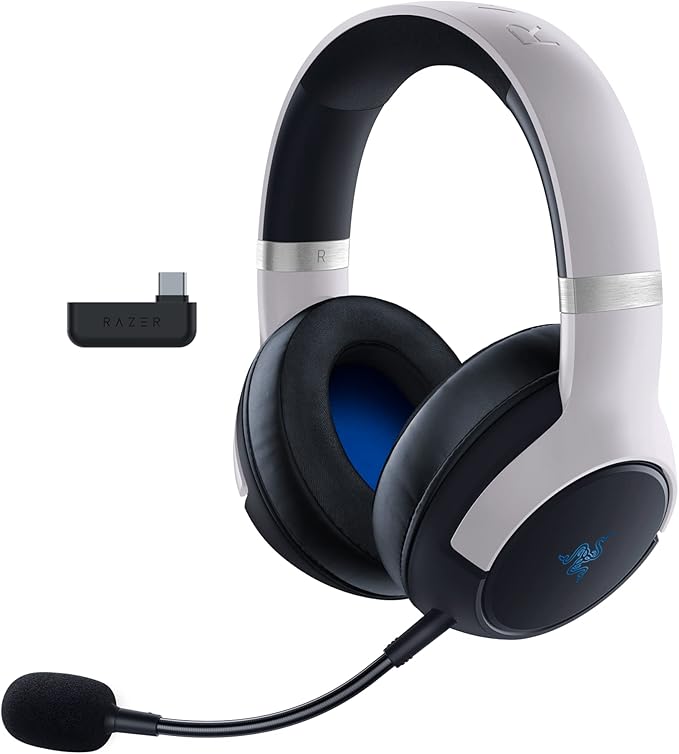
Razer vs Bose: Overview
Comparing Razer and Bose helps you determine which brand is best suited for your needs in Headphones & Earbuds. Both brands offer strong choices depending on your budget and key feature requirements.
Key Features & Comparison
Evaluate factors such as build quality, warranty, customer satisfaction, and total value before making your final purchase choice between Razer and Bose.
Features
Razer's feature set is aggressively specialized around competitive utility, low-latency connectivity, and multi-device workstation setups. Flagship models frequently incorporate proprietary 2.4 GHz wireless transceivers via Razer HyperSpeed technology alongside standard Bluetooth, ensuring virtually imperceptible audio lag critical for gaming. On the software front, the Razer Synapse and Razer Audio mobile suites unlock granular 10-band equalization, mic monitoring (sidetone), broadcast-grade microphone gating, dynamic haptic feedback engines (HyperSense), and customizable RGB lighting via Razer Chroma. Furthermore, integration with advanced spatial formats like THX Spatial Audio provides precise 360-degree positional cues tailored for virtual battlefields.
Bose approaches feature engineering with an emphasis on seamless environmental adaptation and user ergonomics rather than gaming utility. The brand's signature offering is its proprietary Active Noise Cancellation and Aware modes, which continuously sample ambient noise using advanced multi-microphone arrays to produce an inverted acoustic phase with unmatched efficacy. The Bose Music app avoids desktop complexity in favor of an intuitive mobile interface, offering multi-point Bluetooth switching, adjustable active EQ, and revolutionary Bose Immersive Audio, which uses on-board digital signal processing to spatialize standard stereo tracks without platform-specific decoders. While Bose lacks ultra-low-latency 2.4 GHz dongles, its Bluetooth stability and lifestyle features are practically flawless.
Performance
From an acoustic performance standpoint, Razer generally tunes its drivers for high impact, clear vocal delivery, and localized spatial cues. Models utilizing the brand's TriForce Titanium drivers physically separate the diaphragm into distinct zones for lows, mids, and highs, curbing mud even in bass-heavy configurations. While legacy Razer hardware was infamous for bloated low-end frequencies, modern iterations provide a far more balanced signature with pronounced midrange presence, allowing critical tactical audio like footsteps and voice comms to cut through heavy explosive effects. Microphone performance is another standout area for Razer, with broadcast-tuned cardioid capsules offering superior background rejection compared to standard lifestyle headsets.
Bose performance is defined by acoustic maturity, natural tonal balance, and peerless noise isolation. Utilizing custom acoustic architectures with TriPort technology, Bose headphones achieve deep, authoritative low frequencies without sacrificing the delicacy of the mid-range or transparency of the treble. Where Bose completely outclasses Razer is in real-world signal-to-noise ratio and active cancellation; ambient jet engine rumble, transit noise, and vocal chatter are dramatically suppressed, allowing listeners to experience high-fidelity reproduction at safer, lower volume levels. For pure musical listening and dynamic range in uncontrolled environments, Bose delivers an undeniably cleaner, more balanced output.
Design
Razer’s industrial design language is unapologetically aggressive, technical, and gaming-centric. Utilizing a mix of reinforced aluminum sliders, robust plastic shells, and memory foam padding wrapped in hybrid leatherette and breathable fabric weaves, Razer headphones are built to endure marathon sessions while reducing heat buildup. Visual hallmarks such as exposed braided cables, illuminated brand logos, and angular mic booms underscore their gaming pedigree. While modern lines like the Barracuda series offer more subdued styling, the bulkier silhouettes, prominent branding, and stationary focus make the majority of Razer's over-ear lineup less practical for public commuting or professional office environments.
Bose takes a minimalist, timeless, and travel-oriented approach to industrial design, characterized by sleek, contoured silhouettes and understated finishes. Employing ultra-lightweight architectures crafted from cast zinc hinges, glass-filled nylon, and sumptuous synthetic protein leather cushions, Bose models like the QuietComfort series are engineered to disappear on the user's head during long-haul flights. The folding and lay-flat hinges paired with slim, protective travel cases maximize portability, while flush-mounted capacitive touch surfaces and tactile mechanical toggles provide intuitive control without visual clutter. Bose's aesthetic integrates seamlessly into any executive or casual setting, offering a distinct level of refined sophistication that contrasts with Razer's gamer-first ethos.