






Corsair vs SteelSeries: Overview
Comparing Corsair and SteelSeries helps you determine which brand is best suited for your needs in Headphones & Earbuds. Both brands offer strong choices depending on your budget and key feature requirements.
Key Features & Comparison
Evaluate factors such as build quality, warranty, customer satisfaction, and total value before making your final purchase choice between Corsair and SteelSeries.
Features
In terms of auxiliary features and software capability, both brands offer expansive customization suites that fundamentally change the user experience. Corsair relies on its unified iCUE software, which allows users to synchronize headset lighting, configure custom EQ profiles, and map side-tone settings alongside internal PC components. Advanced Corsair models, such as the Virtuoso series, feature broadcast-grade omnidirectional microphones, slipstream 2.4GHz wireless technology, and high-resolution 24-bit/96kHz USB audio modes. However, iCUE is frequently criticized for being resource-heavy, and Corsair headsets often offer limited onboard hardware controls, forcing users to rely heavily on desktop software to access deeper functionality.
SteelSeries elevates feature integration significantly through its Sonar Audio Software Suite, housed within the lightweight SteelSeries GG utility. Sonar is widely regarded as one of the best parametric EQ platforms in gaming, offering independent, studio-grade control over game audio, team chat, and microphone output with AI-assisted noise cancellation. On the hardware front, SteelSeries leads the industry with features found on the Arctis Nova Pro line, such as dual-connection wireless mixing (Bluetooth and 2.4GHz simultaneously) and an external base station featuring an Infinity Battery System that hot-swaps batteries during active play. This hardware-first approach to feature accessibility gives SteelSeries a decisive edge in practical, real-world utility.
Performance
Acoustic performance reveals fundamental differences in sound profile tuning and driver selection between the two manufacturers. Corsair traditionally tunes its custom neodymium drivers with a V-shaped or bass-forward sound signature. In action-heavy titles, this delivers visceral punch, impactful explosions, and immersive cinematic presence, particularly in models like the HS80 and Void series. However, this prominent lower-frequency emphasis can occasionally bleed into the mid-range, resulting in slightly veiled dialogue and masked audio cues during fast-paced multiplayer engagements, though high-end models equipped with 50mm high-density drivers offer significantly better spatial clarity.
SteelSeries emphasizes acoustic separation, competitive imaging, and clarity across the frequency spectrum. Its High-Fidelity speaker drivers are engineered to flatten out bass bloat, intentionally highlighting the mid and treble ranges where critical audio cues—such as enemy footsteps, weapon reloads, and directional movement—reside. When paired with high-performance DACs and Sonar's spatial audio algorithms, SteelSeries headsets provide superior directional tracking and a wider soundstage. Furthermore, SteelSeries' ClearCast bidirectional microphones consistently outperform Corsair's mic setups in passive background noise rejection, ensuring superior voice intelligibility in loud competitive environments.
Design
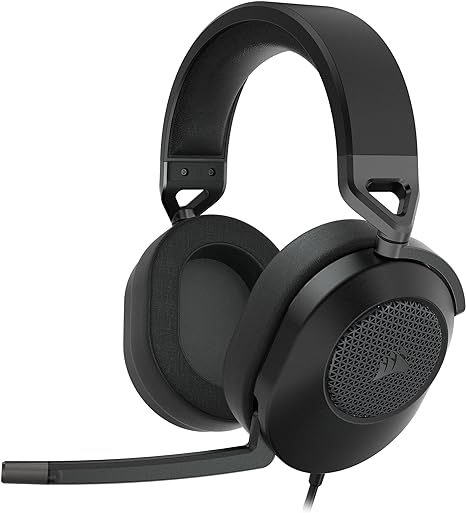
Corsair takes an industrial, muscular approach to industrial design and materials. Often incorporating machined aluminum yokes, dense plastic housings, and substantial headband structures, Corsair headsets convey an immediate sense of structural rigidity and longevity. Models like the Virtuoso RGB look and feel premium with their polished metal accents and diamond-cut edges. The trade-off, however, lies in physical weight distribution and clamping force; Corsair headsets tend to be heavier on the crown, which can lead to fatigue during marathon sessions for users with sensitive head shapes or glasses, despite comfortable memory foam earpads.
SteelSeries champions minimalist, Nordic-inspired ergonomics centered around its iconic ski-goggle suspension headband and the newer Nova height-adjustable comfort framework. This suspension mechanism disperses the headset's physical weight uniformly across the scalp, virtually eliminating pressure points. Earcup materials frequently utilize breathable AirWeave performance fabric that manages heat buildup far more effectively than traditional leatherette. With sleek, low-profile earcups and retractable microphones that stow seamlessly into the chassis, SteelSeries delivers a functional, lifestyle-compatible design that transitions gracefully from desktop gaming to mobile commuting.
Compare current retail pricing, active promotions, and verified stock availability directly from authorized stores: