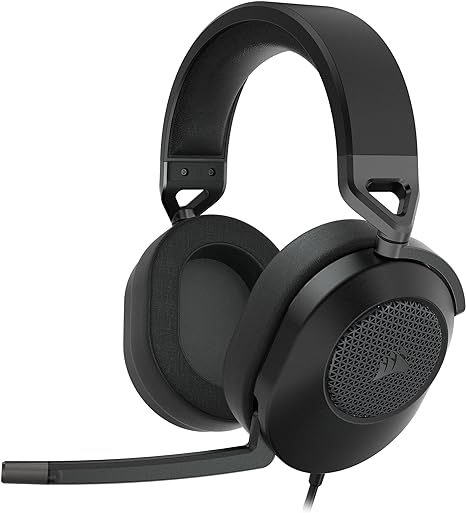
Corsair vs Logitech: Overview & Brand Philosophy
When evaluating the competitive landscape of gaming headsets and audio peripherals, few rivalries are as deeply entrenched as that between Corsair and Logitech. Corsair, originally recognized for its high-performance computer components, entered the audio space with a philosophy centered on premium build quality, aesthetic coherence, and robust hardware design. Its audio portfolio, spearheaded by lines like the HS and Virtuoso series, emphasizes broadcast-grade industrial design, utilizing machined aluminum accents and memory foam ergonomics to attract gamers, streamers, and audio enthusiasts looking for a refined desktop presence.
Conversely, Logitech approaches personal audio through decades of human-interface engineering and enterprise-level acoustic development. Operating heavily under its Logitech G and Blue Microphones sub-brands, Logitech’s design philosophy prioritizes ultra-low-latency wireless ecosystems, modular customizability, and computational acoustic tuning. By leveraging acquisitions such as ASTRO Gaming and Blue, Logitech has integrated studio-style microphone processing and custom driver materials (such as hybrid-mesh Pro-G diaphragms) directly into headsets designed for competitive esports athletes and productivity-focused users alike.
Ultimately, both manufacturers have largely left traditional wired fidelity to audiophile legacy brands, instead focusing on feature-dense wireless platforms. Corsair leans toward structural elegance, cross-platform luxury, and multi-connectivity options like simultaneous Bluetooth and slipstream wireless. Logitech counters with aggressive software intelligence, class-leading wireless battery efficiency, and acoustic profiles tuned specifically for spatial awareness in competitive play.
Key Differences & Technological Comparison
The primary technological divergence between Corsair and Logitech lies in their proprietary wireless protocols, acoustic driver philosophies, and companion software architectures.
In wireless transmission, Corsair deploys its proprietary Slipstream Wireless technology, which utilizes dynamic frequency switching (IFS) to seek out the fastest channel in dense signal environments, operating at sub-1ms speeds. Logitech counters with its industry-standard LIGHTSPEED protocol, an end-to-end engineered wireless solution celebrated in the professional esports community for rock-solid stability and near-zero latency, even in tournament settings saturated with interference.
Acoustically, the two brands diverge in driver material and audio tuning:
- Drivers and Tuning: Corsair often utilizes large 50mm high-density neodymium drivers capable of extended frequency responses (up to 40,000Hz on models like the Virtuoso RGB Wireless XT). This provides a punchy low-end and crisp, highly separated highs suitable for cinematic gaming. Logitech focuses heavily on its proprietary Pro-G 50mm hybrid-mesh drivers, which utilize woven mesh materials to minimize harmonic distortion. Logitech headsets typically feature a flatter, more clinical soundstage engineered to pinpoint subtle positional audio cues like footfalls and reloading sounds.
- Microphone Processing: Logitech holds a decisive technological advantage via its integrated Blue VO!CE software suite. This platform provides real-time voice filters including broadcast noise reduction, dynamic compression, de-essing, and equalization. While Corsair offers omnidirectional broadcast-grade physical microphones on flagship models with excellent raw frequency pickup, its iCUE voice processing options are far more basic and require third-party tools to match Logitech's vocal clarity.
- Software Ecosystem: Corsair’s iCUE is a comprehensive, resource-heavy suite that unifies lighting, spatial audio (such as Dolby Atmos integration), and hardware monitoring. Logitech’s G HUB is more lightweight and focused purely on peripheral mapping, EQ curves, and cloud-stored community sound profiles.
Pros & Cons Comparison
Corsair
Pros:
- Superior structural build materials, frequently utilizing machined aluminum headbands and metal yokes over plastic.
- Broader frequency response ranges on flagship models (up to 40kHz for high-resolution audio playback).
- Native multi-source connectivity, offering concurrent 2.4GHz Slipstream, Bluetooth, and wired USB audio.
- Seamless integration with native Dolby Atmos spatial audio licenses across several flagship tiers.
Cons:
- The iCUE software suite can be resource-intensive and prone to bloat compared to simpler utility software.
- Default acoustic signatures can sound harsh or hollow out of the box without manual EQ adjustments.
- Heavier overall chassis designs that can cause crown fatigue during extended sessions.
Logitech
Pros:
- LIGHTSPEED wireless protocol offers class-leading latency, stability, and extreme power efficiency.
- Advanced Blue VO!CE broadcast filters deliver the best microphone customization in the gaming tier.
- Ergonomic focus on low-weight architectures, resulting in greater comfort for marathon gaming sessions.
- Pro-G drivers provide exceptional mid-range clarity and competitive spatial localization.
Cons:
- Heavier reliance on plastic components and synthetic leatherette that degrades faster over time.
- Low-end bass response can lack warmth and depth for cinematic media consumption and music.
- Higher replacement cost for proprietary components and accessories.
Performance, Durability & Value Analysis
From an endurance and lifecycle perspective, Corsair holds a structural advantage, while Logitech claims the operational edge. Corsair’s reliance on metal hinges, aluminum yokes, and stitched headbands means models like the Virtuoso and HS80 often outlast comparable competitors physically. They resist stress fractures and headband snapping remarkably well. However, this dense metal architecture impacts long-term comfort, often resulting in higher clamping forces. Logitech’s chassis designs (such as the G PRO X or G733) incorporate significantly more polymer plastics, which makes them lighter and more forgiving during 8-hour sessions, but more susceptible to cosmetic wear, peeling synthetic leather, and cracked slider mechanisms over multi-year lifespans.
Regarding value and everyday performance, Logitech generally extracts more functional utility per dollar spent on entry-to-midrange tiers ($80 to $150). The integration of LIGHTSPEED reliability, massive battery life improvements (with newer models exceeding 50+ hours), and out-of-the-box vocal quality via Blue VO!CE means users rarely need secondary hardware. Corsair shines at the upper-premium boundary ($200+), where their multi-device connectivity—allowing users to simultaneously bridge a PC via 2.4GHz and a smartphone via Bluetooth—delivers an all-in-one lifestyle and gaming audio solution that justifies its higher retail price.
Final Verdict: Which Brand Should You Choose?
Choosing between Corsair and Logitech comes down to whether your priority lies in competitive tactical utility or premium multimedia versatility.
Choose Logitech if: You are a competitive esports player, streamer, or student who values lightweight comfort, clinical audio spatialization, and clear vocal transmission. If you play shooters like Counter-Strike 2, Valorant, or Apex Legends, the positional accuracy of Logitech’s Pro-G drivers, combined with the vocal polish of the Blue VO!CE suite, makes the Logitech G PRO X 2 or G535 the superior strategic investment.
Choose Corsair if: You demand a luxurious, durable build that doubles as a lifestyle headset for music, movies, and multi-device management. If you work from home, switch frequently between PC gaming and phone calls, or prefer cinematic single-player campaigns enhanced by native Dolby Atmos, Corsair’s Virtuoso or HS80 Max lineups will provide the superior tactile and acoustic experience.
Features
When evaluating feature sets within the gaming and consumer audio space, Corsair and Logitech represent two distinct engineering philosophies, both heavily driven by proprietary software ecosystems. Corsair centers its feature architecture around extreme hardware fidelity and broad-spectrum customization, anchored by its iCUE software. High-end Corsair models, such as the Virtuoso series, emphasize broadcast-grade capture with high-bandwidth, omnidirectional microphones and superior digital processing, often supporting 24-bit/96kHz high-resolution audio over wired connections alongside low-latency Slipstream wireless technology. Corsair also excels in aesthetic and functional personalization, offering intricate dynamic RGB zones, intuitive onboard tactile controls, and spatial audio integrations like Dolby Atmos. However, Corsair’s reliance on the resource-heavy iCUE suite can be a practical drawback for users seeking lightweight utility, and its feature set rarely ventures beyond PC-centric desktop environments.
Logitech, primarily through its Logitech G and ASTRO gaming verticals, engineers features with a sharper focus on competitive esports utility and cross-platform flexibility. The cornerstone of Logitech’s advanced audio lineup is its G HUB software coupled with integrated Blue VO!CE microphone technology, which provides professional-grade vocal tuning including real-time de-essers, compressors, and noise reduction filters that generally outperform Corsair's native mic processing. Logitech also leads in wireless performance and efficiency via its proprietary LIGHTSPEED protocol, which delivers virtually zero latency and class-leading battery life, often paired with hybrid Bluetooth connectivity for simultaneous multi-device mixing. Additionally, top-tier offerings like the ASTRO A50 X incorporate groundbreaking features such as HDMI 2.1 pass-through switching, allowing seamless routing between multiple consoles and PC without loss of fidelity.
The practical trade-offs between the two brands ultimately hinge on whether a user prioritizes raw acoustic bandwidth and aesthetic synergy or tactical, competitive-grade functionality. Corsair holds the advantage for audiophiles and streamers who desire high-resolution wired playback, premium structural materials, and unified RGB lighting with existing Corsair PC components. Conversely, Logitech provides a more robust, versatile feature package for competitive gamers and multi-platform users, driven by superior microphone modulation software, superior wireless power management, and advanced source-switching capabilities, making it the more functionally comprehensive choice overall.
Performance
When evaluating core acoustic performance in gaming audio, Logitech holds a distinct technical edge, primarily driven by its proprietary hybrid-mesh PRO-G audio drivers and a broader lineage of advanced acoustic engineering. Models within Logitech's flagship lines, such as the G PRO X 2 Lightspeed, leverage cutting-edge graphene driver diaphragms that provide exceptionally low distortion, rapid transient response, and pristine high-frequency detail. This engineering quality translates into superior directional imaging, making Logitech the preferred choice for competitive esports where pinpointing footsteps and spatial cues is critical. Corsair counters this with large, custom-tuned high-density neodymium drivers—often found in their Virtuoso and HS series—which deliver an expansive frequency response ranging from 20Hz up to an impressive 40kHz. While Corsair headsets offer a rich, resonant soundstage with punchier native bass, they can occasionally suffer from a slightly congested lower-midrange that requires equalization to achieve the clean spatial separation that Logitech naturally provides out of the box.
Microphone reproduction and spatial software integration represent another critical axis of performance where the two brands trade advantages. Logitech sets the gold standard for voice capture through its comprehensive Blue VO!CE integration within the G HUB software suite. This platform affords users broadcast-grade signal processing—including real-time compression, noise gating, and de-essing—delivering arguably the clearest and most customizable vocal clarity in the wireless gaming category. Corsair, however, does not lag far behind; its Virtuoso series features omnidirectional, broadcast-grade detachable microphones that offer remarkable bandwidth, capturing a fuller, more natural vocal warmth without excessive digital processing. In terms of spatial audio processing, Corsair relies heavily on standard-bearing Dolby Atmos integration, which delivers a seamless, theater-like object-based surround sound experience. Logitech counters with DTS Headphone:X 2.0, which excels at competitive object tracking, though some users find Corsair’s Dolby processing sounds more natural and immersive for mixed-media consumption and single-player gaming.
In real-world latency, battery longevity, and wireless stability, the trade-offs between the two ecosystems become sharply defined. Logitech's Lightspeed wireless technology is renowned across the industry for its ultra-low latency and rock-solid connection stability, virtually eliminating interference even in environments saturated with 2.4GHz signals. Logitech also leads decisively in power management performance, with headsets like the G733 and G PRO X 2 frequently exceeding 50 to 80 hours of uptime on a single charge. Corsair’s proprietary Slipstream wireless technology is similarly low-latency and enables multi-device pairing to a single receiver, but Corsair's hardware tends to draw significantly more power due to robust onboard RGB lighting systems and high-output amplification. Consequently, Corsair headsets often yield lower battery runtimes (typically 15 to 25 hours on premium models like the Virtuoso RGB Wireless XT). For consumers prioritizing pure competitive fidelity, pristine microphone processing, and marathon battery endurance, Logitech emerges as the superior performance platform; however, Corsair remains a formidable contender for audiophile-leaning gamers who value richer bass dynamics, expansive high-res playback, and seamless Dolby Atmos integration.
Design
In the realm of gaming-focused audio, the design philosophies of Corsair and Logitech diverge significantly in their material engineering and structural aesthetics. Corsair leans heavily into an industrial, premium appearance, often utilizing cast aluminum yokes, plush memory foam earcups with microfibers or leatherette, and prominent metallic accents. This design architecture, best exemplified by the HS and Virtuoso lineups, prioritizes rigid structural durability and a refined, broadcast-studio aesthetic that seamlessly transitions into a standard desktop setup. Conversely, Logitech employs a more targeted, pragmatic approach across its portfolio. Its Pro line champions an understated, utilitarian design characterized by steel sliders and minimalist matte-black finishes engineered specifically for tournament resilience, while the standard G-series embraces aggressively angular silhouettes and playful, lightweight materials aimed at streaming culture and varied consumer tastes.
From an ergonomic and technical engineering standpoint, the brands manage weight distribution and practical feature integration with distinct priorities. Logitech consistently excels in clamping force optimization and overall mass reduction, often engineering their chassis with lighter high-grade polymers that reduce long-session neck fatigue. Furthermore, Logitech seamlessly integrates functional elements into its physical forms, such as discrete storage slots for wireless USB transceivers inside magnetic ear-plate housings and intuitive physical control layouts that prevent accidental inputs. Corsair headphones, while exceptionally solid and premium to the touch, inevitably carry higher overall weights due to their dense metal framing, which can occasionally lead to localized crown fatigue or heat retention despite generous headband padding. However, Corsair counters this by offering superior structural integrity and elevated tactile feedback on their physical volume wheels and mic-mute toggles, conveying a feeling of superior craftsmanship.
Ultimately, the design trade-offs between the two brands come down to an operational dichotomy: Corsair crafts audio hardware designed to feel luxurious, rigid, and executive, whereas Logitech optimizes strictly for performance, agility, and functional versatility. Corsair represents the benchmark for consumers who equate substantial weight, metal components, and understated luxury with high-tier design, despite the marginal comfort penalty over marathon use. Logitech, meanwhile, delivers an engineered efficiency where design exists to serve competitive endurance, offering superior ergonomics, adaptable aesthetics ranging from pro-esports to vibrant lifestyle finishes, and lighter builds that endure grueling daily wear without structural failure.