Bose vs Corsair: Overview
Comparing Bose and Corsair helps you determine which brand is best suited for your needs in Headphones & Earbuds. Both brands offer strong choices depending on your budget and key feature requirements.
Key Features & Comparison
Evaluate factors such as build quality, warranty, customer satisfaction, and total value before making your final purchase choice between Bose and Corsair.
Features
In terms of feature architecture, Bose focuses heavily on ambient sound control, sensor-driven automation, and mobile-first ecosystem synergy. Bose headphones boast industry-leading Active Noise Cancellation with nuanced awareness modes, proprietary CustomTune technology that calibrates sound specifically to the user's ear canal geometry, and advanced head-tracking spatial audio. Their software suite, primarily app-driven for iOS and Android, emphasizes touch-capacitive control customization, simple EQ adjustments, and multipoint Bluetooth connectivity that transitions smoothly between mobile devices and laptops during travel or office work.
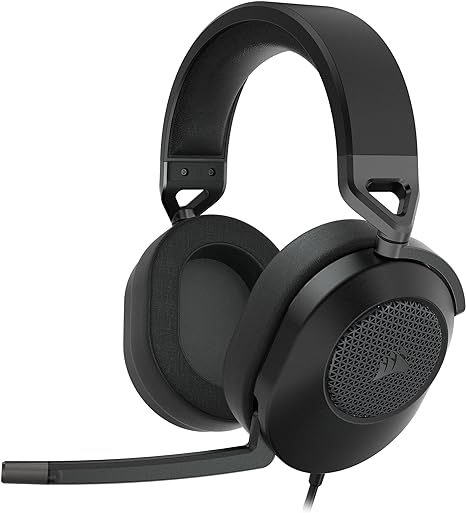
Corsair takes a radically different engineering approach by centering its feature set on desktop utility and interactive media via its robust iCUE software. Corsair headsets typically feature high-bandwidth, 2.4GHz Slipstream wireless connections or direct USB/3.5mm wired interfaces, deliberately bypassing Bluetooth latency constraints. Furthermore, Corsair integrates high-fidelity, omnidirectional or broadcast-grade detachable boom microphones, dynamic RGB lighting customization, on-ear sidetone control, and dedicated Dolby Atmos spatial processing. While lacking the elite travel-friendly ANC of Bose, Corsair compensates with vastly superior microphone performance and granular, system-level PC audio control.
Performance
Acoustic performance highlights the diverging target demographics of these two manufacturers. Bose prioritizes a refined, warm, and highly fatigue-free frequency response characterized by punchy but controlled sub-bass, articulate mid-range presentation for clear vocals, and smoothed high frequencies. The star of Bose's performance envelope is its active noise cancellation, which attenuates low-frequency rumble and mid-band chatter more effectively than almost any competitor on the market, creating an acoustically black background that allows musical dynamics and podcasts to emerge without high volume levels.
Corsair tunes its hardware for spatial perception, competitive clarity, and dynamic range in interactive environments. Out of the box, Corsair headphones frequently exhibit an energetic sound signature tuned to highlight directional cues like footsteps, atmospheric environmental cues, and explosive transients, often driven by custom-matched high-density neodymium drivers. However, Corsair headsets fall significantly short of Bose regarding acoustic isolation and musical nuance, relying instead on high-bandwidth, uncompressed 24-bit/96kHz wireless audio to deliver zero-latency clarity during competitive gameplay and voice over IP communications.
Design
The industrial design languages of Bose and Corsair reflect their distinct operational habitats. Bose emphasizes minimalist elegance, streamlined profiles, and lightweight comfort intended for extended wear during transatlantic flights or long workdays. Utilizing high-grade synthetic leathers, impact-resistant glass-filled nylon, and cast-aluminum hinges, Bose products feature fold-flat or collapsible designs that slip effortlessly into compact travel cases. The clamping force is meticulously tuned to remain gentle while maintaining an acoustic seal, making Bose the undisputed benchmark for physical comfort and understated aesthetics.
Corsair opts for a more aggressive, structural, and tactile design ethos tailored to the desktop workstation. While models like the Virtuoso incorporate machined aluminum yokes and memory foam ear pads for a premium feel, they are noticeably heavier and bulkier than Bose offerings, with limited folding mechanisms. Corsair's aesthetic blends industrial gaming culture with modern accents, featuring subtle to overt RGB lighting, dedicated mute switches on tactile boom arms, and larger earcups designed to dissipate heat during intense, stationary sessions. While Corsair feels exceptionally sturdy and durable on a desk, it lacks the travel-ready compactness and featherlight ergonomics of Bose.