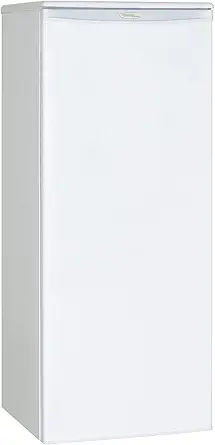
GE vs Danby: Overview & Brand Philosophy
When selecting a dedicated freezer, whether for bulk storage in the garage or supplementary cold space in an apartment, brand reputation and design intent play crucial roles. General Electric (GE), operating today under the umbrella of GE Appliances (a Haier company), represents a long-standing titan in the American home appliance landscape. GE’s philosophy centers on dependable, heavy-duty utility with a strong focus on family-sized capacities, rugged garage-ready technology, and widespread serviceability across North America. Their freezers are primarily engineered as core residential workhorses designed to handle demanding workloads and extreme seasonal environments.
Conversely, Danby occupies a specialized niche focused on smart space utilization, entry-level accessibility, and compact-to-mid-size utility. Founded in Canada in 1947, Danby has established itself as an agile manufacturer tailored toward urban dwellers, secondary-appliance buyers, small offices, and budget-conscious homeowners. Danby approaches freezer design through the lens of straightforward efficiency and minimalist footprints, avoiding extraneous technological bloat in favor of reliable, no-frills refrigeration at accessible price points.
While both brands cover chest and upright configurations, their core audiences diverge considerably. GE positions its product line toward full-scale food security, stocking up via wholesale clubs, and hunting yields, whereas Danby excels at delivering functional preservation in footprints where square footage is at an absolute premium.
Key Differences & Technological Comparison
A technical assessment of GE and Danby freezers reveals distinct engineering choices across compressor design, climate versatility, temperature control mechanisms, and interior ergonomics.
Garage-Ready Engineering: One of GE’s standout technical advantages is its widespread implementation of "Garage Ready" certification across both upright and chest lineups. GE models are systematically tested and built to operate seamlessly in ambient temperatures ranging from 0°F to 110°F (-18°C to 43°C). This is achieved through specialized compressor thermal management and balanced sensor loops that prevent the compressor from short-cycling during freezing winters or overheating in sweltering summers. While Danby offers select garage-ready models, a significant portion of their catalog is engineered specifically for climate-controlled indoor spaces, risking erratic interior temperatures if placed in an uninsulated outbuilding.
Cooling Technology and Defrost Systems: GE upright models frequently deploy advanced dynamic frost-free systems backed by multi-point electronic sensors. These units circulate forced air across distinct duct configurations to prevent localized ice buildup and minimize temperature stratification. Danby, on the other hand, emphasizes manual defrost systems—particularly across its extensive chest freezer inventory. While manual defrost requires periodic user intervention, it utilizes static evaporator coils directly embedded in the interior walls, which creates a more uniform cold barrier, lowers operational sound levels, and substantially reduces overall energy draw compared to active frost-free cycles.
Cabinet Construction & Interior Layout: GE uses thicker, high-density cyclopentane-blown polyurethane insulation and heavy-gauge galvanized steel exteriors on its medium-to-large capacity platforms. Internally, GE incorporates high-strength, adjustable spill-proof glass shelving and deep, full-width door bins capable of handling commercial-grade weights. Danby focuses on space-saving optimization, utilizing lightweight vinyl-coated wire baskets, plastic-lined interiors, and high-efficiency thin-wall insulation designed to maximize net interior cubic footage relative to exterior dimensional volume.
Controls and Diagnostics: GE typically utilizes external digital touchpads with precise temperature readouts, high-temperature audible alarms, and door-ajar sensors, giving users immediate visibility into the freezer’s internal status without opening the door. Danby largely sticks to reliable mechanical thermostats and exterior front-mount dial controls, which, while basic, eliminate digital controller failure points and keep manufacturing costs down.
Pros & Cons Comparison
GE Freezers
- Pro: True Garage-Ready Resilience: Most GE units can withstand extreme ambient fluctuations from 0°F to 110°F right out of the box.
- Pro: Robust Service and Parts Network: Fast, readily available technicians and replacement components throughout North America.
- Pro: Advanced Food Preservation Tech: Frequent availability of frost-free operations, digital controls, and audible temperature-rise alarms.
- Con: Higher Initial Cost: Command a premium price tag compared to equivalent cubic-foot models from compact-focused competitors.
- Con: Heavier Footprints: Bulky exterior dimensions make installation in tight utility closets or basement stairwells more challenging.
Danby Freezers
- Pro: Exceptional Value for Money: Industry-leading price-per-cubic-foot across small and mid-sized form factors.
- Pro: Compact, Space-Saving Profiles: Slim outer dimensions allow placement in apartments, pantries, and tight laundry alcoves.
- Pro: Low Energy Consumption: Manual defrost designs and high-efficiency compressors result in minimal electrical utility draw.
- Con: Fewer High-End Features: Lack of automated defrost in most base models requires manual scraping once or twice a year.
- Con: Limited Extreme Climate Tolerance: Many models require conditioned indoor placement to prevent compressor failure in freezing weather.
Performance, Durability & Value Analysis
From a performance and reliability perspective, both brands demonstrate strong track records within their intended operating domains. GE’s mechanical design favors endurance under heavy operational loads. The compressors utilized by GE are engineered with robust starting capacitors and heavy-duty internal valving, ensuring they can pull down internal temperatures rapidly even after a bulk loading of room-temperature goods. The durability of GE’s steel hinges, thick magnetic door gaskets, and exterior powder-coated finishes ensures that these units can survive ten to fifteen years in dusty basements or humid garages without structural degradation. From a pure investment standpoint, GE yields superior long-term value for users who rely on their freezer to preserve hundreds or thousands of dollars worth of bulk meat and frozen goods where loss of cooling is unacceptable.
Danby delivers outstanding capital efficiency at the lower end of the pricing spectrum. By employing simpler mechanical components—such as capillary-tube refrigerant metering and analog rotary thermostats—Danby minimizes failure-prone electronic control boards. When placed in climate-controlled environments like a home kitchen, basement, or utility room, a Danby freezer routinely operates for a decade with virtually zero required maintenance beyond seasonal defrosting. Danby's value proposition is unmatched for renters, small households, or anyone needing an economical second freezer without overpaying for enterprise-level durability they simply do not need.
Final Verdict: Which Brand Should You Choose?
The choice between GE and Danby ultimately hinges on where the freezer will live and how heavily you intend to use it.
Choose GE if: You intend to install the unit in an unheated or non-air-conditioned garage, barn, or outbuilding; you need large-capacity storage (14 to 21+ cubic feet); you prefer an upright freezer with automatic, hands-off frost-free defrosting; and you value audible safety alarms and digital precision to protect expensive food investments.
Choose Danby if: You are seeking a compact chest or upright freezer (typically under 11 cubic feet) that can fit in a small kitchen, apartment, or indoor utility room; you are shopping on a strict budget; and you do not mind manual defrosting in exchange for ultra-quiet operation, high electrical efficiency, and lower upfront equipment costs.
Features
When evaluating the feature ecosystem of residential freezers, GE leverages its extensive engineering legacy to deliver sophisticated, technologically forward solutions designed for modern household demands. A prime example of GE’s technical superiority is its "Garage Ready" engineering, a system-level feature that ensures compressors and thermal sensors function reliably in extreme ambient environments ranging from 0°F to 110°F without internal temperature degradation. Across both their upright and chest lineups, GE prioritizes high-utility conveniences such as advanced electronic temperature controls with exterior digital readouts, audible high-temp and door-ajar alarms, and integrated lock-and-key mechanisms. Furthermore, GE integrates bright LED interior theater lighting and, in select high-tier upright models, Turbo Freeze capabilities to rapidly drop cabinet temperatures after restocking. Frost-free technology is also heavily deployed throughout GE’s upright portfolio, minimizing routine maintenance through automated, sensor-driven defrost cycles that optimize compressor longevity.
Conversely, Danby approaches freezer features through a pragmatic, space-conscious engineering lens, positioning itself as a leader in specialized, utility-first functionality for compact and mid-sized footprints. Danby’s defining technical asset is its proprietary EZ-Keep or front-mount mechanical thermostats, paired with innovative organization systems like its multi-tiered, heavy-duty wire basket assemblies designed specifically to maximize vertical space in small-capacity footprints. Where Danby notably rivals the competition is with features like reversible door hinges for flexible installations, easy-clean interior liners, and integrated rollers or rear-glide casters that vastly improve mobility compared to GE’s heavier, fixed-placement units. Additionally, Danby incorporates practical touchpoints such as exterior-mounted defrost drains tailored for straightforward manual-defrost upkeep—a feature set engineered to consume less energy while retaining critical operational simplicity for cottages, apartments, or secondary storage spaces.
The practical trade-offs between the two brands ultimately reflect a balance between automated sophistication and streamlined cost-efficiency. GE provides an objectively superior array of active, user-protective features—most notably the ambient-temperature adaptation of its Garage Ready architecture and automated defrost systems that eliminate ice buildup. However, these advanced electronic components and multi-sensor systems introduce a higher upfront cost and potential points of failure down the line. Danby, by contrast, favors durable, low-complexity mechanical components that lower initial acquisition costs and reduce energy draw, especially within their compact chest freezers. The compromise with Danby is the prevalence of manual defrost systems in entry-level units and a general lack of smart-monitoring sensors or exterior digital dashboards, making GE the victor for full-featured, automated household convenience and Danby the preferred choice for straightforward, reliable utility.
Performance
When evaluating thermal performance, GE (General Electric) consistently demonstrates superior compressor engineering and climate versatility compared to Danby. GE freezers are predominantly engineered with robust cooling systems and dynamic airflow distribution, which ensures rapid pull-down times and exceptionally uniform internal temperatures. A major technical advantage for GE is its widespread implementation of "Garage Ready" technology across both chest and upright formats, certifying that the compressor and sealed system can reliably maintain sub-zero Fahrenheit temperatures in extreme ambient fluctuations ranging from 0°F to 110°F. In contrast, Danby focuses its engineering on high-density foam insulation and compact, energy-efficient refrigeration loops. While Danby models achieve targeted freezing levels adequately in stable indoor climates, they often feature longer pull-down periods and can struggle to maintain uniform temperatures when subjected to high ambient heat or during heavy loading cycles, as their compressors lack the displacement power found in GE’s heavy-duty units.
The operational and functional feature sets further distinguish the two brands in day-to-day food preservation. GE integrates sophisticated frost management systems, offering advanced frost-free options with smart sensor-controlled defrost cycles that mitigate temperature spikes, thereby significantly reducing the risk of freezer burn. Danby leans heavily into traditional static, manual-defrost systems—even on many of its mid-sized upright units. While manual defrost systems provide an inherently stable, moisture-locked environment that preserves meat well over long periods, they sacrifice the convenience and adaptive cooling precision of GE's automated platforms. Furthermore, GE freezers frequently incorporate external electronic temperature controls and audible high-temperature/door-ajar alarms, allowing users to monitor thermal stability without breaching the cabinet seal. Danby, prioritizing functional minimalism, typically employs mechanical thermostats that require manual calibration and offer less precise incremental temperature governance.
Ultimately, the performance trade-off between the two brands centers on commercial-grade resilience versus utility-focused energy containment. GE delivers high-capacity recovery rates, making it the superior technical choice for households that frequently open the unit, freeze large batches of room-temperature food at once, or place the appliance in unconditioned spaces. Danby, however, excels in localized thermal retention and steady-state efficiency. Because Danby primarily utilizes direct-cool systems where cooling coils are embedded directly into the shelves or cabinet walls, it eliminates the energy penalties of internal circulation fans and electric defrost heaters, yielding exceptional steady-state cold retention during power outages. For consumers demanding uncompromising thermal recovery and environmental flexibility, GE is the clear performer; for those seeking cost-effective, quiet, and hyper-insulated long-term cold storage within a climate-controlled room, Danby offers reliable, pragmatic performance.
Design
When evaluating the design philosophy of freezers, General Electric (GE) and Danby diverge into two distinct engineering categories: full-sized, heavy-duty domestic infrastructure versus compact, specialized utility. GE approaches freezer design with an emphasis on durability, expansive capacity, and seamless integration into modern home kitchens, basements, or garages. Their upright and chest models frequently utilize robust, commercial-grade galvanized steel cabinet construction paired with high-efficiency polyurethane foam insulation. GE's design strengths shine through in their garage-ready engineering, which allows compressor and thermal systems to withstand ambient temperature fluctuations ranging from 0°F to 110°F. Ergonomically, GE focuses on family-sized practicality, integrating sliding bulk-storage baskets, frost-free air circulation towers, high-output interior LED illumination, and integrated lock mechanisms with self-ejecting keys that ensure safety without sacrificing ease of access.
Danby, by contrast, excels in compact space utilization, minimalist footprints, and versatile apartment-friendly designs. Catering primarily to secondary storage needs, urban dwellers, and smaller households, Danby engineers its freezers with a focus on clean external geometry, reversible door hinges, and flush-back condenser profiles that allow the units to sit tightly against walls. While Danby produces chest freezers, their compact uprights are particularly notable for their integrated fixed wire evaporator shelves, which provide direct contact cooling for rapid freezing, though this eliminates the adjustable interior flexibility seen in GE units. Danby also embraces contemporary styling with rounded retro-inspired edges and unconventional finishes—including sleek matte black, pristine white, and stainless steel looks—making them more aesthetically versatile for home offices, dormitories, or auxiliary pantries where traditional appliance bulk would be intrusive.
The practical trade-offs in design center on structural permanence versus spatial economy. GE holds a significant engineering advantage in air distribution mechanics, utilizing dynamic multi-flow venting that virtually eliminates manual defrosting on mid-to-high-end upright models, whereas Danby’s reliance on static cooling systems often demands periodic manual maintenance. However, Danby counters with high volumetric efficiency and lightweight mobility; their front-mounted mechanical thermostats and bottom-mounted front drain systems make the inevitable defrosting process straightforward. For consumers requiring expansive interior modularity, robust climate tolerance, and long-term mechanical resilience, GE represents the superior industrial design. Conversely, Danby wins on spatial ergonomics, localized versatility, and affordable compact form factors tailored to fit where traditional appliances cannot.