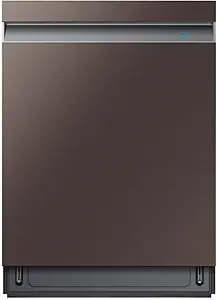
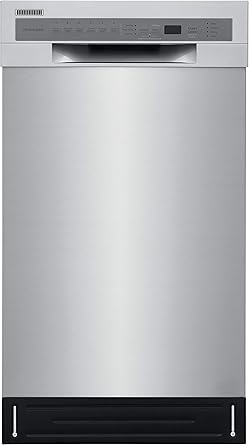
Samsung vs Frigidaire: Overview
Comparing Samsung and Frigidaire helps you determine which brand is best suited for your needs in Dishwashers. Both brands offer strong choices depending on your budget and key feature requirements.
Key Features & Comparison
Evaluate factors such as build quality, warranty, customer satisfaction, and total value before making your final purchase choice between Samsung and Frigidaire.
Features
Samsung consistently pushes the envelope in feature diversity, making advanced technology accessible at moderate price points. Many of Samsung's flagship models feature technologies like the StormWash+ or WaterWall systems, which replace or augment traditional rotary spray arms with high-pressure, targeted blasting zones designed to scour encrusted cookware without pre-rinsing. Furthermore, Samsung leads the sub-$1,000 segment in smart capabilities, incorporating built-in Wi-Fi that interfaces with the SmartThings app. This allows users to remotely monitor cycle progress, download specialized cleaning profiles, track energy consumption, and receive maintenance diagnostic alerts directly on their smartphones, which adds genuine convenience for connected households.
Frigidaire takes a more mechanical, functional approach to its feature architecture, focusing on wash-coverage mechanics rather than digital connectivity. The cornerstone of Frigidaire's upper-tier models is the Dual OrbitClean (or BladeSpray) wash arm system, which uses a secondary rotating disc at the end of the main arm to create multidirectional water patterns, ensuring thorough coverage throughout the tub. While select Frigidaire Gallery models offer practical features such as 30-minute quick washes, sanitize cycles, and CleanBoost technology that premixes detergent with water, they generally eschew Wi-Fi connectivity and complex touch displays. For users who prioritize tactile physical controls, intuitive cycle selections, and proven mechanical washing systems over app-based controls, Frigidaire delivers a distinctly practical feature set.
Performance
In terms of raw cleaning efficacy, both brands produce competitive results, though they achieve them through fundamentally different hydraulic philosophies. Samsung relies heavily on high-pressure variable-speed pumps combined with targeted spray zones to tackle tough food soils. Its upper-tier cycles deliver exceptional results on glassware and flatware, aided by sophisticated filtration systems that prevent soil redeposition. However, Samsung's reliance on condensation drying—supplemented by an automatic door-release function (AutoRelease Dry) that pops the door open at the cycle's end to vent steam—can result in mixed drying performance on plastics, even though it is gentle on heat-sensitive items and highly energy-efficient.
Frigidaire, on the other hand, frequently incorporates traditional exposed or concealed heating elements paired with fan-assisted systems like MaxBoost Dry. This approach makes Frigidaire exceptionally capable at drying dense loads, including plastic containers and ceramic mugs with recessed bases, far outpacing the baseline drying performance of standard condensation-only units. While Frigidaire's cleaning cycle can be somewhat more aggressive and acoustically noticeable—averaging between 49 and 54 dBA on entry models, though dropping to 47 dBA on Gallery units—its water distribution via the OrbitClean arm reliably strips standard food soils. Samsung edges out Frigidaire in delicate handling, soil sensing accuracy, and quiet operation, while Frigidaire holds an advantage in thermal drying completeness and heavy-duty, cycle-speed efficiency.
Design
Design is an area where Samsung sharply differentiates itself, adopting an architectural, minimalist aesthetic that integrates seamlessly into modern cabinetry. Samsung dishwashers frequently showcase pocket handles, fully integrated top-control touch panels, and fingerprint-resistant stainless steel, black stainless, or bespoke custom glass finishes. Internally, Samsung provides superior flexibility with smooth-gliding ball-bearing racks, adjustable tines, dedicated cutlery trays (third racks), and height-adjustable middle racks that easily accommodate tall stemware or oversized platters. The visual and tactile impression of a Samsung dishwasher inside and out consistently punches above its price class, mimicking premium European luxury brands.
Frigidaire adheres to a more conventional American appliance layout, focusing on rugged ergonomics and practical internal geometry rather than high design. While the Frigidaire Gallery series has made significant strides with smudge-proof stainless finishes and integrated top controls, standard Frigidaire units often feature visible front-mounted console buttons, thicker profile handles, and hybrid or polymer (plastic) tubs in their entry-level lines compared to Samsung's widespread use of full stainless steel tubs. Internally, Frigidaire's racking systems are sturdy and functional, offering basic fold-down tines and standard third racks on mid-to-high models, but they lack the dampening, glide smoothness, and premium feel of Samsung's upper-tier interior hardware.