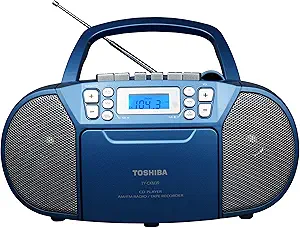
TOSHIBA vs Singing Wood: Overview
Comparing TOSHIBA and Singing Wood helps you determine which brand is best suited for your needs in Boomboxes. Both brands offer strong choices depending on your budget and key feature requirements.
Key Features & Comparison
Evaluate factors such as build quality, warranty, customer satisfaction, and total value before making your final purchase choice between TOSHIBA and Singing Wood.
Features
In terms of feature architecture, Toshiba models typically provide an exhaustive suite of connectivity and format playback capabilities designed for legacy media enthusiasts and power users alike. High-end Toshiba boomboxes frequently incorporate top-loading or front-loading CD mechanisms with MP3/WMA compatibility, dual or single cassette decks with recording functionality, and digital AM/FM tuners with robust preset memories. Beyond physical media, Toshiba integrates contemporary interfaces like Bluetooth streaming, USB flash drive playback, dedicated 3.5mm auxiliary inputs, and often specialized microphone inputs with independent mixing or echo controls, making them versatile tools for both passive listening and interactive performance.
Singing Wood focuses on a curated, streamlined feature set that prioritizes the most commonly utilized playback methods without overwhelming the user interface. Most Singing Wood units emphasize seamless Bluetooth synchronization alongside traditional CD playback and analog or digital FM reception. While select models maintain basic cassette compatibility or auxiliary inputs, Singing Wood generally omits advanced technical features like microphone mixing, complex multi-band equalization, or USB recording. Instead, their engineering efforts concentrate on intuitive top-panel button layouts, easy-to-read LCD screens, and low-latency wireless pairing, resulting in a user-friendly product that minimizes setup friction for casual everyday listeners.
Performance
Acoustically, Toshiba boomboxes dominate in dynamic range, maximum sound pressure level (SPL), and frequency extension. Engineered with higher-wattage internal amplifiers and multi-driver speaker arrays—frequently featuring dedicated passive radiators or ported enclosures—Toshiba units deliver a substantial low-end response that resists distortion even at elevated volumes. The high frequencies remain articulated due to distinct tweeter integration in their flagship models, allowing complex musical arrangements to maintain instrument separation. This high output threshold and assertive acoustic profile make Toshiba models particularly well-suited for outdoor environments, workshops, or large communal spaces where acoustic presence must overcome ambient noise.
Singing Wood delivers a performance profile tailored for near-field listening and moderate volume thresholds. Utilizing modest stereo driver configurations without the high-wattage amplification of Toshiba, Singing Wood boomboxes produce clean, balanced mid-range reproduction that favors vocal clarity, audiobooks, podcasts, and acoustic music. While the low-frequency output lacks the visceral punch and sub-bass resonance of Toshiba's heavier drivers, Singing Wood avoids overly muddy bass by tuning their enclosures for neutral, balanced output. Pushed to maximum volume, Singing Wood units will exhibit minor harmonic distortion, but within normal indoor operating levels, they maintain commendable sonic fidelity and intelligible sound reproduction.
Design
The industrial design of Toshiba boomboxes reflects a functional, robust aesthetic that prioritizes durability and tactile feedback. Enclosures are constructed with heavy-gauge plastics, reinforced corners, integrated full-width carry handles, and protective speaker grilles designed to withstand physical impacts. Control layouts lean into mechanical switches, large rotary volume knobs, and tactile push buttons that can be operated reliably by feel or with gloved hands. While some high-output Toshiba units embrace an aggressive, boombox-era party aesthetic featuring integrated LED lighting accents, the fundamental design remains rooted in functional utility, serviceability, and physical resilience.
In contrast, Singing Wood champions a softer, mid-century modern or minimalist aesthetic that integrates harmoniously with contemporary home decor. Their chassis typically feature rounded geometries, matte pastel or neutral colorways, and flush-mounted controls that present a sleek, non-intrusive footprint. Singing Wood boomboxes are engineered to be lightweight and highly portable, featuring recessed handles or low-profile carry grips that cater to moving the device from room to room. While their lightweight plastic construction lacks the rugged, drop-resistant durability found in Toshiba's heavier enclosures, Singing Wood succeeds in offering a visually charming, space-conscious product that looks at home on a nightstand or bookshelf.