TOSHIBA vs GPX: Overview
Comparing TOSHIBA and GPX helps you determine which brand is best suited for your needs in Boomboxes. Both brands offer strong choices depending on your budget and key feature requirements.
Key Features & Comparison
Evaluate factors such as build quality, warranty, customer satisfaction, and total value before making your final purchase choice between TOSHIBA and GPX.
Features
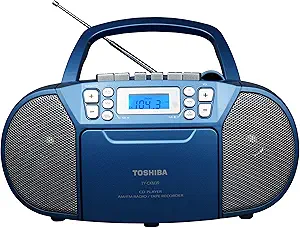
From a feature-set perspective, Toshiba generally offers a more technologically sophisticated and versatile suite of playback options. Many Toshiba models bridge the retro and modern eras by combining legacy top-loading CD players and auto-stop cassette decks with modern digital playback mechanisms, including USB inputs for MP3/WMA decoding, Bluetooth streaming, and programmable digital AM/FM tuners with robust preset capacities. High-end variants even include guitar or microphone inputs with dedicated volume and echo controls, effectively doubling as portable PA systems or karaoke machines. The integration of high-resolution audio support in select Toshiba units underscores their commitment to versatile media consumption without sacrificing modern convenience.
GPX takes a minimalist, no-frills approach to its feature architecture, focusing predominantly on basic functionality. A standard GPX boombox typically incorporates an analog or basic digital AM/FM tuner, a standard top-loading CD mechanism, and an auxiliary 3.5mm line-in jack. While Bluetooth connectivity is increasingly common across their newer product lines, features like cassette recording, multi-format USB decoding, or detailed equalization adjustments are either absent or rudimentary in execution. The controls on GPX units are deliberately straightforward, which reduces the learning curve for non-technical users, but power users and media collectors will quickly encounter limitations regarding format compatibility and fine-grained audio manipulation.
Performance
Acoustic performance is where the disparity between Toshiba and GPX becomes most apparent. Toshiba models frequently incorporate sophisticated amplification stages, higher-wattage output transformers, and dedicated passive radiators or bass-reflex porting systems. This architectural emphasis yields a full-bodied sound signature characterized by tight, punchy low-end response, intelligible mid-range vocal reproduction, and clear high-frequency extension. Even at elevated volumes, Toshiba’s rigid internal enclosures and superior speaker drivers mitigate chassis resonance and harmonic distortion, ensuring that dynamic passages in music retain clarity and depth whether playing an original red-book CD or streaming via a high-bitrate wireless connection.
GPX units, engineered with cost constraints in mind, typically utilize smaller, single-cone full-range drivers housed in lightweight plastic enclosures without advanced acoustic sealing. As a result, the sound profile tends to be mid-centric with constrained bass response and rolled-off treble, making them well-suited for spoken-word content like talk radio or casual background playback, but less ideal for dynamic music genres. When pushed to higher volume levels, GPX boomboxes are prone to acoustic breakup and harmonic distortion due to low-power integrated amplifiers clipping early. While adequate for near-field listening at moderate volumes, GPX cannot match the acoustic presence, stereo separation, or dynamic headroom provided by Toshiba.
Design
Toshiba’s industrial design language leans toward a deliberate blend of modern ruggedness and retro-classic boombox aesthetics. The brand often employs textured, heavy-duty ABS plastics, reinforced carry handles, and prominent, visually striking speaker grilles that project durability and acoustic purpose. Control layouts on Toshiba units are intuitively clustered, featuring tactile switches, smooth rotary dials for volume and tuning, and legible backlit LCD screens that facilitate operation in low-light environments. Furthermore, the internal layout of Toshiba boomboxes reflects careful mechanical dampening, which is crucial for preventing vibrations from causing disc read errors or cassette flutter during playback.
GPX opts for an ultra-lightweight, compact, and utilitarian aesthetic characterized by smooth, molded plastics and minimalist ornamentation. The primary advantage of GPX’s design is physical portability; these units are exceptionally easy to transport, occupying minimal surface area on countertops or workbenches. However, the trade-off is evident in the tactile feedback of the hardware, where pushbuttons, sliders, and CD compartment latches feel significantly less substantial compared to Toshiba's hardware. While GPX's clean, modern lines blend inconspicuously into everyday domestic settings, they lack the rugged, premium chassis construction that enables Toshiba to withstand repeated transport and heavier mechanical use.