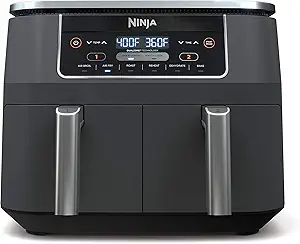
Ninja vs SAKI: Overview
Comparing Ninja and SAKI helps you determine which brand is best suited for your needs in Air Fryers. Both brands offer strong choices depending on your budget and key feature requirements.
Key Features & Comparison
Evaluate factors such as build quality, warranty, customer satisfaction, and total value before making your final purchase choice between Ninja and SAKI.
Features
From a feature and functionality standpoint, Ninja treats its air fryers as multi-purpose culinary workstations. Flagship Ninja models regularly incorporate advanced capabilities such as the DualZone Technology with Smart Finish—which allows two distinct foods to finish cooking simultaneously at different temperatures—alongside specialized modes like Max Crisp (reaching up to 450°F), Proofing, Air Broil, and Dehydrate. Furthermore, premium Ninja configurations often integrate built-in Foodi Smart Thermometers that actively monitor internal meat temperatures, taking the guesswork out of protein preparation. These hardware-driven innovations are engineered directly into the tactile control panels, giving users immediate, granular control over time, convection fan velocity, and heat distribution without the need for secondary devices.
SAKI shifts the feature paradigm away from hardware complexity toward software-assisted convenience and smart home integration. SAKI smart air fryers stand out by incorporating robust Wi-Fi capabilities that interface smoothly with iOS and Android applications, as well as voice control compatibility through platforms like Amazon Alexa. Through the dedicated app, users can browse curated recipes, receive real-time push notifications when food requires shaking or is finished, and adjust cooking parameters remotely. While SAKI models may omit specialized high-heat modes like Ninja's 450°F Max Crisp or integrated internal meat probes, their intuitive digital presets, keep-warm routines, and seamless mobile interface provide a frictionless experience tailored to users who prefer a hands-off, automated cooking process.
Performance
In terms of pure thermal performance and culinary execution, Ninja models are engineered for velocity, high heat, and uncompromising texture. Ninja utilizes high-wattage heating elements coupled with aggressively tuned convection fans that optimize airflow circulation around the cooking basket. This results in superior moisture retention in proteins paired with rapid Maillard browning and exceptionally crisp exteriors, especially when utilizing their proprietary Max Crisp setting. Recovery times after opening the basket are notably fast, ensuring that thermal drops are minimized. For users who frequently cook frozen convenience items, dense root vegetables, or large batches of wings, Ninja delivers consistent, restaurant-grade crunch across all zones of the basket.
SAKI provides an admirable and consistent cooking performance that excels in everyday meal preparation, though with a slightly more gentle thermal profile. Its convection heating elements distribute warmth evenly throughout the interior chamber, preventing the scorching or hot-spotting that can sometimes plague less refined air fryers. While it may take a marginal amount of extra time compared to Ninja to reach peak crispness on dense, high-moisture items, SAKI excels in precision baking, roasting delicate fish, and reheating dishes without drying them out. The air circulation is remarkably quiet compared to the audibly powerful blower fans of Ninja units, offering a more peaceful kitchen environment at the expense of a fraction of Ninja's aggressive, rapid-heat crisping power.
Design
The design language of Ninja appliances is industrial, utilitarian, and built for durability. Typically clad in a mixture of dark brushed stainless steel, heavy-duty matte plastics, and intuitive tactile digital displays, Ninja units present an unmistakable countertop presence. Ergonomics are clearly front of mind: basket handles are thick, insulated, and secure, while the non-stick crisper plates feature silicone bumpers that lock firmly into place. Furthermore, Ninja commonly uses a high-grade ceramic non-stick coating that is PTFE- and PFOA-free, which holds up extraordinarily well to abrasive cleaning and high temperatures. However, this robust build quality often results in substantial physical bulk, making many Ninja models challenging to store under low-hanging cabinets or in smaller kitchens.
SAKI takes an entirely different approach to aesthetic and physical design, embracing Scandinavian-inspired minimalism and sleek countertop integration. SAKI air fryers frequently feature glossy monochromatic finishes, soft-curved silhouettes, and integrated, hidden-until-lit touch displays that reduce visual clutter when not in use. The footprint of a SAKI air fryer is consciously engineered to maximize internal cooking capacity while minimizing countertop real estate, making it an excellent choice for modern apartments or minimalist decor schemes. While the interior baskets utilize standard food-grade non-stick coatings that require gentle handling to prevent flaking over time, the lightweight construction and elegant lines make the appliance aesthetically pleasing and exceptionally easy to maneuver during daily cleanup.