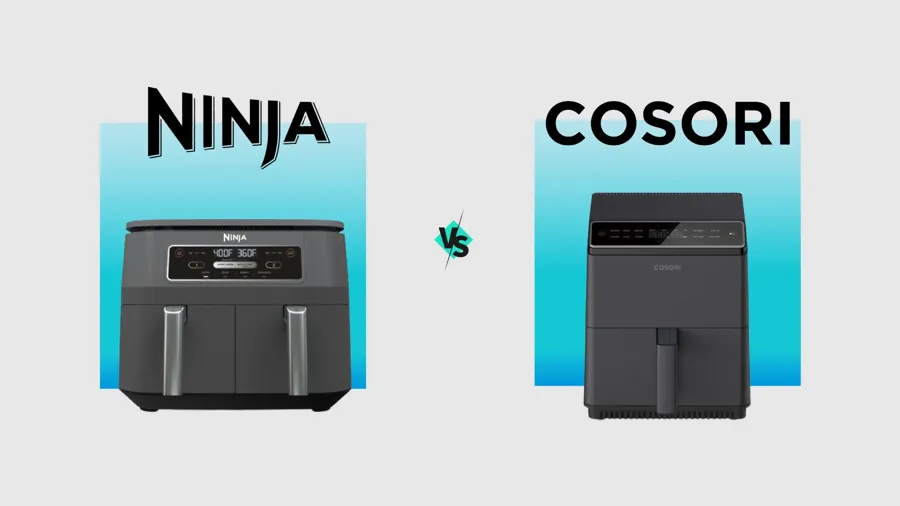
Whether you’re looking to upgrade your kitchen with an air fryer or make your first purchase, COSORI and Ninja are two of the most popular brands in the market.
Both brands offer excellent models with unique features, but which one is the best for you?
In this comprehensive comparison, we’ll break down expert data, official insights, and detailed product information to give you a complete view of both brands. Let’s dive in!
Features
When evaluating the functional engineering and feature architecture of air fryers, COSORI and Ninja represent two distinct philosophies: COSORI champions digital integration and precision interface design, while Ninja emphasizes multi-modal thermodynamic versatility. COSORI consistently outfits its product line—most notably the Dual Blaze and TurboBlaze series—with advanced smart capabilities, including robust 2.4GHz Wi-Fi connectivity and control via the VeSync companion app. This integration allows for precise recipe monitoring, remote start parameters, and Alexa or Google Assistant voice commands. At the hardware level, COSORI differentiates itself through specialized dual-element heating arrays, using independently controlled top and bottom heating elements paired with DC-motor convection fans. This setup bypasses the ubiquitous need for mid-cycle food shaking by eliminating thermal gradients, an engineering feat bolstered by up to twelve distinct, finely tuned pre-programmed presets displayed on intuitive, capacitive-touch interfaces.
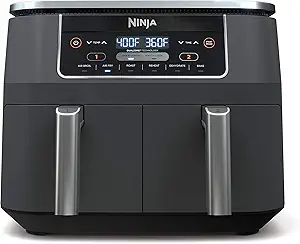
Conversely, Ninja approaches features through the lens of mechanical multi-functionality and expansive dynamic temperature ranges rather than smartphone connectivity. Signature units like the Ninja Foodi and the DoubleStack series feature proprietary multi-zone airflow systems and the wide-spectrum "Max Crisp" technology, capable of generating up to 450°F of targeted heat for rapid moisture evaporation, as well as low-temperature control descending to 105°F for true dehydrating functionality. Ninja’s most impactful functional features center on basket versatility, such as the DualZone system equipped with "Smart Finish" and "Match Cook" mechanics. Smart Finish uses independent microprocessors to synchronize cook times across two distinct baskets running entirely different programs, temperatures, and durations, ensuring two discrete dishes finish cooking at the exact same moment. While Ninja generally foregoes internet connectivity and smartphone telemetry, its physical engineering focuses heavily on high-powered ceramic coatings and tactile dial controls that favor immediate operational feedback.
The practical trade-offs regarding features boil down to a user's operational preferences in the kitchen. COSORI provides a feature set tailored to modern smart-home cooks who demand granular, recipe-guided control and streamlined automation; the bottom-heating elements and sensor-driven pause features directly solve common user frustrations with uneven crisping. However, COSORI air fryers generally possess narrower overall temperature spans and lack the heavy-duty dehydrating or moisture-roasting versatility found in competitor models. Ninja sacrifices modern app integration and hands-free voice utility in favor of robust, multi-tier cooking capability and broader thermal ceilings. Ultimately, consumers prioritizing seamless split-meal logistics and powerful multi-cook versatility will find Ninja's hardware features superior, whereas tech-forward users seeking automated precision, remote monitoring, and truly shake-free dual-element heating will benefit more from COSORI's feature ecosystem.
Performance
When evaluating performance, Ninja and COSORI approach thermal dynamics and culinary execution with distinctly different engineering philosophies. Ninja relies heavily on raw power and proprietary airflow mechanics, best exemplified by its "Max Crisp" technology. By combining robust heating elements—often exceeding 1750 watts—with high-velocity convection fans, Ninja units achieve rapid heat transfer that excels at delivering an exceptionally crunchy, deep-fried texture on frozen foods and dense proteins. Temperatures on select Ninja models can climb to a blistering 450°F, creating a superior sear that rivals traditional broiling. In contrast, COSORI engineering prioritizes thermal precision, thermodynamic consistency, and moisture retention. Its advanced Dual Blaze technology utilizes independent top and bottom heating elements paired with smart temperature sensors, effectively eliminating the cold spots that plague single-element baskets. This 360-degree heat envelope allows COSORI to cook delicate items, such as fish and baked goods, with exceptional uniformity and without requiring the user to pause and shake the basket mid-cycle.
The practical trade-offs between the two brands become apparent depending on the user's everyday cooking style. Ninja is the undisputed powerhouse for rapid, high-heat air frying and versatile multi-zone cooking. Dual-zone models from Ninja feature independent heating systems capable of running completely different cooking functions and times simultaneously, syncing the finish times with zero performance degradation in either basket. However, Ninja’s intense, focused heat can occasionally lead to edge-burning on delicate foods if not closely monitored. COSORI counters this with higher cooking finesse, offering a wider dynamic range of precise presets that gently circulate air without drying out the interior of proteins. While COSORI may take a minute or two longer to achieve the extreme, shattering crispiness that Ninja produces natively, its dual-element execution yields far juicier results on thick chicken breasts and steaks. Ultimately, consumers seeking aggressive browning, blistering speeds, and commercial-grade crisping will find Ninja’s performance superior, whereas home cooks prioritizing edge-to-edge heat distribution, tender moisture retention, and hands-off consistency will benefit more from COSORI’s balanced engineering.
Design
When evaluating the design philosophy of air fryers, COSORI and Ninja represent two distinct approaches: COSORI prioritizes streamlined, contemporary aesthetics tailored for modern kitchen integration, whereas Ninja leans heavily into rugged, utilitarian engineering designed for high-throughput versatility. COSORI excels in ergonomic sophistication, featuring sleek matte finishes, square-footprint silhouettes, and angled, capacitive touch displays that eliminate the need to bend down to read settings. The brand’s intelligent spatial engineering maximizes internal cooking capacity without ballooning counter footprint, utilizing squarish baskets that comfortably accommodate square-shaped items like sliced bread or single-layer proteins better than traditional circular designs. Furthermore, COSORI models frequently integrate seamless smart-home connectivity and transparent viewing windows with interior lighting, catering to tech-forward consumers who value both visual elegance and cooking process visibility.
Conversely, Ninja’s design framework centers on multifaceted mechanical utility and robust durability, often at the expense of a compact kitchen profile. Ninja pioneered the split-zone design language, popularized by their DualZone and FlexBasket platforms, which utilize independent heating elements, dual convection fans, and synchronized finish timers to tackle two disparate culinary tasks simultaneously. From a materials and engineering perspective, Ninja opts for thick, high-density plastics paired with brushed stainless steel accents and tactile, physical dials alongside membrane buttons. While this industrial styling feels slightly more commercial and demands significantly more horizontal counter space, the physical tactile controls provide high reliability and positive feedback when operating with greasy or wet hands. Additionally, Ninja baskets are engineered with heavier gauge metals and proprietary ceramic non-stick coatings, which typically exhibit superior scratch resistance over prolonged high-heat cycles compared to traditional PTFE layers.
Ultimately, the trade-offs between COSORI and Ninja come down to form-factor efficiency versus modular capability. COSORI’s design triumphs in space economy, offering larger usable single-basket capacities per square inch of counter real estate, quieter fan acoustics, and a cohesive, minimalist look that complements modern interior decor. Ninja trades this sleek minimalism for heavy-duty operational versatility; its multi-basket designs, flip-away storage mechanisms (as seen in their toaster-oven hybrid series), and heavy-duty components cater to high-volume family cooking where dual-temperature capability trumps counter footprint. Consumers prioritizing intuitive, visually cohesive appliances with superior space-to-capacity ratios will find COSORI’s design superior, while those demanding heavy-duty mechanical reliability and complex multi-zone functionality will benefit from Ninja’s performance-driven architectural engineering.
Conclusion
Both Cosori and Ninja air fryers offer excellent performance, but the choice depends on your specific needs.
Cosori is perfect for those who want an energy-efficient, easy-to-use air fryer with a great build quality at a competitive price.
Ninja excels in smart features, multi-functional cooking, and faster performance, making it ideal for users looking for versatility and advanced technology.
Considering their quality, It doesn’t make much difference which brand you go for, because both will provide you with delicious, crispy meals with minimal effort. Just make sure to select based on the features that matter most to you!
Compare current retail pricing, active promotions, and verified stock availability directly from authorized stores: