Whirlpool vs Homelabs: Overview & Brand Philosophy
When selecting a room air conditioner, consumers often find themselves weighing heritage legacy against modern direct-to-consumer efficiency. Whirlpool stands as one of the most recognized global juggernauts in home appliances, boasting over a century of manufacturing pedigree. In the climate control sector, Whirlpool’s brand philosophy centers on reliability, widespread parts availability, and seamless integration into traditional household workflows. Their air conditioning catalog spans standard window units, dual-hose portables, and through-the-wall systems engineered to deliver consistent cooling across diverse architectural footprints.
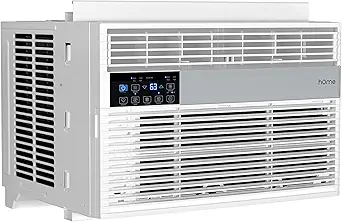
Conversely, hOmeLabs represents the modern wave of agile, consumer-centric home electronics brands. Founded with a digital-first distribution model, hOmeLabs strips away the corporate overhead typical of legacy appliance makers, focusing on minimalist aesthetics, intuitive user interfaces, and competitive out-of-the-box value. Their philosophy prioritizes simplicity and problem-solving for modern urban dwellers, renters, and budget-conscious homeowners who demand competent thermal performance without unnecessary proprietary complexity or prohibitive price tags.
The contrast between these two manufacturers highlights a fundamental shift in the appliance market. Whirlpool leans heavily on its comprehensive engineering ecosystem, certified installation networks, and expansive warranties. hOmeLabs builds brand loyalty by optimizing popular form factors, emphasizing quiet operation in compact living environments, and maintaining straightforward plug-and-play functionality across their portable and window-mounted air conditioning product tiers.
Key Differences & Technological Comparison
The primary technological divergence between Whirlpool and hOmeLabs lies in smart integration, chassis engineering, and compressor management. Whirlpool has invested heavily in connected home infrastructure. Many premium Whirlpool AC units feature native 6th Sense Technology, an automated sensor suite that continuously monitors ambient temperature and relative humidity, modulating fan speeds and cooling cycles to stabilize indoor climate conditions automatically. Additionally, Whirlpool’s Wi-Fi enabled models interface seamlessly with Google Assistant, Amazon Alexa, and the proprietary Whirlpool mobile application for remote scheduling and energy tracking.
hOmeLabs approaches climate control engineering through practical functional design rather than complex IoT ecosystems. While select hOmeLabs models offer Wi-Fi compatibility, their engineering core prioritizes physical refinement: multi-stage washable air filtration, optimized airflow louvers, and dual-motor operation on select portable models to reduce decibel output. hOmeLabs units are renowned for their low-profile acoustic profile, frequently undercutting comparable Whirlpool models by 2 to 5 decibels (dBA), an important metric for bedrooms and home offices.
From a hardware and form-factor standpoint, Whirlpool offers a significantly broader range of cooling capacities, scaling from compact 5,000 BTU window frames to robust 24,000 BTU systems capable of handling open-concept residential spaces. hOmeLabs concentrates its lineup strategically within the mid-market bracket, primarily offering 5,000 to 14,000 BTU (ASHRAE) solutions. Furthermore, Whirlpool provides dedicated through-the-wall units designed to fit universal wall sleeves, whereas hOmeLabs focuses squarely on freestanding portable ACs and traditional double-hung window models.
Pros & Cons Comparison
Whirlpool: Advantages
- Broad Capacity Range: Extensive BTU selection, accommodating everything from small dens to large, open-floor layouts up to 1,500 square feet.
- Advanced Automation: Proprietary 6th Sense Technology dynamically adapts cooling cycles to both heat load and ambient humidity.
- Widespread Service Network: Extensive access to certified repair technicians, genuine replacement parts, and extended warranty support.
- Form Factor Diversity: Offers specialized options including through-the-wall, casement-slider, and commercial-grade window units.
Whirlpool: Disadvantages
- Higher Price Floor: Carries a brand premium, often costing 15% to 30% more than equivalent capacity units from direct-to-consumer rivals.
- Acoustic Footprint: Compressor and fan assemblies tend to run louder on mid-range and high-BTU units compared to modern lifestyle brands.
hOmeLabs: Advantages
- Exceptional Value: Aggressive pricing structures deliver strong BTU-per-dollar ratios across both window and portable classes.
- Quiet Operation: Internal component dampening and aerodynamic fan blades ensure quiet operation during sleep cycles.
- Modern Aesthetics: Minimalist exterior designs with clean digital displays that blend into modern interior decor.
- User-Centric Packaging: Includes comprehensive, easy-to-install window sealing kits and lightweight chassis configurations.
hOmeLabs: Disadvantages
- Limited Large-Scale Options: Portfolio lacks high-capacity systems (above 14,000 BTU) needed for expansive spaces.
- App and Smart Home Ecosystem: Companion applications and smart connectivity options are less refined than Whirlpool's platform.
Performance, Durability & Value Analysis
In thermal pull-down assessments, Whirlpool demonstrates superior raw power. When tasked with cooling a high-heat-load room with direct solar exposure, Whirlpool’s commercial-grade compressors and high-velocity blower wheels lower the ambient temperature faster than similarly rated competitors. In terms of long-term durability, Whirlpool’s heavy-gauge galvanized steel chassis and anti-corrosive hydrophilic aluminum condenser fins hold up exceptionally well over multiple seasons, resisting the coastal air degradation and seasonal exposure that can plague cheaper components.
hOmeLabs, however, dominates the pure cost-to-performance equation. While their chassis use slightly more lightweight molded plastics, their internal thermal dynamics—refrigerant routing, heat exchangers, and moisture evaporation systems—are exceptionally well-tuned. For everyday residential spaces, hOmeLabs achieves target setpoints efficiently while maintaining a lower power draw, earning strong Energy Star efficiency ratings across their core SKUs. For tenants, students, or homeowners seeking 3 to 6 seasons of reliable cooling without a heavy upfront investment, hOmeLabs offers top-tier market value.
Final Verdict: Which Brand Should You Choose?
Choosing between Whirlpool and hOmeLabs depends on your spatial parameters, installation requirements, and long-term ownership strategy. Select Whirlpool if you require heavy-duty thermal output for large architectural footprints (exceeding 550 square feet), need a dedicated through-the-wall installation, or value an integrated smart-home ecosystem backed by a nationwide appliance service network. Whirlpool represents a long-term structural investment designed to weather heavy seasonal use.
Conversely, choose hOmeLabs if your primary objectives are acoustic comfort, modern aesthetic design, and high value per dollar. It is the superior option for apartments, bedrooms, home offices, and standard room cooling up to 500 square feet where quiet operation and straightforward, DIY installation are paramount. If you do not require institutional-scale cooling capacities, hOmeLabs provides everything necessary for a cool, comfortable home at a more accessible price point.
Customer Support & Warranty
Whirlpool benefits from one of the most entrenched and expansive customer service infrastructures in the global appliance industry. Backed by decades of manufacturing heritage, Whirlpool provides a standard one-year limited warranty covering parts and labor across its window and portable air conditioning lineups, with select compressor components carrying extended protection on premium units. The primary strength of Whirlpool’s support lies in its authorized technician network, broad regional availability, and mature supply chain for replacement parts. Consumers experiencing mechanical failures can generally schedule certified in-home service or source replacement filters and chassis components with minimal friction, making Whirlpool a dependable choice for long-term serviceability.
In contrast, hOmeLabs approaches customer service through a modernized, direct-to-consumer framework that prioritizes responsiveness and straightforward warranty fulfillment over an expansive physical repair network. Most hOmeLabs air conditioners carry a standard one-year warranty, which can often be extended by an additional six months via product registration on their website. While hOmeLabs excels at prompt email support, clear troubleshooting documentation, and hassle-free replacements for defective portable and window units, it lacks the localized certified technician infrastructure that Whirlpool maintains. For catastrophic component breakdowns, hOmeLabs often relies on unit replacements rather than component-level repairs, representing a trade-off between instant digital resolution and classic repairability.
Energy Efficiency
Whirlpool demonstrates a dedicated engineering approach toward energy conservation, with a substantial portion of its window and through-the-wall catalog achieving official ENERGY STAR certification. The brand incorporates advanced inverter compressor technology in its higher-tier models, which dynamically modulates cooling capacity instead of cycling on and off at full wattage. This variable-speed design, combined with intelligent Eco Mode algorithms and precise digital thermistors, yields high Combined Energy Efficiency Ratios (CEER) often exceeding 12.0. Whirlpool’s smart connectivity features further augment thermal management, allowing users to establish automated cooling schedules and remotely monitor power consumption, curbing overall utility expenses.
hOmeLabs prioritizes accessible efficiency by engineering units that adhere to contemporary Department of Energy standards, with several of their core window units also securing ENERGY STAR ratings. However, hOmeLabs primarily relies on traditional single-stage rotary compressors rather than variable-frequency inverters. While their Eco Mode algorithms effectively cycle the fan and compressor to maintain target temperatures without excessive power draw, the constant on/off cycling intrinsically limits peak efficiency under heavy thermal loads compared to Whirlpool's inverter-driven platforms. For standard daily usage in moderate climates, hOmeLabs offers respectable, cost-effective power efficiency, but Whirlpool holds the technical advantage for optimized, long-duration energy savings.
Noise Level
Acoustic performance in Whirlpool air conditioners reflects targeted mechanical damping and specialized airflow engineering. In its premium window and portable units, Whirlpool employs dual-fan assemblies, multi-speed cross-flow blowers, and high-density compressor insulation blankets designed to absorb low-frequency vibrations. When operating on low settings, select Whirlpool window models can achieve decibel outputs as low as 42 to 45 dBA, which is quiet enough for undisturbed sleep or home office use. Even when running at full capacity, Whirlpool’s aerodynamic air duct designs mitigate turbulent air rush, producing an even, low-pitched hum rather than the intrusive rattle typical of budget air conditioners.
hOmeLabs designs its air conditioners with acoustic comfort in mind, typically registering noise levels between 50 and 55 dBA on low fan speeds and climbing to around 58 to 60 dBA at maximum cooling output. While these operational figures are competitive within the budget and direct-to-consumer segment, hOmeLabs units generate a more noticeable ambient presence. The mechanical housing and single-stage compressor configurations transmit marginally more chassis vibration and high-frequency fan wash than Whirlpool’s acoustically dampened assemblies. For open-concept living rooms or baseline daytime cooling, hOmeLabs is well within acceptable acoustic limits, but Whirlpool is the superior choice for noise-sensitive bedrooms.
Cooling Performance
Whirlpool’s cooling performance is defined by industrial-grade thermal transfer capabilities, robust BTUs ranging from 5,000 up to heavy-duty 24,000 BTU systems, and sophisticated air-dispersion mechanics. Whirlpool units utilize high-efficiency evaporator coils and optimized louvers capable of directional airflow across 8-way directional vents. This engineering ensures rapid room pull-down times and eliminates stagnant warm pockets in larger architectural layouts. Additionally, Whirlpool’s 3-in-1 and 4-in-1 climate configurations deliver formidable moisture extraction alongside cooling, utilizing integrated dehumidification modes that pull substantial pints of water per day, directly improving sensible and latent heat management.
hOmeLabs delivers reliable, direct cooling power tailored primarily for small to medium-sized living spaces, with product offerings generally concentrated in the popular 5,000 to 14,000 BTU range. Their units exhibit prompt initial air chill, thanks to rapid-cycling rotary compressors and high-velocity fan outputs that quickly circulate cool air across compact footprints. However, hOmeLabs air conditioners generally lack the multi-directional airflow dispersion complexity and sheer cooling scale found in Whirlpool's higher-capacity commercial and residential systems. Under sustained peak ambient heat waves, hOmeLabs maintains consistent target temperatures effectively, but Whirlpool delivers faster initial temperature pull-down and superior thermal regulation across demanding square footages.
Compare current retail pricing, active promotions, and verified stock availability directly from authorized stores: