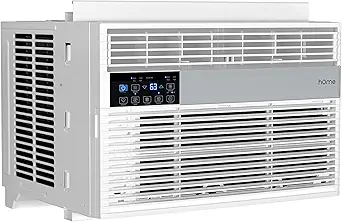
TCL vs Homelabs: Overview & Brand Philosophy
In the competitive residential cooling sector, TCL and hOmeLabs (frequently stylized as Homelabs) represent two distinctly different manufacturing philosophies. TCL (Telephone Communication Limited) is a massive multinational consumer electronics powerhouse based in China, commanding significant manufacturing infrastructure, extensive internal R&D, and global supply chain integrations. In the air conditioning space, TCL approaches product design from a high-volume, vertically integrated standpoint. Their catalog spans portable ACs, budget-friendly window units, and advanced multi-zone mini-split inverter systems, all leaning heavily on smart-home ecosystem integration and energy efficiency driven by proprietary inverter technologies.
Conversely, hOmeLabs was established as a direct-to-consumer appliance brand focused on modern living, clean aesthetics, and intuitive functionality. Rather than competing as an industrial hardware manufacturer, hOmeLabs curates and designs appliances tailored explicitly to urban dwellers, renters, and homeowners seeking no-nonsense climate control solutions. Their air conditioner portfolio is concentrated strictly on consumer-friendly window units and portable air conditioners, omitting commercial-grade mini-splits. hOmeLabs emphasizes user experience, contemporary minimalist design, straightforward installation kits, and approachable customer care rather than overwhelming buyers with excessive technical configurations.
Understanding this distinction is critical for prospective buyers: TCL is an industrial tech giant that builds its own components and prioritizes cutting-edge smart home capabilities across a broad spectrum of AC form factors. hOmeLabs operates as a specialized consumer lifestyle brand prioritizing practical utility, aesthetic cohesion, and frictionless residential comfort.
Key Differences & Technological Comparison
When analyzing the engineering beneath the chassis, the most profound divergence lies in compressor technology and inverter integration. TCL leads significantly in variable-speed inverter technology across its higher-end window units and mini-split lineups. Variable-speed compressors allow the AC unit to modulate cooling capacity continuously rather than cycling aggressively on and off. This results in superior energy efficiency (often exceeding 12.0 CEER on premium window models), more precise temperature regulation, and drastically quieter operation (often dropping below 42 dBA in low-power modes). hOmeLabs predominantly employs traditional single-stage rotary compressors across its portable and window lines. While dependable, these fixed-speed units generate more abrupt acoustic fluctuations when cycling and consume more peak energy during prolonged use.
Smart connectivity represents another decisive battleground. TCL has embedded extensive IoT capabilities into the majority of its mid-to-premium air conditioners. Through the TCL Home app, users gain granular control over scheduling, sleep curves, and energy consumption metrics, alongside native integration with Google Assistant and Amazon Alexa. hOmeLabs focuses primarily on localized control; while select modern models feature Wi-Fi integration, a substantial portion of their catalog relies on tactile on-unit LED controls and standard digital remotes. hOmeLabs purposefully streamlines its interfaces to reduce software troubleshooting, which appeals to users seeking plug-and-play simplicity over connected ecosystems.
In terms of form factor versatility, TCL easily eclipses hOmeLabs. TCL offers everything from compact 5,000 BTU mechanical window units to high-capacity 24,000 BTU ductless mini-splits capable of whole-home climate control. hOmeLabs intentionally constrains its catalog to portable air conditioners (ranging from 8,000 to 14,000 BTU ASHRAE) and standard window ACs (5,000 to 10,000 BTU). However, hOmeLabs often outperforms TCL regarding out-of-the-box installation accessories. hOmeLabs portable units feature exceptionally well-engineered, modular window venting kits with durable plastic sliding panels and high-grade foam sealing tape, reducing the need for aftermarket insulation adjustments.
Pros & Cons Comparison
TCL: Pros
- Advanced Inverter Options: Superior variable-speed compressor technology on select window and mini-split units for quieter, highly efficient cooling.
- Broad Product Catalog: Offers a complete range of cooling solutions, from entry-level 5,000 BTU window units to advanced whole-home ductless mini-splits.
- Robust Smart Ecosystem: Comprehensive smart-app control, voice-assistant compatibility, and programmable energy modes across a wide variety of models.
- High Efficiency Ratings: Consistently achieves high CEER and SEER ratings, lowering monthly utility costs over prolonged operational cycles.
TCL: Cons
- Inconsistent Exterior Aesthetics: Industrial, utilitarian exterior styling that can look dated compared to modern boutique brands.
- Uneven Installation Kits: Included window brackets and side accordion panels on budget models can feel flimsy and may require supplemental weatherproofing.
hOmeLabs: Pros
- Sleek, Minimalist Design: Clean, modern visual aesthetics that blend seamlessly into contemporary home decor without looking like an industrial appliance.
- User-Friendly Installation: Thoughtfully designed installation kits with intuitive window brackets, robust sliding panels, and superior out-of-the-box sealing materials.
- Straightforward Operation: Intuitive controls without complicated software layers, ideal for consumers who prefer simplicity over connected apps.
- Responsive Customer Support: Direct-to-consumer focus often results in more accessible and personalized warranty and replacement assistance.
hOmeLabs: Cons
- Limited Technological Innovation: Heavy reliance on traditional fixed-speed compressors, leading to higher operational noise and lower overall energy efficiency.
- Narrow Product Lineup: Absence of high-capacity units (above 14,000 BTU) or ductless mini-split systems for whole-home cooling.
Performance, Durability & Value Analysis
From an acoustic and thermal perspective, performance varies widely depending on the chosen cooling architecture. In standard portable units and entry-level window units, both brands perform admirably, rapidly pulling ambient room temperatures down by 10 to 15 degrees Fahrenheit within 30 to 45 minutes in appropriately sized spaces. However, in sustained real-world testing, TCL's advanced inverter-driven units pull ahead significantly in temperature stability. By avoiding the jarring temperature swings associated with cycling single-stage compressors on and off, TCL maintains a tighter thermal band (±1°F) while keeping ambient noise at a gentle, white-noise hum. hOmeLabs units, utilizing traditional compressors, feature a more noticeable acoustic drop and surge during cycling, which light sleepers may find disruptive if installed in a bedroom.
When assessing long-term durability and return on investment, both brands deliver solid baseline reliability, but their value propositions cater to different lifecycles. TCL benefits from industrial-grade manufacturing controls and anti-corrosive coatings (such as their proprietary TitanGold condenser fin technology), which protect against environmental degradation in humid or coastal climates. From a pure price-to-BTU metric, TCL generally offers the highest value for dollar-conscious consumers wanting technical features like Wi-Fi and inverter efficiency at a low initial cost. hOmeLabs commands a slight price premium relative to raw performance metrics, but justifies it through superior industrial design, better packaging, and durable internal plastics that resist yellowing and rattling over multi-year use.
Final Verdict: Which Brand Should You Choose?
Choose TCL if your primary objectives are maximum cooling efficiency, whisper-quiet operation, and advanced smart-home automation. TCL is the clear winner for tech-savvy consumers, users who want to manage their climate through voice commands or smart schedules, and homeowners looking for high-performance mini-splits or ultra-quiet inverter window units. If you live in a climate requiring non-stop summer cooling where energy bills are a major concern, TCL's technical advantages will pay dividends over the life of the appliance.
Choose hOmeLabs if you are an apartment renter, student, or design-conscious homeowner who prioritizes aesthetic integration, effortless setup, and straightforward functionality. hOmeLabs is exceptionally well-suited for users seeking a reliable portable or compact window air conditioner that looks modern, unpacks easily, and operates without the hassle of finicky Wi-Fi pairing or software updates. For straightforward, seasonal cooling backed by a consumer-first approach, hOmeLabs remains an outstanding, stress-free choice.
Customer Support & Warranty
When evaluating customer service infrastructure and warranty coverage, TCL operates with the established footprint of a global consumer electronics conglomerate. Most TCL window and portable air conditioners come standard with a limited one-year parts and labor warranty, which is standard for the industry. Because of TCL's vast supply chain and retail partnerships, obtaining replacement components or scheduling authorized service appointments can be relatively systematic, though users may encounter standard corporate call-center friction. The brand's digital presence offers accessible troubleshooting guides, firmware updates for smart units, and multi-channel support including phone, email, and live chat, making warranty registration and direct claims tracking straightforward for the end consumer.
In contrast, hOmeLabs approaches customer service from a modern, direct-to-consumer perspective, often outperforming legacy brands in personalized responsiveness. Standard hOmeLabs units typically include a one-year warranty, but the brand frequently offers an additional six-month warranty extension upon product registration on their website, providing greater initial peace of mind. Their customer support pipeline is notably agile, with an emphasis on rapid email communication and hassle-free return or replacement policies for units that fail within the warranty window. However, because hOmeLabs does not maintain the extensive authorized physical repair networks that a multinational giant like TCL possesses, warranty resolutions frequently result in full unit replacements rather than component-level repairs, which is convenient for the consumer but potentially less resource-efficient over time.
Energy Efficiency
Energy efficiency represents a major engineering focus for TCL, which leverages advanced inverter compressor technology across a wide swath of its modern lineup. Many TCL window and split air conditioners carry Energy Star certifications and boast high Combined Energy Efficiency Ratios (CEER), often exceeding 12.0 or even 15.0 on their flagship variable-speed inverter models. By continually modulating compressor output rather than aggressively power-cycling on and off, TCL units minimize thermal overshoot and draw significantly less peak wattage. Additionally, their integrated companion apps feature comprehensive eco-modes and energy-monitoring tools that allow users to schedule setpoints according to peak electric utility rates, providing tangible utility bill savings over a long cooling season.
hOmeLabs prioritizes straightforward, accessible climate control, primarily utilizing traditional rotary or fixed-speed reciprocating compressors across their portable and window AC offerings. While several of their compact window units carry respectable Energy Star ratings and implement standard energy-saver modes that turn off the fan when the compressor rests, they generally lack the sophisticated variable-frequency drives seen in high-end TCL inverter models. Consequently, hOmeLabs units often exhibit a classic duty-cycle profile, pulling maximum rated amperage upon compressor startup and running until the target temperature is reached. For consumers in mild climates or those utilizing the AC for supplemental cooling, hOmeLabs offers adequate efficiency, but TCL holds a demonstrable engineering advantage in long-term power conservation and thermal regulation.
Noise Level
Acoustic performance is an area where TCL's advanced mechanical design and acoustic dampening yield noticeable benefits. Because TCL invests heavily in inverter technology, their compressors rarely operate at full throttle once ambient room temperatures stabilize, mitigating the harsh mechanical hum associated with traditional refrigeration cycles. In their premium window and inverter-driven portable models, sound output often hovers between 42 and 50 decibels (dBA) on low fan settings. Furthermore, TCL employs aerodynamically optimized cross-flow fan blades and sound-absorbing insulation around the compressor housing, which substantially reduces high-frequency vibration and motor rattle, rendering them exceptionally well-suited for bedrooms and home offices where quiet operation is paramount.
hOmeLabs constructs reliable, no-nonsense appliances that emphasize air movement, which can sometimes come at the expense of absolute acoustic subtlety. Most hOmeLabs portable and window air conditioners register sound levels between 50 and 58 dBA on their lowest settings, climbing past 60 dBA on maximum output. The fixed-speed compressors utilized in many hOmeLabs models generate a perceptible click-and-hum transition whenever the thermostat calls for active cooling, which can be disruptive to light sleepers. While their blower wheel assemblies do a commendable job of delivering smooth, white-noise-like airflow without unpleasant whining frequencies, they inherently lack the whisper-quiet operation that TCL achieves through variable-speed modulation and specialized chassis baffling.
Cooling Performance
In terms of sheer cooling capacity and thermal throughput, TCL delivers robust performance engineered to handle extreme ambient heat. Offering an expansive spectrum of units ranging from compact 5,000 BTU options to heavy-duty 24,000 BTU window units, TCL designs its evaporator and condenser coils with high-efficiency louvered aluminum fins and inner-grooved copper tubing to maximize heat exchange. Their dual-hose and inverter-based portable models excel at preventing negative room pressure, cooling spaces rapidly without continuously drawing in warm outdoor air. Advanced digital features like 4-way auto-swing louvers ensure broad, uniform air dispersion, eliminating hot spots in medium-to-large architectural layouts.
hOmeLabs focuses primarily on the core residential market, engineering highly capable, user-friendly units that typically range between 5,000 and 14,000 BTUs. In small-to-medium rooms, hOmeLabs air conditioners perform reliably, delivering brisk cold airflow and fast temperature pull-downs thanks to high-velocity centrifugal fans. However, their portable models typically employ a single-hose exhaust configuration, which can draw some unconditioned air into the room through gaps around doors and windows under high-thermal-load conditions. While hOmeLabs provides dependable, straightforward cooling that meets the real-world demands of typical apartments and suburban bedrooms, TCL offers greater thermal overhead, superior airflow distribution, and specialized engineering suitable for harsher heat environments.
Compare current retail pricing, active promotions, and verified stock availability directly from authorized stores: