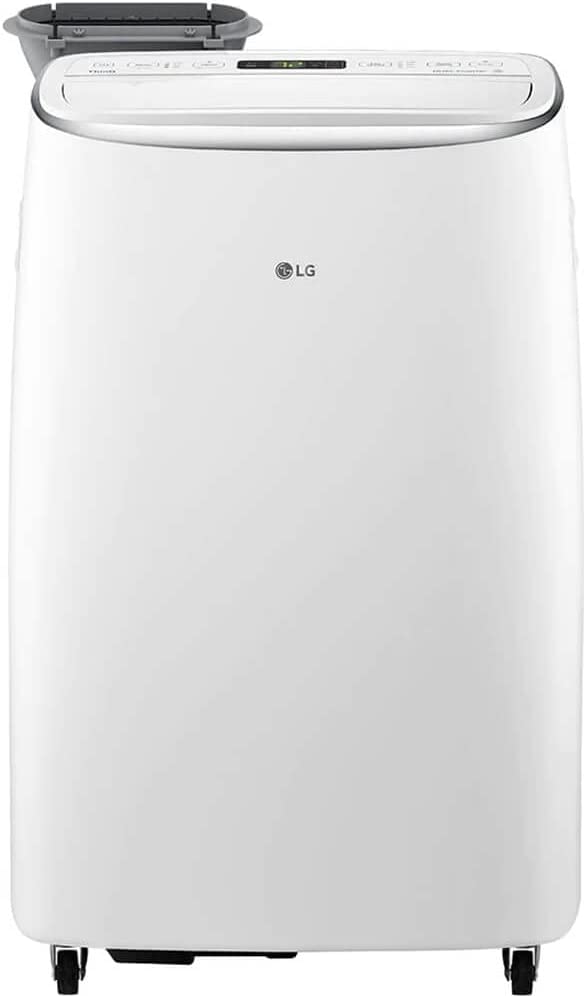
LG vs Windmill: Overview
Comparing LG and Windmill helps you determine which brand is best suited for your needs in Air Conditioners. Both brands offer strong choices depending on your budget and key feature requirements.
Key Features & Comparison
Evaluate factors such as build quality, warranty, customer satisfaction, and total value before making your final purchase choice between LG and Windmill.
Customer Support & Warranty
When evaluating post-purchase reliability and service infrastructure, LG presents the massive footprint of a legacy consumer electronics giant, whereas Windmill operates with the high-touch, digital-first responsiveness characteristic of a modern direct-to-consumer brand. LG backs most of its window air conditioners with a standard one-year limited parts and labor warranty, augmented significantly by extended coverage—often up to five or ten years—on the hermetic compressor components, particularly within their premium dual-inverter series. Service fulfillment for LG is handled through a vast, decentralized network of authorized third-party contractors and automated customer portals. While this infrastructure offers widespread geographic reach, consumers can occasionally encounter fragmented support, scheduling delays, and bureaucratic triage typical of multi-national conglomerates.
In contrast, Windmill counters this corporate distance with an accessible, boutique customer service model that emphasizes rapid digital engagement via SMS, chat, and email. While Windmill typically matches the industry-standard one-year limited warranty, it generally lacks the extended multi-year compressor warranties offered by LG on inverter models. However, Windmill compensates for this technical gap with a remarkably low-friction claims process; the brand is renowned for replacing problematic units directly rather than requiring tedious home technician dispatches. For buyers who prioritize long-term component-level coverage on complex mechanicals, LG retains an institutional advantage, but consumers valuing immediate, personalized human support will find Windmill's customer-centric model vastly more convenient.
Energy Efficiency
LG holds a commanding technical lead in energy efficiency due to its pioneering integration of Dual Inverter compressor technology across its room air conditioning lineup. Traditional compressors cycle abruptly between full power and complete dormancy, creating significant electrical spikes and parasitic thermal fluctuations. LG's variable-speed rotary compressor modulates continuously to match the precise cooling demand of the space, yielding Combined Energy Efficiency Ratios (CEER) often ranging between 13.0 and 15.0. This inverter architecture routinely secures Energy Star Most Efficient distinctions, slashing real-world operational power draw by up to 25 to 40 percent compared to standard baseline room units.
Windmill air conditioners, while compliant with standard Energy Star certifications, predominantly utilize conventional fixed-speed reciprocating or rotary compressors paired with eco-conscious R32 refrigerant. While Windmill designs optimize airflow aerodynamics and feature smart thermostat integration to minimize unnecessary runtime, the underlying mechanical platform cannot compete with the thermodynamic efficiency of variable-speed modulation. Operating at typical CEER ratings between 11.0 and 12.0, Windmill is sufficiently efficient for moderate, seasonal climate zones, but in sustained, high-heat environments, LG's inverter engineering delivers distinctly lower long-term utility costs.
Noise Level
Acoustic performance is one of the most critical differentiators in modern window air conditioning, and LG sets a benchmark via structural dampening and variable-speed physics. Because LG's Dual Inverter compressors eliminate the abrasive, sudden rattling associated with the hard starts and stops of conventional units, they operate with a linear acoustic profile. Furthermore, LG incorporates dual-rotor mechanics and specialized skewed fan blades that minimize turbulent air shearing. At their lowest operational tiers, LG's high-end units drop down to sound pressure levels as low as 44 to 48 decibels (dBA), making them barely perceptible over background ambient room noise.
Windmill approaches noise mitigation through industrial chassis design and directional acoustic dispersion rather than dynamic compressor throttle. The unit is engineered with an upward-angled discharge grille, which projects cold air upward at an angle toward the ceiling rather than blasting horizontally at the listener, effectively attenuating the perceived acoustic impact within the living space. Although Windmill is remarkably quiet for a fixed-speed system—registering around 50 dBA on low—the mechanical hum of the single-speed compressor cycling on and off remains noticeable compared to the uniform, whisper-quiet hum produced by LG's inverter drivetrains.
Cooling Performance
LG's cooling architecture focuses on rapid, high-capacity thermal extraction and precise setpoint maintenance. Through its DUAL Inverter technology, an LG unit can engage a high-frequency "Turbo" cooling mode that temporarily overclocks the compressor beyond nominal capacity, pulling indoor ambient temperatures down far faster than conventional competitors. Moreover, LG's motorized, multi-directional louvers and high-velocity horizontal blowers provide superior static pressure, enabling these units to project chilled air deep into wide-open or architecturally complex floor plans, preventing the formation of stagnant thermal pockets.
Windmill differentiates its cooling performance through fluid dynamics and user comfort ergonomics rather than raw, brute-force BTU projection. Its perforated front fascia draws air inward while the ceiling-facing, 45-degree top exhaust vent utilizes the natural laws of convection: chilled air rises, blankets the upper perimeter, and sinks evenly down over the room. This effectively eliminates the harsh, freezing drafts directly pointed at occupants that characterize standard air conditioners. While Windmill provides exceptionally even, gentle cooling for standard bedrooms and enclosed offices, LG remains the superior platform for challenging spaces with high ceiling heights, open-concept designs, or severe solar thermal loads.