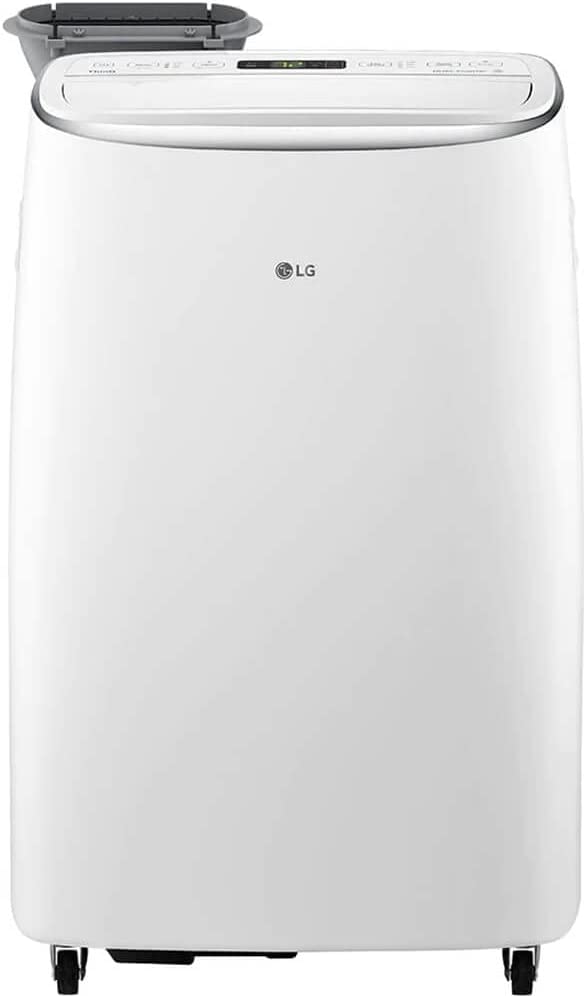





LG vs Rheem: Overview
Comparing LG and Rheem helps you determine which brand is best suited for your needs in Air Conditioners. Both brands offer strong choices depending on your budget and key feature requirements.
Key Features & Comparison
Evaluate factors such as build quality, warranty, customer satisfaction, and total value before making your final purchase choice between LG and Rheem.
Customer Support & Warranty
When examining post-purchase support and warranty structures, LG and Rheem operate under distinct business models that cater to different installation ecosystems. LG offers a baseline warranty that typically covers parts for 5 years and the compressor for up to 10 years on select residential mini-split and central systems, provided the unit is registered within 60 to 90 days of installation. While LG's digital customer portal and mobile diagnostics (such as Smart Diagnosis) simplify immediate troubleshooting for tech-savvy homeowners, their central HVAC support pipeline has historically relied on third-party consumer electronics technicians rather than dedicated mechanical contractors. Consequently, warranty claims for major central equipment can occasionally experience processing delays if local HVAC technicians are unfamiliar with LG's proprietary diagnostic codes or inverter electronics.
In contrast, Rheem provides a more traditional, contractor-centric warranty framework that is deeply entrenched in the North American mechanical trades. Rheem’s mid-to-high-tier systems, such as the Prestige series, frequently carry 10-year conditional parts warranties alongside rare 10-year unit replacement warranties if the compressor fails within the initial decade. Because Rheem exclusively distributes through licensed HVAC supply houses, finding authorized technicians who can diagnose, source, and replace parts is generally faster and more straightforward across North America. While Rheem's consumer-facing digital interface is less sophisticated than LG’s consumer app, their robust distributor network and rapid parts availability yield a superior real-world support experience during mechanical emergencies.
Energy Efficiency
In terms of thermal efficiency, LG dominates the higher end of seasonal metrics through its pioneering use of DUAL Inverter compressor technology. Unlike traditional fixed-capacity or even standard two-stage compressors, LG’s dual rotary designs modulate across a remarkably broad frequency range, drastically reducing the energy lost during cycling. This allows LG mini-splits and multi-split heat pumps to achieve extraordinary SEER2 ratings that frequently exceed 20 to 24, with select residential systems pushing upwards of 28 SEER2. The precision of their electronic expansion valves (EEVs) and variable-speed fan motors ensures that the power draw dynamically matches the real-time heat load of the conditioned space, resulting in best-in-class operational savings, particularly in climates requiring extended cooling runtimes.
Rheem delivers formidable efficiency within standard unitary split systems, though its operational ceiling is slightly more constrained by traditional ducted platform architectures. Rheem's top-tier variable-speed models (such as the Endeavor line) reach impressive SEER2 ratings of up to 20.5 using advanced Copeland scroll compressors and proprietary EcoNet controls. However, the bulk of Rheem’s mainstream product catalog focuses on single-stage and two-stage systems that hover between 14.3 and 16 SEER2. While these numbers comfortably surpass federal minimums and present lower upfront capital costs, Rheem units cannot match the extreme electrical modulation or ultra-high seasonal efficiency curves inherent to LG’s inverter-driven ductless and variable-refrigerant platforms.
Noise Level
Acoustic performance represents one of LG’s most compelling engineering advantages, largely attributable to its inverter-driven architecture and aerodynamic fan designs. LG’s indoor wall-mounted and ducted cassette units regularly operate at sound levels as low as 19 to 26 decibels (dBA) in low-capacity or sleep modes, rendering them virtually imperceptible within residential bedrooms and home offices. Outside, LG condensing units benefit from skew fan blades and dual-rotor compressors that counteract vibrational resonance, maintaining outdoor sound pressure levels between 45 and 55 dBA. This whisper-quiet operation makes LG ideal for strict property line setbacks, zero-lot-line communities, and multi-family structures where outdoor noise emissions are closely regulated.
Rheem has made substantial strides in noise mitigation through its Composite Base Pan design and swept-wing fan blade technology, especially within the Endeavor and Prestige lines. Rheem’s composite base isolates motor vibrations and prevents metallic rattling, allowing their flagship variable-speed outdoor condensers to run as quietly as 54 to 58 dBA. However, Rheem’s high-volume entry and mid-tier models (single-stage and two-stage units) typically emit sound levels ranging from 68 to 74 dBA under full load. While perfectly acceptable for conventional suburban backyards where condensers are placed away from bedrooms, Rheem systems generally generate higher low-frequency compressor drone and air turbulence compared to the near-silent acoustic profile of LG.
Cooling Performance
Cooling performance between these two brands illustrates divergent engineering philosophies: precision room-by-room conditioning versus high-airflow, whole-home bulk cooling. LG leverages its variable-refrigerant flow (VRF) roots to excel in micro-climate control and continuous latent heat removal. Because the LG DUAL Inverter compressor can throttle down to minimal speeds without cycling completely off, the evaporator coil stays chilled continuously. This operational profile draws exceptional amounts of moisture out of the air, significantly reducing indoor relative humidity and enhancing thermal comfort even on moderately warm, humid days. Furthermore, LG’s multi-zone systems provide precise individual room temperature regulation, preventing the hot-and-cold spots common in larger residences.
Rheem approaches cooling through high-capacity, high-static ducted systems engineered to condition expansive square footage rapidly and reliably. In extreme ambient temperatures exceeding 100°F (38°C), Rheem’s heavy-duty outdoor coils and robust scroll compressors deliver aggressive sensible cooling, quickly pulling down temperatures across entire ducted layouts. Rheem’s EcoNet-enabled systems optimize airflow via communicating variable-speed air handlers, ensuring balanced static pressure across complex ductwork. While Rheem single-stage units can cause slight indoor temperature swings of 2 to 3 degrees during cycling, their raw mechanical durability and ability to move vast volumes of conditioned air make them a proven workhorse for large, open-concept North American architectural designs.
Compare current retail pricing, active promotions, and verified stock availability directly from authorized stores: