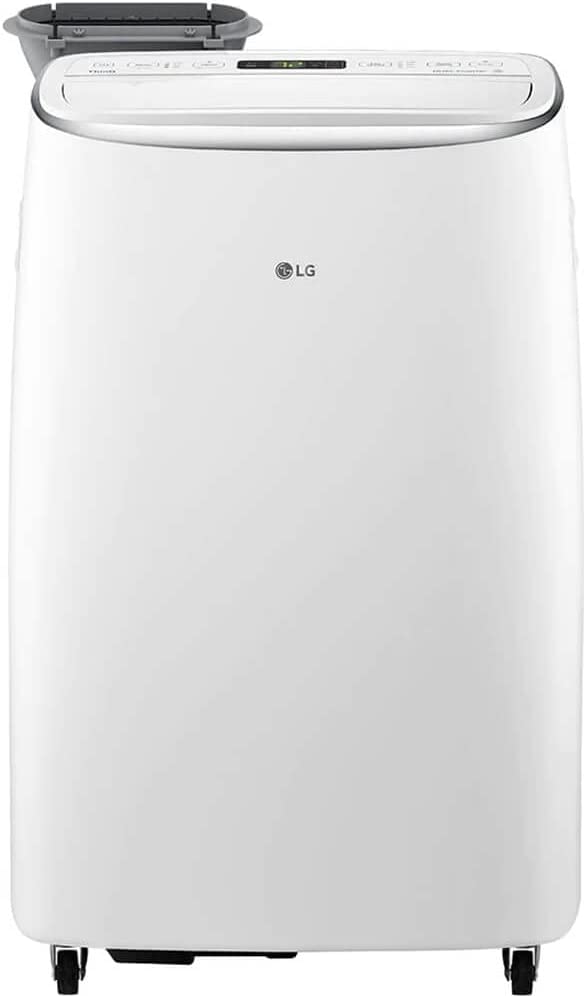





LG vs Lennox: Overview
Comparing LG and Lennox helps you determine which brand is best suited for your needs in Air Conditioners. Both brands offer strong choices depending on your budget and key feature requirements.
Key Features & Comparison
Evaluate factors such as build quality, warranty, customer satisfaction, and total value before making your final purchase choice between LG and Lennox.
Customer Support & Warranty
When examining customer service and warranty structures, Lennox takes a traditional, dealer-centric approach that offers high-touch local support at the expense of standardized consumer accessibility. Lennox central air conditioning systems typically come with a 5-year base limited warranty on parts and the compressor, which automatically upgrades to a 10-year limited parts and compressor warranty upon timely product registration (usually within 60 days). Their flagship Dave Lennox Signature Collection extends compressor coverage to a 10-year standard and offers extended labor options. However, Lennox restricts warranty claims, technical diagnostics, and parts distribution strictly to its network of licensed Lennox Premier Dealers. This protects installation quality but can lead to significant headaches for homeowners if proprietary replacement components are backordered or if local dealer pricing for labor is steep.
In contrast, LG relies on a more decentralized consumer electronics and HVAC distribution model, pairing standard residential mini-split and ducted system warranties with broader contractor accessibility. LG typically provides a 5-year parts and 7-year compressor warranty out of the box, which can be extended to 10 years for parts and compressor—or even 12 years—when installed and registered through an LG Excellence Contractor. While LG’s corporate customer service hotline is structured like a massive consumer electronics firm, which can sometimes result in slower tiered troubleshooting for residential inquiries, their technical support for certified installers is robust through dedicated regional training academies. Homeowners will find Lennox more integrated for end-to-end full-home HVAC servicing through dedicated dealers, whereas LG provides greater flexibility in equipment acquisition and technician selection, provided you work with certified ductless specialists.
Energy Efficiency
Lennox has historically set the standard for energy efficiency in whole-home central split systems, frequently leading the industry in SEER2 (Seasonal Energy Efficiency Ratio 2) ratings. The Dave Lennox Signature Collection, specifically the XC28 and SL28XCV models, achieves extraordinary efficiencies reaching up to 28 SEER2. These systems utilize advanced variable-capacity inverter-driven scroll compressors and proprietary Precise Performance technology, which modulates cooling output in increments as small as 1% to balance energy usage with ambient load. This micro-modulation minimizes electrical draw during continuous operation and drastically reduces the energy spikes associated with traditional single- or two-stage cycling.
LG counters Lennox by leveraging its globally recognized DUAL Inverter compressor technology, which dominates the ductless mini-split and multi-zone heat pump sectors. LG systems, such as the Art Cool and Multi F series, deliver exceptionally high SEER2 metrics often hovering between 20 and 28 SEER2, alongside remarkable EER ratings due to their dual-rotary design. The twin-rotors operate at varying rotational speeds to dynamically align with indoor demands, eliminating high-energy starts while utilizing eco-friendly, high-heat-transfer refrigerants. While Lennox edges out LG in central whole-home efficiency metrics at the top tier, LG offers far superior zoned energy efficiency, allowing users to cool only occupied spaces without incurring the thermal duct losses that can undermine Lennox’s central ducted efficiency by up to 20 to 30 percent.
Noise Level
Acoustic performance is an engineering hallmark for both brands, but they tackle sound attenuation through different structural designs. Lennox is widely regarded as an industry benchmark for ultra-quiet central air conditioning condensers, utilizing their proprietary SilentComfort technology. High-end Lennox units incorporate composite fan blades with serrated edges, isolated compressor sound blankets, and aerodynamic top grilles that deflect sound waves upward rather than outward. As a result, premier Lennox outdoor units can operate at decibel ratings as low as 56 to 59 dBA—quieter than a standard conversational tone—making them virtually undetectable even when placed directly outside patio or bedroom windows.
LG, rooted primarily in ductless and compact variable-refrigerant-flow (VRF) architectures, achieves exceptionally low acoustic profiles indoors while maintaining discreet outdoor acoustics. Inside the living space, LG’s indoor air handlers utilize skewed fan blades and brushless direct current (BLDC) motor technology to achieve sound levels as low as 19 dBA in quiet mode, which is roughly equivalent to a faint whisper or rustling leaves. Outdoors, the smooth harmonic balance of LG’s twin-rotary DUAL Inverter compressors cancels out the low-frequency vibrations typical of single-rotor or older scroll compressors, holding outdoor noise around 50 to 55 dBA depending on capacity. Homeowners seeking absolute indoor silence will favor LG's whisper-quiet indoor units, while those sensitive to outdoor perimeter noise around outdoor living spaces will find Lennox’s acoustic baffling exceptional for central units.
Cooling Performance
Lennox excels in heavy-duty, climate-wide central cooling performance, engineered specifically to handle high thermal loads in large North American homes. Powered by variable-speed scroll compressors and paired with communicating digital thermostats like the S40 Smart Thermostat, Lennox units do more than just drop room temperature; they manage latent heat via precise humidity removal. Their Climate IQ technology allows technicians to customize compressor and blower profiles based on whether the local climate is arid, moderate, or highly humid. This deep dehumidification capability ensures that living spaces feel crisp and comfortable without requiring overcooling, creating exceptionally even airflow distribution through standard ductwork networks.
LG approaches cooling performance from a localized, rapid-response methodology using high-velocity inverter dynamics. Because LG’s core portfolio focuses on mini-splits and compact modular VRF platforms, these systems can cool down spaces significantly faster via Jet Cool modes that run the compressor and cross-flow fans at maximum output for immediate relief. Furthermore, LG’s multi-zone systems provide independent climate management per room, completely resolving hot spots and multi-story temperature imbalances that standard central Lennox systems can struggle to mitigate without complex motorized zoning dampers. For sprawling suburban homes requiring unified thermal conditioning, Lennox delivers unrivaled volumetric consistency, whereas LG delivers superior micro-climate precision, rapid pulldown times, and tailored comfort per individual living zone.