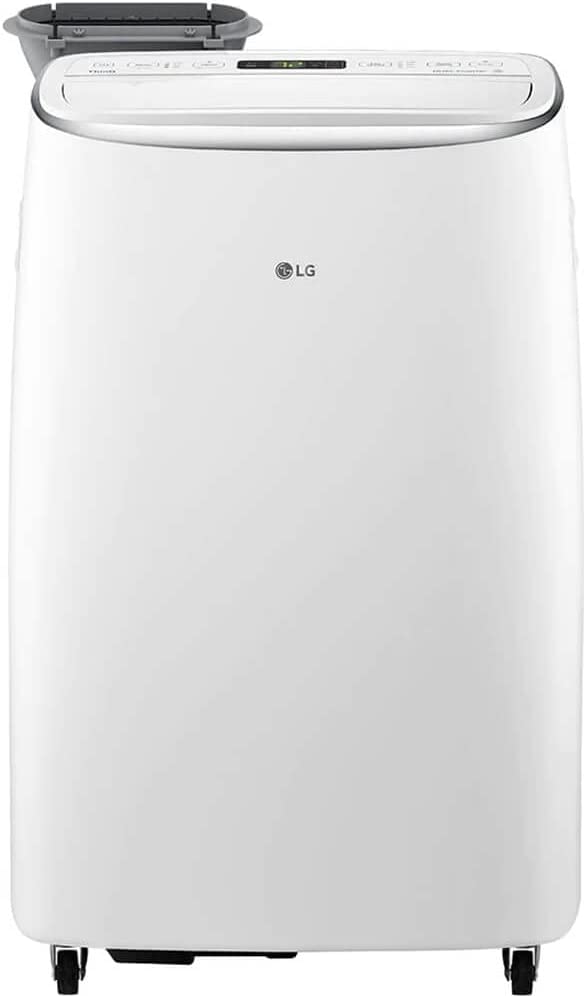
LG vs Keystone: Overview
Comparing LG and Keystone helps you determine which brand is best suited for your needs in Air Conditioners. Both brands offer strong choices depending on your budget and key feature requirements.
Key Features & Comparison
Evaluate factors such as build quality, warranty, customer satisfaction, and total value before making your final purchase choice between LG and Keystone.
Customer Support & Warranty
LG establishes a substantial advantage in warranty coverage and post-purchase infrastructure, particularly for its higher-tier dual-inverter window and portable air conditioning units. While the baseline limited warranty on parts and labor typically spans one year, LG frequently provides an extended five-to-ten-year warranty on the sealed refrigeration system and inverter compressor. Their support ecosystem is highly mature, featuring comprehensive digital self-service tools, integrated diagnostics via the ThinQ smart app, and a sprawling network of authorized service technicians. Consequently, consumers investing in advanced LG systems gain long-term protection on the most expensive mechanical components, backed by consistent customer service availability across multiple support channels.
Keystone operates on a standard value-tier customer care model, generally offering a limited one-year warranty covering replacement parts and labor for manufacturing defects. Unlike LG, Keystone does not offer extended warranty protection for the compressor or sealed system on its budget-oriented window and portable AC models. Customer support is primarily routed through telephone lines and email submission forms operated by its parent distributor. While Keystone's support representatives are generally responsive for straightforward claims such as missing installation hardware or immediate out-of-box failures, scheduling in-home technical repairs is rare; defective units under warranty are more frequently resolved through total unit replacements or pro-rated refunds rather than component-level servicing.
Energy Efficiency
LG is an industry leader in residential climate control efficiency, driven largely by its proprietary DUAL Inverter technology. Unlike conventional single-speed compressors that aggressively cycle on and off, LG's variable-speed compressors continuously modulate rotational speed to maintain target temperatures with minimal power consumption. This architecture allows numerous LG window air conditioners to achieve exceptional Combined Energy Efficiency Ratios (CEER), frequently surpassing 14.0 or 15.0 and earning Energy Star Most Efficient designations. Features such as integrated smart energy monitoring via Wi-Fi allow users to track real-time kilowatt usage, maximizing operational savings over extended summer cooling seasons.
Keystone focuses on delivering entry-level and mid-range affordability, relying on traditional rotary compressors that utilize standard on-off thermodynamic cycling. While modern Keystone units comply with baseline federal efficiency standards and many select models earn basic Energy Star certification with CEER ratings typically between 11.0 and 12.0, they inherently lack the precision energy management of inverter-driven systems. Keystone units incorporate essential power-saving modes, such as Energy Saver and programmable 24-hour timers, but the frequent mechanical cycling of the compressor draws peak inrush current multiple times per hour, resulting in noticeably higher operating costs during prolonged, severe heat waves.
Noise Level
Acoustic performance is one of LG's most prominent technical differentiators, especially within its inverter-equipped product lines. By using a dual-rotor compressor design combined with a proprietary BLDC motor and skewed fan blades, LG dramatically mitigates mechanical vibration and high-frequency turbulence. Many LG dual-inverter models operate at sound levels as low as 44 decibels in sleep mode, rendering them quieter than a typical conversational hum or standard household background noise. Even under maximum thermal load, the ramp-up in sound profile is progressive and uniform, avoiding the abrupt, jarring mechanical clicks and thumps characteristic of legacy air conditioners engaging the cooling cycle.
Keystone air conditioners present a conventional acoustic profile that is typical of budget-focused HVAC manufacturing. Relying on fixed-speed compressor assemblies and standard cross-flow or axial fan geometries, Keystone units generate an ambient operational noise level generally ranging between 52 and 58 decibels on low settings, escalating past 60 decibels on maximum output. The acoustic output consists of steady white noise combined with noticeable mechanical vibration and distinct clicks as the compressor cycles on and off. While this continuous fan sound is often acceptable for living rooms, kitchens, or ambient-dampened spaces, it can be intrusive in smaller bedrooms or home offices where absolute quiet is preferred.
Cooling Performance
LG delivers superior, nuanced thermal management by leveraging its variable-capacity cooling technology. Inverter compressors allow LG units to operate beyond their rated nominal capacity during initial startup, delivering rapid temperature pull-downs to swiftly counter extreme ambient heat loads before throttling down to match heat infiltration rates. This steady output minimizes ambient temperature swings, preventing the perceptible hot-and-cold fluctuations common in lesser units. Furthermore, LG units excel at continuous latent heat removal (dehumidification), as the prolonged, low-speed runtime effectively pulls moisture from the air without over-chilling the living space, creating a far more comfortable overall climate.
Keystone delivers reliable, aggressive cooling that is well-suited for straightforward, high-capacity temperature reduction on a budget. Because its rotary compressors run at 100% capacity whenever active, Keystone units excel at blasting high volumes of cold air into an area, quickly dropping the sensible room temperature. However, this brute-force approach comes with the trade-off of thermal hysteresis; the ambient temperature fluctuates by a couple of degrees around the setpoint as the compressor cycles completely off and back on. Additionally, in regions with extreme humidity, the quick cycling of single-speed compressors can occasionally lead to a cold yet clammy interior environment, as the unit may reach the temperature target before adequately lowering relative humidity.