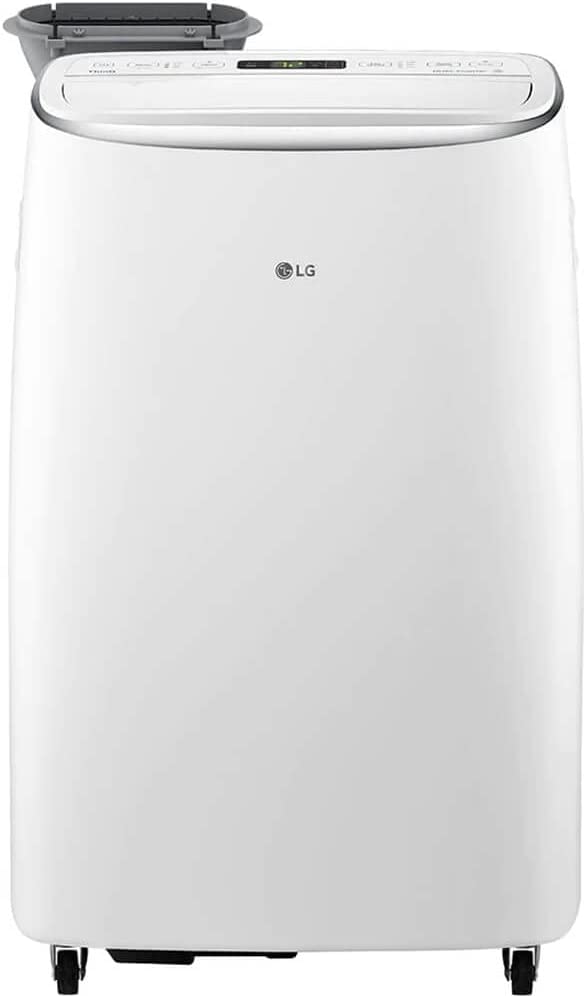



LG vs Homelabs: Overview
Comparing LG and Homelabs helps you determine which brand is best suited for your needs in Air Conditioners. Both brands offer strong choices depending on your budget and key feature requirements.
Key Features & Comparison
Evaluate factors such as build quality, warranty, customer satisfaction, and total value before making your final purchase choice between LG and Homelabs.
Customer Support & Warranty
LG establishes a substantial advantage in warranty coverage and customer service infrastructure, reflecting its status as a premier global appliance manufacturer. Most LG room air conditioners come with a standard one-year comprehensive parts and labor warranty, but key models—particularly those utilizing Dual Inverter technology—extend coverage to up to ten years on the compressor. LG’s support ecosystem is deeply entrenched, providing multi-channel customer service including phone, live chat, dedicated mobile apps, and an extensive network of certified field technicians. This ensures that when mechanical failures occur, diagnosis and in-home repairs are streamlined, minimizing downtime during peak summer months.
In contrast, hOmeLabs operates as a direct-to-consumer brand focused on value-driven home appliances, offering a standard one-year warranty across its air conditioner lineup. While hOmeLabs allows consumers to extend their warranty by an additional six months through product registration, it lacks the multi-year dedicated compressor protections provided by LG. Furthermore, hOmeLabs relies predominantly on replacement or refund models managed through digital channels like email and web forms, rather than deploying localized repair technicians. For budget-conscious consumers seeking quick replacements within the first year, hOmeLabs is accessible, but LG provides significantly greater long-term security and professional post-purchase support.
Energy Efficiency
LG is an industry leader in thermal engineering and energy conservation, predominantly due to its proprietary Dual Inverter compressor technology. Unlike traditional fixed-speed compressors that run at full blast before abruptly shutting down, LG's inverter units continuously modulate motor speed to maintain target temperatures with minimal energy expenditure. Consequently, many LG room and portable air conditioners achieve high CEER (Combined Energy Efficiency Ratio) ratings well above 14.0, routinely earning Energy Star Most Efficient designations. In the long term, these engineering efficiencies translate into noticeable reductions in monthly electricity costs, particularly in climates requiring prolonged, continuous operation.
Conversely, hOmeLabs focuses primarily on traditional rotary compressors designed to meet standard baseline federal efficiency requirements. While several hOmeLabs window units do qualify for standard Energy Star ratings, their fixed-speed operational profile leads to cyclical power surges and higher cumulative energy usage compared to inverter-driven models. The brand provides cost-effective upfront pricing, but the lower operational efficiency means operating costs will scale higher over time. For renters or occasional users seeking short-term cooling, hOmeLabs is economically viable, but LG remains the superior investment for serious energy savings and high-efficiency performance.
Noise Level
Acoustic performance is another area where LG’s advanced mechanical design distinctly outpaces the competition. By decoupling vibration through twin-rotary dual inverters and employing skewed fan designs, LG dramatically minimizes mechanical hum, rattle, and turbulence. Many LG window units operate at decibel levels as low as 44 dB in sleep mode, which is roughly equivalent to a quiet library. This whisper-quiet operation makes LG units exceptionally well-suited for bedrooms, nurseries, and home offices where ambient motor drone and abrupt compressor cycling can disrupt sleep or concentration.
hOmeLabs units, while well-built within their category, rely on conventional compressor architectures that inherently generate more vibrational and operational noise. On average, hOmeLabs portable and window units register between 50 and 56 dB during active cooling phases, with sudden acoustic spikes whenever the compressor cycles back on. While the consistent hum is tolerated by many as white noise, it is noticeably louder than LG's ultra-quiet inverter systems. Buyers sensitive to sound or those installing units directly adjacent to sleeping quarters will find LG's acoustic isolation and low decibel output far more accommodating.
Cooling Performance
In terms of raw thermal dynamics and temperature stabilization, LG demonstrates superior capability across varying ambient environments. The variable-speed compressors in LG units allow for accelerated initial pulldown times, rapidly drawing heat out of a room before throttling down to maintain an exceptionally steady thermal equilibrium with less than a degree of temperature variance. Coupled with multi-directional auto-swing louvers and advanced microclimatic sensors via the LG ThinQ smart platform, LG air conditioners distribute chilled air evenly, effectively eliminating hot spots in larger or awkwardly shaped living spaces.
hOmeLabs provides robust, straightforward cooling that reliably handles square footage matching its rated BTU capacities, making it a reliable option for small apartments, dorms, and single rooms. However, because its units rely on standard on/off cycling, they exhibit typical thermal hysteresis—where the room noticeably warms up before the unit kicks back on, causing brief fluctuations in both temperature and relative humidity. While hOmeLabs effectively cools down high-heat environments, it lacks the refined micro-adjustment capabilities, uniform airflow control, and rapid pulldown precision engineered into LG's higher-tier models.
Compare current retail pricing, active promotions, and verified stock availability directly from authorized stores: