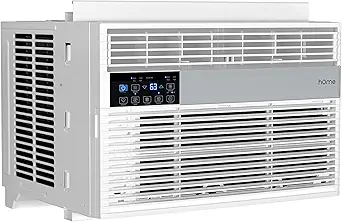
Homelabs vs Keystone: Overview & Brand Philosophy
When shopping for room air conditioners, modern consumers frequently encounter Homelabs (often stylized as hOmeLabs) and Keystone. Both brands have carved out significant market share in the direct-to-consumer and big-box retail spaces, yet they approach climate control with distinct engineering philosophies. Homelabs entered the market with an emphasis on modern, minimalist aesthetics paired with streamlined, user-friendly digital interfaces. Their mission centers on demystifying home appliances, offering products that blend seamlessly into contemporary home decor without overwhelming the buyer with needlessly complex industrial specifications.
Keystone, by contrast, operates with an engineering ethos rooted in traditional HVAC utility and versatility. Manufactured under the umbrella of major appliance conglomerates with extensive manufacturing infrastructure, Keystone focuses heavily on maximum thermal efficiency, rugged durability, and diverse installation form factors. While Homelabs primarily targets urban renters, tech-savvy homeowners, and modern apartments, Keystone targets a broader demographic that includes property managers, suburban homeowners, and budget-conscious buyers seeking reliable, no-frills cooling capacity across diverse window and through-the-wall layouts.
Understanding the fundamental distinction between these two brands comes down to choosing between modern lifestyle design and utilitarian versatility. Homelabs treats air conditioning as an intuitive, aesthetic home accessory, prioritizing quiet operation and sleek chassis design. Keystone treats it as an indispensable, workhorse appliance where performance metrics, energy compliance, and chassis adaptability supersede design minimalism.
Key Differences & Technological Comparison
In technological execution, Homelabs and Keystone diverge across several critical categories: compressor design, chassis variety, air filtration, and smart connectivity.
In terms of product catalog and chassis architecture, Keystone holds a clear advantage in versatility. Keystone manufactures standard window units, portable units, through-the-wall (TTW) units, and specialized casement/slider ACs ranging from 5,000 BTU entry models up to high-capacity 25,000 BTU systems capable of cooling entire floor plans. Homelabs concentrates its efforts on the core consumer segments, offering highly polished portable units and standard compact window models up to 14,000 BTUs. If you require specialized installation options like through-the-wall sleeves or slider windows, Keystone is inherently built to accommodate those architectural constraints.
Compressor technology and energy efficiency also show distinct profiles. Keystone units frequently prioritize high Combined Energy Efficiency Ratios (CEER) and widely integrate Energy Star certifications across their lineup. Many Keystone window units feature automated "Energy Saver" modes that shut off both the compressor and circulation fan once target temperatures are achieved, sampling room air periodically. Homelabs models also feature eco-modes and competitive CEER ratings, but their fan profiles tend to emphasize acoustic dampening over aggressive cycling, resulting in a more continuous, quieter ambient operation that many light sleepers prefer.
From an interface and controls perspective, Homelabs leans toward clean digital LED displays with auto-dimming features and modern, soft-touch capacitive controls that cater to bedroom installations. Keystone utilizes robust, high-visibility digital panels accompanied by full-featured remotes that often integrate "Follow Me" LCD thermostat sensors. This feature allows the Keystone remote to act as a localized thermostat, communicating with the base unit to ensure the temperature where you are sitting is the temperature the machine maintains, mitigating thermal stratification in larger rooms.
Pros & Cons Comparison
Homelabs: Pros
- Sleek, minimalist aesthetic that integrates well into modern interior spaces.
- Exceptionally quiet acoustic profile, particularly in low-fan and sleep modes.
- Intuitive digital controls with auto-dimming displays ideal for bedrooms.
- Lightweight portable and window designs that make seasonal installation and removal easier.
- Responsive, modern customer support ecosystem.
Homelabs: Cons
- Limited lineup: lacking heavy-duty high-BTU options (above 14,000 BTU) and through-the-wall designs.
- Exterior casing materials use lighter plastics that can feel less rugged than industrial alternatives.
- Fewer secondary thermodynamic features like integrated supplemental heat pumps.
Keystone: Pros
- Broad product portfolio, including casement, through-the-wall, and large-capacity (up to 25,000 BTU) units.
- "Follow Me" temperature-sensing remote controls ensure precise cooling zones.
- High energy efficiency ratings with pervasive Energy Star qualification across the catalog.
- Heavy-duty metal chassis and reliable internal componentry built for extended runtimes.
- Competitive price-per-BTU ratio across all categories.
Keystone: Cons
- Industrial, utilitarian appearance that lacks modern design refinement.
- Auditory performance is louder on high settings; compressor cycling is more noticeable.
- Installation manuals and customer-facing support can feel antiquated and disjointed.
Performance, Durability & Value Analysis
When analyzing real-world thermal output and component longevity, Keystone generally yields better raw mechanical durability in high-stress environments. Keystone's cooling coils and exterior condenser fins are treated to resist basic atmospheric corrosion, and their heavy-gauge steel casing stands up well to seasonal window installation and harsh exterior weather. In regions subjected to prolonged, blistering heatwaves, Keystone's compressors run reliably without early thermal throttling, making them an excellent investment for multi-season longevity. From a pure price-to-power perspective, Keystone often delivers more BTUs per dollar, translating to high utility value for cost-conscious shoppers.
Homelabs, however, captures immense value through daily user experience, particularly for bedroom and home office use cases. While mechanical specifications match Keystone in standard cooling pull-down times, Homelabs excels in vibration mitigation and noise dampening. The structural design minimizes plastic rattles and harsh compressor clicks, two primary complaints with lower-cost air conditioning units. While their warranty terms are comparable (typically standard one-year limited warranties), Homelabs manages warranty resolutions and consumer inquiries through a more modern, frictionless support platform, effectively balancing Keystone's mechanical ruggedness with a superior ownership experience.
Final Verdict: Which Brand Should You Choose?
Choosing between Homelabs and Keystone requires evaluating your installation constraints, cooling zone size, and tolerance for operational noise.
Choose Keystone if: You need to cool a large space exceeding 550 square feet, require a specialized through-the-wall or horizontal sliding window unit, or want the absolute best cooling capacity per dollar spent. Keystone is the ideal choice for living rooms, open-concept spaces, rental properties, and budget-first installations where performance and thermodynamic efficiency take precedence over aesthetic design and ultra-quiet acoustics.
Choose Homelabs if: You are cooling a bedroom, nursery, home office, or studio apartment where ambient noise and visual clutter are critical factors. Homelabs offers the superior daily experience for light sleepers and design-conscious consumers who need dependable, compact cooling up to 14,000 BTUs without having an industrial-looking appliance dominate the room.
Customer Support & Warranty
When evaluating the post-purchase experience and long-term reliability of air conditioners, hOmeLabs and Keystone present contrasting approaches shaped by their respective operational models. hOmeLabs has carved out a direct-to-consumer reputation built on exceptional accessibility and proactive digital customer engagement. They standardly offer a 1-year limited warranty, but significantly enhance this value proposition by granting an additional 6-month extension simply upon product registration. From an engineering and operational standpoint, hOmeLabs prioritizes streamlined support triage, deploying responsive web-based chat systems, active email desk ticketing, and straightforward component replacement protocols. If an internal compressor fails or a PCB glitches under warranty, hOmeLabs frequently opt for complete unit replacements rather than prolonged diagnostics, substantially minimizing user downtime during peak heat waves.
Conversely, Keystone operates more within the traditional appliance distribution framework, frequently serving as an entry-to-mid-tier brand under parent entities like Midea. Keystone generally provides a standard 1-year warranty covering parts and labor, though select heavy-duty units historically featured extended five-year coverage specifically on the sealed compressor system—a notable technical advantage over flat one-year terms for users concerned with catastrophic refrigeration loop failures. However, Keystone’s customer support infrastructure lacks the modern responsiveness found with hOmeLabs. Technical service inquiries with Keystone typically rely on legacy call-center channels and outsourced third-party service networks. Resolving issues such as thermistor anomalies or blower motor degradation can involve bureaucratic service-claim processes, mandatory authorized technician inspections, or slower warranty approvals, which poses practical friction for non-technical consumers.
The practical trade-offs between the two brands ultimately hinge on transactional convenience versus legacy component protection. For consumers prioritizing seamless, modern communication, rapid claims processing, and the security of a 1.5-year total coverage window via registration, hOmeLabs stands as the superior, customer-centric choice. On the other hand, Keystone appeals to buyers who may value traditional compressor warranty stipulations where available and are willing to navigate standard wholesale appliance support channels. However, the operational efficiency, lower friction in resolving defective hardware, and overall responsiveness clearly tilt the customer support advantage toward hOmeLabs for the average residential cooling consumer.
Energy Efficiency
When evaluating energy efficiency in the room air conditioner category, hOmeLabs and Keystone approach thermal regulation through distinct engineering philosophies, both yielding competitive Combined Energy Efficiency Ratios (CEER). hOmeLabs generally leans into modern, solid-state microprocessor controls optimized for automated thermal cycling. Their units frequently feature intuitive "Eco" and "Energy Saver" algorithms that continuously poll ambient room temperatures, shutting down both the compressor and the blower fan concurrently once targets are satisfied, rather than allowing the circulation fan to run indefinitely. This aggressive duty-cycling is paired with relatively lightweight, high-velocity heat exchangers that excel at rapidly shedding heat, ensuring that the compressor run-times remain as brief as possible during peak load conditions.
Keystone, a brand closely aligned with established industrial manufacturing standards, frequently matches or exceeds hOmeLabs in raw hardware metrics by leveraging robust, high-efficiency rotary compressors and generously sized condenser coils. Keystone models routinely secure Energy Star certification across their window and through-the-wall segments, posting CEER ratings north of 12.0 on standard capacity tiers. While Keystone’s user interface and firmware algorithms are more utilitarian compared to the sleek digital logic of hOmeLabs, their mechanical engineering compensates with superior passive airflow geometry and low-draw, multi-speed brushless blower motors. This allows Keystone units to sustain consistent cooling output without over-taxing the compressor during extended operation in hot, humid climates.
The practical trade-off between the two brands centers on behavioral automation versus raw mechanical endurance. hOmeLabs offers a distinct advantage for tech-conscious consumers who prioritize smart sleep curves, precision low-power standby modes, and rapid-response digital thermostats that minimize user error and unnecessary power consumption. Conversely, Keystone provides a slight technical edge in heavy-duty duty-cycle efficiency; its larger coil surfaces and durable internal components dissipate heat more efficiently under extreme thermal stress, preventing the amperage spikes that often plague compact lifestyle units like those from hOmeLabs. For moderate daily use, hOmeLabs provides superior adaptive energy conservation, while Keystone represents the more resilient, mechanically efficient choice for sustained, high-demand cooling.
Noise Level
When evaluating the acoustic profiles of hOmeLabs and Keystone air conditioners, the fundamental difference lies in their internal component dampening and compressor engineering. hOmeLabs generally prioritizes modern, consumer-centric design that actively suppresses high-frequency mechanical hums. Utilizing dual-motor designs in several of their modern window and portable units, hOmeLabs separates the exhaust fan from the internal blower, allowing the system to run at lower, more stabilized RPMs. This results in an operational noise floor typically ranging from 50 to 55 decibels (dBA) on low settings, producing a consistent white-noise effect that blends smoothly into home and bedroom environments without jarring pitch shifts when the compressor cycles on.
Conversely, Keystone leans toward a traditional, utilitarian engineering approach that prioritizes raw airflow velocity and rapid thermodynamic exchange over decibel attenuation. While Keystone units are highly reliable workhorses, their single-motor, high-velocity fan systems and rigid chassis configurations tend to transmit more vibration through window frames and wall sleeves. On comparable cooling capacities, Keystone units frequently register higher on the acoustic spectrum, typically operating between 53 and 59 dBA on low, and pushing beyond 62 dBA on high. The trade-off is evident in the tone of the noise: Keystone's auditory output features more pronounced fan turbulence and noticeable metallic clicks during thermostat cycling, making it more intrusive in noise-sensitive settings.
From a practical consumer standpoint, hOmeLabs emerges as the superior choice for bedrooms, home offices, and nursery applications where auditory unobtrusiveness and sleep modes are paramount. Their dedicated low-speed settings throttle the compressor smoothly to prevent sudden decibel spikes during the night. Keystone, however, remains a viable and cost-effective option for open-concept living rooms, basements, or high-traffic areas where ambient background noise is already elevated and raw cooling power takes precedence over whisper-quiet operation. For consumers prioritizing acoustic comfort without stepping into ultra-premium inverter territory, hOmeLabs offers a distinct acoustic advantage over Keystone's louder, more mechanical profile.
Cooling Performance
When evaluating cooling performance, hOmeLabs and Keystone approach climate control with distinct engineering philosophies, both aimed at maximizing efficiency across residential spaces. hOmeLabs places a heavy emphasis on rapid thermal reduction, leveraging optimized, modern rotary compressors and high-velocity blower wheels designed to circulate chilled air quickly throughout a room. Their units, particularly in the portable and standard window segments, feature intuitive airflow mechanics with automated vertical louvers that prevent cold air pooling and eliminate ambient hot spots. Keystone, by contrast, relies on a more traditional, heavy-duty cooling architecture rooted in gradual, sustained heat extraction. Utilizing robust compressor technology paired with large-surface-area hydrophilic condenser fins, Keystone models excel at pulling latent heat out of high-humidity environments, delivering a steady, dry chill that often feels cooler than the ambient thermostat reading suggests.
From a technical standpoint, the operational dynamics of both brands showcase meaningful trade-offs in power output, smart features, and temperature consistency. Keystone holds a notable advantage in precision localized cooling through its integrated "Follow Me" remote thermostat technology. Instead of relying on the onboard sensor at the chassis—which often misreads ambient room temperatures due to the cold air cycle immediately surrounding the unit—Keystone measures cooling efficacy directly where the remote is located, yielding superior localized comfort and fewer erratic compressor short-cycles. hOmeLabs balances this with exceptionally responsive variable fan speeds, dynamic Eco-modes, and faster overall pulldown speeds during initial startup. While hOmeLabs units ramp up to peak BTU capacity aggressively to combat sudden spikes in afternoon thermal load, they can cycle off more abruptly once target temperatures are achieved, occasionally resulting in minor temperature swings compared to Keystone's more uniform duty cycles.
Ultimately, your choice in cooling performance hinges on your primary environmental challenges and spatial dynamics. hOmeLabs is the superior performer for modern living areas, open floor plans, or urban apartments where quick, high-volume air movement and swift heat dissipation are required to cool down a room after hours of trapped heat. Keystone proves more capable in persistently hot and humid climates or poorly insulated rooms, where continuous, deep moisture extraction and stable, remote-sensed cooling matter more than pure air velocity. While hOmeLabs delivers immediate, refreshing airflow, Keystone offers deep, enduring thermal stability that prevents clamminess during the hottest stretches of the season.